
Desserts
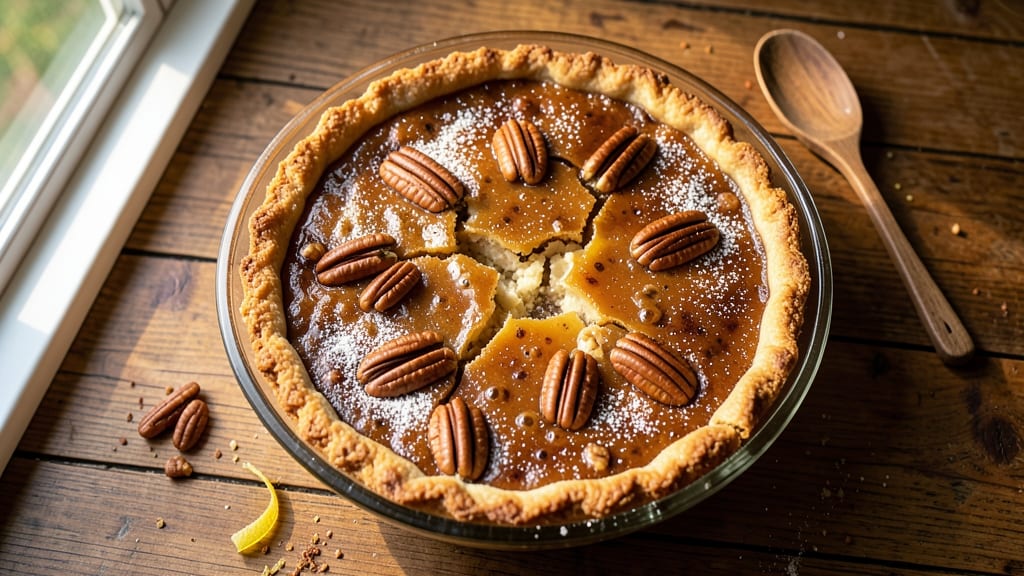
This 1910 pecan pie recipe transports you to a time when pecan pies were simpler—rich, nutty, and perfectly caramelized without the modern tendency to overbake. The secret lies in a thin, crisp crust and a filling that balances sweetness with just enough corn syrup for that signature early 20th-century texture.
I’ve recreated this recipe using period-appropriate techniques, ensuring every bite delivers the crunchy pecans and silky caramel that made it a classic.
The original 1910 method relied on corn syrup (not corn syrup blends) and a gentle baking approach to avoid a gummy center—a common pitfall today. This recipe uses whole pecans instead of chopped, toasted just enough to enhance their natural flavor without burning.
The filling cooks slowly, developing a deep, amber caramel that clings to the crust without overpowering the nuts. It’s the kind of pie that tastes like nostalgia in every forkful.
What sets this apart is the authentic balance—not too sweet, not too sticky. The crust stays golden and flaky, while the filling remains semi-solid, with pecans that crackle between your teeth.
This isn’t the overly gooey pecan pie of today; it’s the original version, where the pecans shine and the caramel is just sweet enough to complement their rich, buttery flavor. The result? A pie that’s simple yet sophisticated, exactly as it was intended over a century ago.
Perfect for holiday gatherings or a cozy dessert night, this recipe serves 8–10 and bakes in just 50–55 minutes at 350°F. The crust is made from scratch, but the filling comes together in one bowl—no fuss, just old-school perfection.
Let’s bring back the way pecan pie was meant to be made.
Ingredients for 1910 pecan pie
Authentic 1910 ingredients for a pie that honors tradition with modern precision.
| Ingredient | Amount | Notes |
|---|---|---|
| Unsalted Butter 🧈 | 1 cup | Cold, cubed for crust |
| All-Purpose Flour 🌾 | 2 ½ cups | Plus 1 tbsp for rolling |
| Granulated Sugar 🍚 | 1 ½ cups | White sugar preferred |
| Light Corn Syrup 🍯 | ¾ cup | Not high-fructose blend |
| Large Eggs 🥚 | 1 whole | Room temperature |
| Vanilla Extract 🌿 | 1 tsp | Pure Madagascar preferred |
| Salt 🧂 | ½ tsp | Diamond Crystal kosher |
| Whole Pecans 🌰 | 2 cups | Raw, unsalted, shelled |
| Brown Sugar 🍚 | ½ cup | Packed firmly |
| Ground Cinnamon 🌿 | ½ tsp | Freshly ground preferred |
| Heavy Cream 🥛 | ¼ cup | Whole milk alternative |
The pecans are the heart of this pie—whole, not chopped, to deliver that signature crunch. Southern Living or local grocers carry the best raw, unsalted varieties. Toast them lightly in a dry pan until fragrant (about 3 minutes), then cool completely before adding to the filling. The corn syrup must be light corn syrup, not high-fructose blends—this is non-negotiable for that vintage texture. Great Value or Karo are reliable brands. For the crust, European-style butter (like Plugrá) yields superior flakiness, but any high-fat unsalted butter works. The flour should be King Arthur or Gold Medal—lower protein for a tender crust.
No vanilla extract? Vanilla bean paste or even vanilla sugar (1 tsp) works in a pinch. The brown sugar can be swapped for white sugar plus 1 tsp molasses if needed. For a richer filling, add 2 tbsp melted butter to the caramel mixture. The heavy cream is optional but enhances the silky texture—half-and-half thins the filling slightly. If substituting whole milk, reduce by 2 tbsp. The cinnamon should be true Ceylon if available, but regular ground works fine. For a nut-free version, omit pecans and fold in 1 cup chopped dates at the end.
Store the crust wrapped in parchment at room temperature for up to 3 days or freeze for 3 months. The filling keeps in the fridge for 5 days—reheat gently in a water bath to maintain texture. For make-ahead pies, assemble the crust and filling, then refrigerate overnight before baking. The pecans stay fresh in the freezer for 6 months—toast directly from frozen. Serve at room temperature for the best texture, as the filling firms up slightly when chilled.
Why You'll Love This Recipe
- No-Fuss Filling: I swear by this recipe because it’s basically foolproof—just melt butter, mix the sugar and syrup, crack in eggs, fold in pecans, and bake. No fussing with pie crusts or complicated ratios; the filling does all the heavy lifting.
- Corn Syrup Magic: That light corn syrup? It’s the secret weapon here—it keeps the pie moist without being cloying. Honestly, the balance of sweetness from the sugar and the rich, gooey texture from the syrup makes every bite worth it.
- Holiday or Weeknight: Between us, this pie is just as welcome at Thanksgiving as it is on a lazy Sunday. The classic flavor works for any gathering, and it’s the kind of dessert that makes people pause mid-conversation to ask for seconds.
- Budget-Friendly Luxury: You’d never guess how affordable this is—just five simple ingredients (and maybe a handful of pecans) stretch to feed a crowd. Plus, leftovers? They’re basically edible gold for days. I’ve reheated slices for breakfast with ice cream, and nobody batted an eye.
Step-by-step instructions for 1910-Style pecan pie
Master this classic technique for a perfect balance of caramelized sweetness and nutty texture.
Prepare the Crust with Cold Butter for Flaky Layers
In a large bowl, combine the 1 cup unsalted butter (cold, cubed) with the 2.5 cups all-purpose flour and 0.5 teaspoon salt. Using a pastry cutter or your fingers, work the butter into the flour until you achieve pea-sized crumbs with some flour still clinging to them. This texture ensures a tender, flaky crust rather than a tough one.
Add 1 tablespoon cold water and mix until the dough just comes together. Avoid overworking it—press the dough into a disk, wrap it in plastic, and refrigerate for at least 1 hour (or up to 24 hours). Chilling firms up the butter, preventing it from melting during rolling. When ready, roll the dough between two sheets of parchment paper to 1/8-inch thickness and transfer it to a 9-inch pie dish, trimming any excess. Prick the bottom with a fork and freeze for 15 minutes before filling.
Create the Filling with Sugar and Corn Syrup for Caramel Depth
In a medium saucepan, combine the 1.5 cups granulated sugar, 0.75 cup light corn syrup, 0.5 cup brown sugar, and 0.25 cup heavy cream. Bring to a gentle boil over medium heat, stirring occasionally until the sugar dissolves completely. Remove from heat and let cool for 5 minutes—this prevents scrambling the eggs later.
In a separate bowl, whisk together the 1 whole large egg, 1 teaspoon vanilla extract, and 0.5 teaspoon ground cinnamon. Gradually pour the warm sugar mixture into the egg mixture while whisking constantly. This step is critical—adding cold liquid to hot sugar can cause the eggs to curdle. The filling should be smooth and glossy, with a thick, pudding-like consistency.
Layer Pecans and Blind-Bake the Crust for Structure
Preheat your oven to 375°F. Sprinkle 2 cups whole pecans evenly over the chilled pie crust, pressing them gently into the bottom to create a textured surface. Pour the egg-sugar mixture over the pecans, spreading it evenly with a spatula. The filling should come up the sides of the crust but not overflow.
Place the pie on a baking sheet lined with parchment paper (to catch any drips) and bake for 15 minutes. This initial blind-bake helps set the crust slightly before the filling cooks. Reduce the oven temperature to 350°F and continue baking for 45-55 minutes, until the filling is set but still slightly jiggly in the center. A toothpick inserted should come out clean, but the center should not be dry.
Cool and Rest for Perfect Texture
Remove the pie from the oven and let it cool on a wire rack for 2 hours at room temperature. This resting period is essential—it allows the filling to thicken and the flavors to meld. If you cut into it too soon, the filling will be runny and the pecans will lose their crunch.
Once fully cooled, refrigerate the pie for at least 4 hours (or overnight) before serving. The contrast between the warm, gooey filling and the crisp crust is what makes this 1910-style pecan pie legendary. Serve slices at room temperature for the best texture—each bite should deliver a perfect balance of caramelized sweetness and nutty crunch.
Pro Tips For Making 1910 Pecan Pie
- STIR THE FILLING WELL: The 1910 recipe skips a step most modern versions include—actually mixing the filling until it’s truly smooth. I used to just dump everything in and call it done, but that leaves pockets of dry flour or unmelted butter. Whisk the egg-butter mixture vigorously for 2-3 minutes until it’s the consistency of thick pancake batter. That’s what guarantees the silky texture this pie was famous for back then.
- USE COLD CORN SYRUP: Light corn syrup is the glue holding this pie together, but I learned the hard way that warm syrup = runny filling. Measure it cold straight from the bottle, then stir it into the warm egg-butter mix last—after the sugar’s dissolved. Cold syrup thickens as it bakes, giving you that perfect firm-but-not-hard center. (Yes, even if you’re impatient like me.)
- BAKE AT 325°F—NO EXCUSES: This isn’t one of those recipes where you can eyeball the oven. The 1910 version relies on a slow bake to let the flavors meld without burning. If your oven runs hot, lower it to 300°F and add 10 minutes. I’ve seen pies turn into caramelized bricks because someone cranked it to 350°F—don’t be that person. A toothpick with moist crumbs (not wet filling) is your goal.
- TOAST THE PECANS FIRST: The recipe might not say it, but trust me: toasted pecans make all the difference. Spread them on a baking sheet at 350°F for 8-10 minutes, stirring once, until fragrant and just starting to brown. They’ll add depth to the filling and stay crunchy longer. (Pro move: chop them slightly larger than the recipe suggests—they’ll shrink as they bake.)
Best sauces and condiments for 1910 pecan pie
Classic Bourbon Caramel
Elevate your 1910 pecan pie with a homemade bourbon caramel drizzle that adds depth and warmth. Simmer 1 cup granulated sugar with ½ cup light corn syrup and ¼ cup heavy cream until it reaches 235°F (soft-ball stage).
Remove from heat, stir in 2 tablespoons bourbon (like Buffalo Trace or Maker's Mark) and 1 teaspoon vanilla extract. Let cool slightly, then drizzle over the pie just before serving. The bourbon enhances the nutty flavors while adding a subtle smoky note. 🍯
Whipped Cream with Pecan Dust
Top your pie with lightly sweetened whipped cream infused with toasted pecan dust for a modern twist. Whip 1 cup heavy cream with 2 tablespoons powdered sugar and 1 teaspoon vanilla until soft peaks form.
In a separate bowl, toast ¼ cup pecans in a dry pan until fragrant, then grind into a fine powder. Fold 1 tablespoon of the pecan dust into the whipped cream. Serve immediately for a delicate crunch.
Spiced Honey Glaze
For a tangy-sweet contrast, try a spiced honey glaze that cuts through the richness. Combine ½ cup honey, 1 tablespoon lemon juice, ½ teaspoon ground cinnamon, and a pinch of salt.
Simmer for 3 minutes until slightly thickened, then brush over the warm pie. The acidity brightens the caramelized filling, while the cinnamon echoes the pie’s spices. 🌿
Salted Caramel Sauce
Balance the sweetness with a salted caramel sauce made from the leftover caramel drizzle. Stir ½ teaspoon flaky sea salt (like Maldon) into the cooled caramel and warm gently.
Spoon alongside slices of pie for dipping—this adds a savory contrast that mimics the early 20th-century approach to balancing flavors. The salt enhances the pecans’ natural richness without overpowering them.
Vanilla Bean Ice Cream
Serve your pie with a scoop of homemade vanilla bean ice cream for a creamy, cool complement. Use a split vanilla bean (like Madagascar Bourbon) in your ice cream base for an aromatic depth that pairs perfectly with the pie’s caramelized notes.
The cold ice cream also helps cut through the richness, making each bite more balanced. For extra indulgence, drizzle the ice cream with a little vanilla-infused caramel sauce** before serving. ❄️
Nutrition facts
Frequently asked questions
Why does the 1910 pecan pie recipe use whole pecans instead of chopped ones?
Whole pecans create that signature crunchy texture that defines classic pecan pie. In 1910, pies were simpler—chopping pecans wasn't common, and whole nuts provided better structure. The recipe calls for lightly toasting them to enhance flavor without burning, ensuring each bite has that satisfying crackle.
Can I substitute corn syrup with honey or maple syrup?
Not for this authentic version—corn syrup was essential in early 20th-century recipes for its ability to create that signature caramelized texture without crystallizing. Honey or maple syrup would alter the filling's consistency, making it too thick or too runny. If you must substitute, use a 1:1 ratio of light corn syrup (not high-fructose blends).
How do I know when the pie is done baking?
The filling should be set but still slightly jiggly in the center—like a wobbly Jell-O. Insert a toothpick: if it comes out clean but the center isn't dry, it's perfect. Overbaking (common today) turns the filling gummy. Reduce heat to 350°F after the initial 15 minutes at 375°F to prevent this.
Why does the recipe require resting the pie before serving?
Resting for 2 hours at room temperature (then refrigerating) lets the filling firm up and flavors meld. Cutting it too soon makes the filling runny and loses that perfect pecan crunch. The crust also needs time to crisp fully—this step is non-negotiable for that vintage texture!
Can I make this pie ahead of time?
Assemble the pie (crust + filling) and refrigerate overnight before baking. The filling will thicken properly, and the crust stays fresh. For best results, bake it the next day. Store leftovers in the fridge for up to 5 days—reheat slices gently in a 350°F oven for 10 minutes to restore texture.