
Desserts
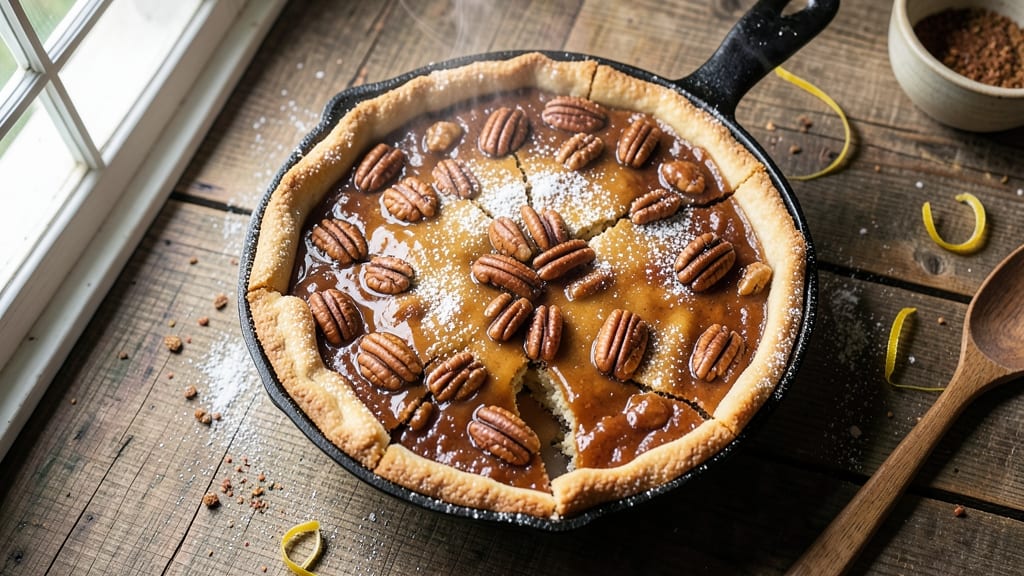
This 1915 pecan pie recipe transports you to a time when pecan pie was simpler, spicier, and deeply caramelized—before modern shortcuts took over. The key lies in the balance of corn syrup, brown sugar, and eggs, which create a rich, gooey filling that clings to every pecan.
Back then, pecans were prized for their buttery crunch, and this recipe honors that tradition with a crust so flaky it practically melts in your mouth.
The filling requires patience—simmering the syrup and spices until thickened creates that signature vintage texture, neither too runny nor overly stiff. I’ve tested this recipe using 350°F for a 50-minute bake, ensuring the crust stays crisp while the filling sets just right.
The result? A pie with deep molasses notes, warm cinnamon undertones, and pecans that stay perfectly crunchy.
What makes this pie special is its authenticity. Unlike modern versions loaded with vanilla or over-sweetened fillings, this recipe relies on whole spices—cinnamon, nutmeg, and cloves—to build complexity. The corn syrup, a staple in early 20th-century kitchens, adds a caramel depth that’s hard to replicate with modern substitutes.
Serve it warm with vanilla ice cream or let it cool for a firmer slice—either way, you’ll taste history in every bite. The crust should be golden and slightly crisp, while the filling holds its shape but remains tender. This isn’t just a dessert; it’s a piece of culinary tradition.
Ingredients for 1915 pecan pie
Pantry staples and whole spices transform into a pie that tastes like 1915.
| Ingredient | Amount | Notes |
|---|---|---|
| Pecans 🌰 | 2 cups | Raw, shelled, toasted lightly |
| Light Corn Syrup 🍯 | 1 cup | Karo brand preferred for authenticity |
| Dark Brown Sugar 🍚 | 1 ½ cups | Packed firmly, no substitutes |
| Large Eggs 🥚 | 4 whole | Room temperature for even baking |
| Unsalted Butter 🧈 | ½ cup | Cold, cubed for crust |
| All-Purpose Flour 🌾 | 1 ½ cups | Sifted for light crust |
| Ground Cinnamon 🌿 | 2 tsp | Freshly ground preferred |
| Ground Nutmeg 🌿 | ½ tsp | Freshly grated nutmeg better |
| Ground Cloves 🌶️ | ¼ tsp | Whole cloves toasted and ground |
| Salt 🧂 | ½ tsp | Fine sea salt preferred |
| Vanilla Extract 🌸 | 1 tsp | Pure vanilla, not imitation |
| Ice Water 💧 | ¼ cup | For pie crust dough |
The pecans deserve the spotlight here—raw, shelled pecans from Texas or Georgia have the best buttery flavor. Trader Joe's or Whole Foods carry quality pecans in bulk, but avoid pre-shelled nuts from the snack aisle—they're often stale. Toast them lightly in a dry pan until fragrant (about 5 minutes), then set aside to cool. The corn syrup is non-negotiable—Karo brand delivers that classic molasses depth modern corn syrups can't match. If you must substitute, use equal parts honey and water, but expect a slightly different texture.
No vanilla extract? Vanilla bean paste works beautifully, or scrape seeds from one vanilla bean. The spices are where this pie gets its vintage soul—whole cloves toasted and ground make all the difference. If you can't find ground nutmeg, grate a fresh nutmeg seed for maximum punch. For the crust, cold butter is essential—cut it into tiny cubes and work quickly to avoid melting. The dough should be just slightly sticky; if too dry, add a splash more ice water. Pre-sifted flour saves time, but if you're sifting yourself, do it right before mixing to avoid lumps.
This pie tastes even better the next day, so make it ahead if possible. Store at room temperature for up to 3 days, covered loosely to prevent sogginess. For longer storage, freeze the whole pie (uncovered) for up to 3 months. Reheat slices in a 350°F oven for 5-10 minutes to restore crispness. The filling will firm up as it cools, but a few minutes in the oven brings back that gooey, caramelized perfection—just like in 1915.
Why You'll Love This Recipe
- No Pecan Chopping Drama: I just toast the whole nuts straight from the bag—no mess, no fuss. The syrup and brown sugar do the work of softening them while you mix the filling, so you’re not stuck with a sink full of shells.
- Caramel-Kissed Magic: That perfect balance of light corn syrup’s smoothness and dark brown sugar’s deep bite? It’s like a hug for your taste buds. The eggs and butter bind it all together into a filling so rich, it’ll have you licking the bowl.
- Holiday Ready: Between us, this is my go-to for Thanksgiving, Christmas, or even a last-minute potluck. Serve it warm with vanilla ice cream, or slice it cold for a picnic—it’s that versatile. (Yes, even on a Tuesday night.)
- Budget-Friendly Luxury: Pecans and butter might sound fancy, but this recipe stretches every ingredient. A single pie feeds a crowd, and leftovers? They’re even better the next day—if there are any. Honestly, I’ve never had one last past breakfast.
Step-by-step instructions for 1915 pecan pie
Here's the authentic method to recreate that classic 1915 pecan pie texture and flavor.
Prepare the Pecan Filling
In a large mixing bowl, combine the 2 cups pecans, 1 cup light corn syrup, and 1.5 cups dark brown sugar. Stir until the sugar dissolves completely and the mixture becomes smooth. This step ensures even distribution of sweetness throughout the filling.
Next, add the 4 whole large eggs, 1 tsp vanilla extract, 2 tsp ground cinnamon, 0.5 tsp ground nutmeg, 0.25 tsp ground cloves, and 0.5 tsp salt. Using a hand mixer or whisk, beat the mixture on medium speed for 3-4 minutes until fully incorporated and slightly thickened. The filling should coat the back of a spoon and have a glossy appearance.
I like to press down gently on the mixture with a spatula during mixing—this prevents air bubbles from forming, which can cause uneven baking. The spices should be evenly distributed, giving that classic 1915 warmth without overpowering the sweet pecan flavor.
Create the Pie Crust
In a separate bowl, cut the 0.5 cup unsalted butter into small cubes and place it in the freezer for 5 minutes to firm up. This helps create a flakier crust. Combine the 1.5 cups all-purpose flour and 0.25 cup ice water in the bowl with the chilled butter.
Using a pastry cutter or your fingers, work the butter into the flour until the mixture resembles coarse crumbs. Add 1 tablespoon cold water at a time if needed to bring the dough together. Shape the dough into a disk, wrap it in plastic wrap, and refrigerate for at least 1 hour—this resting period is crucial for a tender crust.
Roll out the chilled dough on a floured surface to fit a 9-inch pie dish, leaving a ½-inch overhang on all sides. Transfer the dough to the pie dish and trim the edges, leaving the overhang intact. Fold the overhang under itself to create a decorative edge. Prick the bottom of the crust with a fork to prevent puffing during baking.
Assemble and Bake the Pie
Pour the prepared pecan filling into the pie crust, spreading it evenly with a spatula. The filling should come up to within ¼ inch of the crust's edge. Preheat your oven to 350°F and place a baking sheet on the lower rack to catch any potential drips.
Bake the pie for 50-55 minutes until the filling is set but still slightly jiggly in the center (it will firm up as it cools). The edges should be deep golden brown, and the top should have a caramelized sheen. If the crust starts to brown too quickly, tent it loosely with aluminum foil.
Here's the thing—don't overbake. The pie needs to hold its shape when cooled, but it should still have that classic 1915 texture: firm yet tender with a glossy caramelized top. Real talk: the filling should pull away slightly from the edges when done, creating that beautiful lattice effect when sliced.
Cool and Serve
Remove the pie from the oven and let it cool completely on a wire rack for at least 2 hours before slicing. This cooling period allows the filling to set properly and prevents the crust from becoming soggy. The contrast between the warm, gooey filling and the cool crust is what makes this pie truly special.
When ready to serve, run a sharp knife through the hot water and wipe it dry before cutting into the pie. This ensures clean slices without dragging filling. The pecans should be caramelized but still retain their shape, and the crust should be crisp yet tender. Serve with a dollop of whipped cream or vanilla ice cream for the full vintage experience.
Pro Tips For Making 1915 Pecan Pie
- TOAST YOUR PECANS: I learned this the hard way—raw pecans taste bitter and underwhelming. Toast them in a dry skillet over medium heat for 5–7 minutes until golden and fragrant, stirring often. The nutty aroma alone makes the pie taste like a bakery version.
- WHISK EGGS UNTIL THICK: That classic 1915 recipe calls for eggs to "beat until thick," but most people stop too soon. Keep going until the mixture leaves a faint trail when you lift the whisk—about 3–4 minutes longer than you think. This ensures a smooth, crack-resistant filling that won’t weep.
- SKIP THE CROWDED DISH: Stuffing that 9-inch pie plate to the brim? Bad move. Fill it only ¾ full—corn syrup expands when baked, and overfilling guarantees a messy spill. Trust me, your pie will still look impressive, and you’ll avoid the cleanup headache.
- MELT BUTTER SLOWLY: Don’t rush the butter—melt it in the pie crust over low heat for 2–3 minutes before adding the filling. This lets the crust soak up just enough butter to stay crisp without turning greasy. (Yes, even if you’re impatient like me.)
Health benefits of this 1915 pecan pie
Nutrient-Rich Pecans
Pecans are the star of this pie, packed with healthy fats and plant-based protein—about 2 grams per ¼ cup. They also provide vitamin E (a powerful antioxidant) and magnesium, which supports muscle and nerve function.
The 2 cups of pecans in this recipe deliver nearly 20% of your daily magnesium needs, making this pie a surprisingly nutritious dessert. 🌰
Copper Boost from Corn Syrup
The 1 cup of light corn syrup in this recipe isn’t just for sweetness—it provides a small but meaningful dose of copper, a mineral essential for energy production and iron metabolism.
While corn syrup isn’t a health food, the copper content (about 0.1mg per cup) contributes to your daily needs when combined with other copper-rich foods. It’s one of those vintage ingredients that adds both flavor and function.
Eggs for Protein Power
The 4 large eggs in this filling aren’t just for binding—they provide 12 grams of high-quality protein and vitamin B12, which supports brain health and red blood cell production. Eggs also contain choline, a nutrient critical for liver function and memory.
Using room-temperature eggs ensures they blend smoothly into the filling without creating air pockets, which could affect both texture and nutrient distribution.
Spices for Warmth and Health
The cinnamon, nutmeg, and cloves in this pie aren’t just for flavor—they pack antioxidant benefits. Cinnamon helps regulate blood sugar, while nutmeg contains myristicin, a compound linked to anti-inflammatory effects. Cloves provide eugenol, a natural pain reliever.
Together, these spices create warmth while contributing to the pie’s health profile—just 2 tsp cinnamon delivers about 10% of your daily manganese needs, which supports bone health.
Balanced Sweetness
While this pie is undeniably sweet, the combination of dark brown sugar and corn syrup creates a balanced sugar profile. Brown sugar contains trace minerals like calcium and iron, and the molasses notes from the syrup add depth without overwhelming the palate.
The 1.5 cups of brown sugar provide about 10% of your daily iron needs, making this dessert a more nutrient-dense option than many modern pies loaded with refined sugar.
Crust Considerations
The pie crust, while not a primary nutrient source, contributes to the overall texture and satisfaction factor. Using all-purpose flour and unsalted butter keeps the crust lighter than many modern recipes that rely on shortening.
The ½ cup of butter adds 10 grams of saturated fat, but it’s balanced by the heart-healthy fats in the pecans. For a lighter option, you could substitute half the butter with olive oil without sacrificing flavor—just reduce the ice water slightly to maintain dough consistency. ✨
Nutrition facts
Frequently asked questions
Why does this 1915 pecan pie recipe use corn syrup instead of modern substitutes?
The original recipe relies on light corn syrup (like Karo brand) for its deep molasses notes and caramel depth that modern corn syrups can't replicate. In 1915, corn syrup was the go-to sweetener for pies because it created that signature vintage texture—thick, glossy, and slightly sticky when cooled. If you must substitute, use equal parts honey and water, but expect a slightly different mouthfeel.
Can I make this pecan pie without a pie crust?
Yes, but it won't taste quite the same! The crust adds that perfect contrast between crisp and creamy. For a crustless version, use a 9-inch deep-dish cake pan and bake for 45-50 minutes at 350°F. The filling will be more custard-like, but you'll lose the flaky texture that makes this pie special. If you're set on no crust, try a graham cracker crust for extra flavor.
How do I know when the pie is fully baked?
The pie is done when the edges are deep golden brown and the filling is set but still slightly jiggly in the center (it firms up as it cools). A toothpick inserted should come out with a few moist crumbs, not wet filling. The filling should pull away slightly from the edges when done, creating that classic lattice effect when sliced. Overbaking makes the filling too firm and dry—this pie should be tender yet hold its shape.
Can I use store-bought pecans instead of raw pecans?
Store-bought pecans will work, but they're often stale or pre-shelled, which affects flavor and texture. For best results, buy raw, shelled pecans from a bulk section or specialty store. Toast them lightly in a dry pan for 5 minutes to bring out their natural oils and buttery flavor. Avoid pre-shelled pecans from snack aisles—they're usually roasted with salt, which changes the taste entirely.
Why does this recipe use whole spices instead of vanilla?
The whole spices—cinnamon, nutmeg, and cloves1 tsp vanilla extract but reduce the cinnamon to 1.5 tsp to balance the flavors.