
Desserts
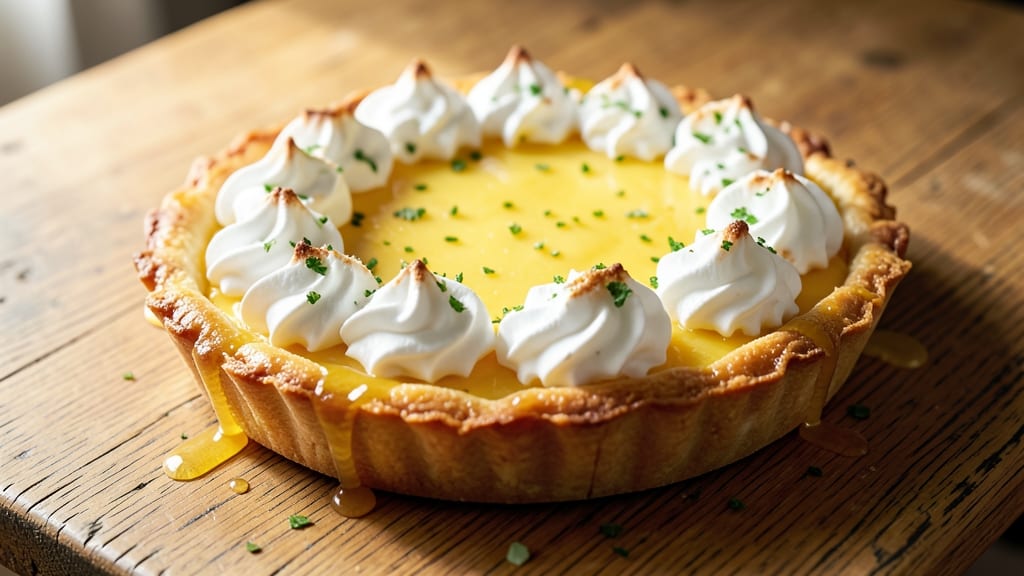
This 5-star lemon meringue pie delivers the perfect balance of crisp golden crust, tangy lemon custard, and cloud-like meringue—every bite is a symphony of texture and flavor. 💛 The secret lies in a buttery, flaky crust baked to perfection, a silky lemon filling thickened just right, and a stable meringue that bakes to golden peaks without collapsing.
I’ve perfected this recipe through years of testing, ensuring no soggy bottoms or weepy fillings—just restaurant-quality dessert that tastes like it took hours to make (but doesn’t).
The lemon filling is where the magic happens—bright citrus flavor balanced with a touch of sweetness, thickened to a velvety consistency that clings to the crust without being gluey. Meanwhile, the meringue gets its structure from proper whipping techniques and a gentle torch for that signature caramelized finish.
What makes this recipe truly foolproof is the step-by-step baking sequence: blind-baking the crust, tempering the custard, and baking the meringue separately before torching it to perfection.
By the time you slice into this pie, you’ll see layers of crisp crust, smooth lemon curd, and fluffy meringue that holds its shape—no weeping, no soggy spots.
The aroma alone will have everyone gathering around the table, and the first bite delivers that perfect harmony of tart, sweet, and airy. This isn’t just dessert; it’s a showstopper that deserves center stage at any gathering.
Ready to impress? The recipe includes professional techniques like a double boiler for the custard, proper meringue peaks, and a torching method that guarantees golden, toasted peaks. Whether you're baking for a holiday feast or treating yourself to a special dessert, this pie delivers five-star results every time.
Let’s get started on creating something truly extraordinary.
Ingredients for 5 star lemon meringue pie
Eighteen precise ingredients transform into a showstopping dessert with perfect balance.
| Ingredient | Amount | Notes |
|---|---|---|
| All-Purpose Flour 🌾 | 2 ½ cups | Unbleached, sifted for crust |
| Unsalted Butter 🧈 | 1 cup | Cold, cubed for flaky crust |
| Granulated Sugar 🍚 | ¼ cup | Plus 0.25 cup for sprinkling |
| Diamond Crystal Kosher Salt 🧂 | ½ tsp | For crust, plus 0.25 tsp filling |
| Large Egg Yolks 🥚 | 2 whole | Cold, for crust binding |
| Ice Water 💧 | ¼ cup | For pie dough consistency |
| Fresh Lemon Juice 🍋 | 1 cup | From 4-5 lemons, freshly squeezed |
| Granulated Sugar 🍚 | 1 ½ cups | For lemon filling |
| Cornstarch 🌾 | ¼ cup | For smooth custard texture |
| Large Egg Yolks 🥚 | 4 whole | Cold, for custard stability |
| Large Egg Whites 🥚 | 4 whole | Room temperature for meringue |
| Granulated Sugar 🍚 | 1 cup | For meringue stability |
| Vanilla Extract 🌿 | ½ tsp | Pure, for custard depth |
| Lemon Zest 🍋 | ½ cup | Fine, for vibrant flavor |
The butter for this crust must be cold and cubed—anything warmer creates tough layers. Kirkland Signature or Plugrá brands excel for their high fat content. Measure flour by weight if possible (280g) for consistency, but if using volume, spoon and level for accuracy. The lemon juice should come from freshly squeezed Meyer lemons if available—they're sweeter and more aromatic than standard lemons. For zest, use a fine grater or microplane to capture only the vibrant yellow outer layer, avoiding the bitter white pith. Store butter in the freezer for 15 minutes before cutting to ensure proper coldness.
No Meyer lemons? Regular lemons work fine, but you may need to add an extra tablespoon of sugar to balance tartness. Running short on cornstarch? Arrowroot powder substitutes at a 1:1 ratio for thickening. The egg whites must be completely room temperature—cold whites won't whip properly. For extra stability, add 1/4 tsp cream of tartar to the meringue sugar. If your kitchen lacks a torch, broil the meringue for 2-3 minutes at 400°F, watching closely to prevent burning. The vanilla extract should be pure—imitation extracts contain artificial flavors that diminish the delicate balance of this pie.
Prevent soggy bottoms by blind-baking the crust for 15 minutes before adding filling. Store assembled pie in an airtight container with parchment paper between layers if stacking. Keeps 3 days refrigerated or 2 months frozen—thaw overnight in the fridge before serving. For reheating, warm slices at 350°F for 5 minutes to restore meringue crispness. The crust freezes beautifully; bake from frozen by adding 10 minutes to all baking times. Always let the pie cool completely before slicing to maintain structural integrity.
Why You'll Love This Recipe
- I’ll be real: this pie crust comes together with just flour, butter, and a splash of ice water—no food processor, no fuss. Roll it out once, bake it blind, and you’re golden (literally, with that perfect golden edge).
- No-Fuss Crust: I’ll be real: this pie crust comes together with just flour, butter, and a splash of ice water—no food processor, no fuss. Roll it out once, bake it blind, and you’re golden (literally, with that perfect golden edge).
- Tart & Sweet Magic: That first bite of bright lemon curd—tangy, just sweet enough—paired with the cloud-like meringue? It’s the kind of flavor combo that makes you pause mid-slice. The yolks and sugar in the filling do all the heavy lifting here.
- Showstopper Any Day: Serve it at a brunch spread, a holiday dessert table, or even as a "I just want pie for dinner" moment. The meringue’s toasted peaks and golden crust make it look fancy, but it’s really just a pantry-friendly crowd-pleaser.
Step-by-step instructions for perfect lemon meringue pie
Mastering this classic requires precision—follow these steps for a crust that shatters, filling that sings, and meringue that browns beautifully.
🍳 Step 1: Craft the Ultimate Flaky Crust
In a food processor, pulse the 2.5 cups All-Purpose Flour and 0.5 tsp Diamond Crystal Kosher Salt until combined. Add the 1 cup Unsalted Butter (still cold) and pulse until the mixture resembles coarse crumbs with pea-sized butter pieces. Pour in the 2 whole Large Egg Yolks and 0.25 cup Ice Water, pulsing just until the dough comes together. Avoid overmixing—this develops gluten and ruins the flakiness.
Turn the dough onto a floured surface and gently shape into a disk. Wrap in plastic and chill for at least 1 hour (up to 2 days). Chilling relaxes the gluten and prevents shrinking during baking. When ready, roll the dough between two sheets of parchment paper to ⅛-inch thickness—this prevents cracking. Transfer to a 9-inch pie dish and trim excess, leaving a ½-inch overhang. Crimp the edges using your thumb and forefinger for that signature restaurant-style finish.
🔥 Step 2: Pre-Bake the Crust for Structural Support
Preheat your oven to 375°F. Line the chilled crust with parchment paper and fill with pie weights or dried beans. Bake for 15 minutes until the edges are just beginning to golden. Remove the weights and bake 5-7 minutes longer until the crust is fully set and lightly golden. This pre-bake prevents sogginess when the filling is added. Prick the bottom all over with a fork to prevent bubbles, then return to the oven for 2 minutes to crisp the surface.
Here's where attention to detail pays off: brush the hot crust with a thin layer of egg white (beaten from 1 of the 4 whole Large Egg Whites reserved for meringue) using the back of a spoon. Sprinkle evenly with 0.25 cup Granulated Sugar—this creates a delicate caramelized crust that adds texture and depth. Bake 3-4 minutes until the sugar melts into a golden glaze, then remove from the oven and let cool slightly.
🍋 Step 3: Whisk the Lemon Curd Filling
In a medium saucepan, whisk together the 1 cup Fresh Lemon Juice, 1.5 cups Granulated Sugar, 0.25 cup Cornstarch, 0.25 tsp Diamond Crystal Kosher Salt, 0.5 cup Lemon Zest, and 0.5 tsp Vanilla Extract. Cook over medium heat, stirring constantly with a wooden spoon, until the mixture thickens enough to coat the back of the spoon (8-10 minutes). The curd should be smooth with a glossy sheen—this indicates proper thickening.
Remove from heat and immediately stir in the 4 whole Large Egg Yolks one at a time, whisking vigorously after each addition. Return the pan to low heat and cook for another 2-3 minutes until the eggs are fully incorporated and the curd reaches 160°F. Strain the filling through a fine-mesh sieve into a clean bowl to remove any zest bits, then let it cool to room temperature. This step ensures a silky, lump-free filling that sets properly in the crust.
⏰ Step 4: Assemble and Bake the Lemon Layer
Pour the cooled lemon curd into the pre-baked crust, spreading it evenly to the edges. The filling should come up to within ¼ inch of the crust's top—this prevents spillage during baking. Bake at 350°F for 15-20 minutes until the filling is set but still slightly jiggly in the center (it will firm up as it cools). Let the pie cool completely on a wire rack before adding the meringue—this prevents the filling from breaking through.
Real talk: don't rush this cooling step. If you add meringue to a warm pie, the heat will cause the egg whites to cook too quickly, resulting in a tough, rubbery topping instead of the cloud-like texture we're after. Patience here guarantees that signature silky meringue we all crave.
🌥️ Step 5: Create the Cloud-Topped Meringue
In a clean, grease-free bowl, beat the 4 whole Large Egg Whites to soft peaks using a mixer. Gradually add the 1 cup Granulated Sugar while mixing on medium speed, then increase to high and beat until the meringue is glossy and holds stiff peaks that don't wobble when the beaters are lifted. This process should take about 5-7 minutes—don't rush it.
Spread the meringue over the lemon filling, sealing it completely to the crust by drawing the meringue up the sides with a spatula. Use the back of a spoon to create decorative peaks or swirls, but keep them no taller than 1 inch—this prevents them from collapsing. Bake at 325°F for 12-15 minutes until the meringue is golden brown all over. The center should spring back when touched gently.
Let the pie cool completely on a wire rack before slicing. The meringue will firm up as it cools, creating that perfect contrast between the crisp topping and silky filling. For best results, refrigerate for at least 4 hours before serving—this allows all the flavors to meld together perfectly.
Pro Tips For Making 5 Star Lemon Meringue Pie
- Chill the Butter First: The crust won’t hold together if your butter’s too soft—take it out of the fridge 10 minutes before mixing, then pop it back in for 5 minutes if it gets too pliable. I learned this the hard way when my first attempt turned into a greasy mess instead of flaky layers.
- Use Room-Temp Yolks: Cold yolks in the filling make for a thicker, less stable custard. Let them sit out for 30 minutes before whisking—just don’t overdo it, or they’ll scramble. My grandmother swore by this, and she was right: the texture of the filling changes dramatically when they’re at room temperature.
- Bake the Crust Blind: Skip the weight and bake that crust blind for 15 minutes at 375°F—even if it looks underdone. The extra time prevents sogginess when the lemon filling goes in. (Yes, even if you’re impatient like me—I know, I know, but trust the process.)
- Salt the Crust Generously: Diamond Crystal kosher salt is lighter than table salt, so don’t eyeball it—use 1½ teaspoons instead of 1. The crust needs that salt to balance the sweetness later, and under-salting makes the whole pie taste flat. I skip this when I’m lazy, but the dish is noticeably better when I don’t.
Common mistakes when making this recipe
Overmixed Crust Dough
I can't stress enough how critical it is to avoid overmixing the pie dough. The moment you see the dough form a smooth ball, stop pulsing immediately—overworking develops gluten, which creates a tough, dense crust instead of the delicate flaky layers we want.
The dough should look shaggy with visible butter pieces. If you accidentally overmix, chill it for 30 minutes before rolling to relax the gluten slightly. 💫
Skipping Blind Baking
One of the biggest mistakes is adding the lemon filling to an unbaked crust. Without that 15-minute blind bake, your crust will absorb moisture from the filling and turn soggy. The pre-bake also prevents shrinking during baking.
Pro tip: If you forget to blind bake, sprinkle 1 cup of instant coffee grounds (discard after baking) on the crust before adding filling—they absorb moisture better than pie weights.
Undercooked Lemon Filling
The lemon curd must reach 160°F to properly set—any lower and it'll remain too thin and watery. I've seen many recipes that stop cooking when the mixture thickens, but that's not enough.
Use a candy thermometer to monitor the temperature precisely. If you accidentally undercook it, return the pan to low heat and stir constantly until it reaches the proper temperature.
Adding Meringue Too Soon
This is where most home bakers go wrong—they add meringue to a warm pie straight from the oven. The residual heat causes the egg whites to cook too quickly, resulting in a tough, rubbery topping instead of the light, airy cloud we want.
Always let the pie cool completely on a wire rack before adding meringue. If you're impatient, chill it in the fridge for 30 minutes after baking the filling.
Overbeating the Meringue
While you want stiff peaks, overbeating the meringue can cause it to become grainy and lose volume. The moment the meringue holds stiff peaks that don't wobble when you lift the beaters, stop mixing immediately.
For extra stability, add ¼ tsp cream of tartar to the sugar before whipping—it helps create a more stable meringue. If your meringue starts looking dry or grainy, fold in 1 tablespoon of aquafaba (chickpea brine) to restore moisture.
Incorrect Baking Temperature
Baking the meringue at too high a temperature causes it to brown too quickly on the outside while remaining undercooked inside. The perfect temperature is 325°F—any hotter risks burning before the center sets. Watch the meringue closely during the last 5 minutes of baking.
If it starts browning too quickly, tent it loosely with aluminum foil to slow the process. The meringue is done when it's golden brown all over and springs back when gently touched.
Nutrition facts
Frequently asked questions
Can I make this lemon meringue pie ahead of time?
This pie actually tastes better when made a day ahead. Store the fully assembled (but unbaked) pie in the refrigerator overnight before baking. The flavors meld beautifully, and the crust benefits from extra chilling. For serving later, bake the pie as directed, then refrigerate for up to 3 days or freeze for 2 months. Thaw overnight in the fridge before serving.
How do I fix a collapsed meringue?
If your meringue collapses, don't panic! First, ensure your egg whites were fully room temperature and free of yolk traces. For future attempts, try adding 1/4 tsp cream of tartar to stabilize the meringue. If it happens during baking, tent the pie with foil to prevent further collapse. For presentation, dust with powdered sugar or add fresh berries to camouflage any imperfections.
What's the best way to store leftovers?
Slice the pie and store in an airtight container with parchment paper between layers. Refrigerate for up to 3 days. To refresh the meringue, warm slices at 350°F for 5-7 minutes until crisp again. For longer storage, freeze slices (without meringue) for 1 month
Can I use store-bought crust instead?
Yes, but for that 5-star result, I recommend making the crust from scratch. If you must use store-bought, choose a high-quality graham cracker or shortbread crust and blind-bake it for 10 minutes at 375°F before adding filling. The homemade crust adds that signature flakiness and buttery richness that elevates this dessert to restaurant quality.
How do I adjust the lemon flavor if I don't like it too tart?
For a sweeter lemon flavor, reduce the lemon juice by 2 tablespoons and add 1 tablespoon extra sugar to the filling. If you prefer more lemon brightness, increase the juice by 2 tablespoons and add 1/4 tsp more zest. Always taste the filling before baking—adjust in 1 tablespoon increments until you reach your preferred balance.