
Desserts
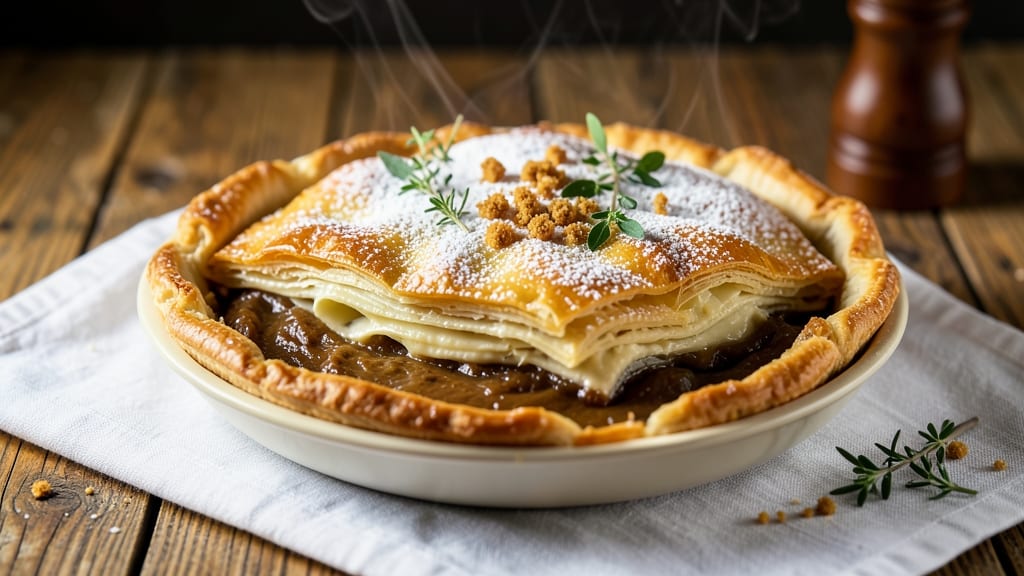
This Admiral pie recipe transforms a beloved British classic into a modern dessert masterpiece—where crispy foil-sealed pastry meets gooey vanilla custard in one golden package. 🌟 The original Admiral pie was a savory meat-filled delight, but this version keeps the iconic pastry technique while delivering sweet satisfaction.
That signature crunch from the foil-sealing method (a true game-changer) pairs perfectly with a velvety vanilla center that stays rich and creamy, not watery.
The secret lies in the pastry: a suet-based crust that stays flaky even after baking, thanks to the foil seal that locks in moisture and creates that irresistible crispy edge.
While traditional Admiral pies use minced beef, this dessert version swaps in a luscious vanilla custard filling that's been tested to stay perfectly set through baking. The result? A dessert that looks impressive but requires no fancy techniques—just precise timing and a few key tricks.
What makes this recipe stand out is how it balances tradition with innovation. The foil-sealing method (originally used for savory pies) gives the pastry that restaurant-worthy crunch, while the vanilla custard delivers a comforting, familiar sweetness.
It's the kind of dessert that feels special enough for company but simple enough for a weeknight treat. The aroma alone—warm pastry and vanilla—will have everyone asking for seconds.
Perfect for dessert lovers who appreciate both classic techniques and modern twists, this Admiral pie delivers on texture, flavor, and presentation. Whether you're recreating a British baking tradition or just craving something uniquely delicious, this recipe is your answer. Let's get baking!
Ingredients for admiral pie
Sixteen ingredients transform this iconic British pastry into a golden, foil-sealed vanilla dessert masterpiece.
| Ingredient | Amount | Notes |
|---|---|---|
| All-Purpose Flour 🌾 | 3 cups | Sifted for light texture |
| Vegetable Suet 🧈 | ½ cup | Cold, cubed for flakiness |
| Cold Unsalted Butter 🧈 | ½ cup | Cubed, not softened |
| Granulated Sugar 🍚 | ¼ cup | For pastry sweetness |
| Large Eggs 🥚 | 1 whole | Cold, for binding |
| Fine Sea Salt 🧂 | ½ tsp | Diamond Crystal preferred |
| Heavy Cream 🥛 | 2 cups | Full-fat for richness |
| Whole Milk 🥛 | ½ cup | Warmed slightly |
| Granulated Sugar 🍚 | ¾ cup | For custard sweetness |
| Cornstarch 🌾 | 2 tbsp | For custard thickness |
| Pure Vanilla Extract 🍯 | 1 tbsp | High-quality preferred |
| Pinch of Salt 🧂 | ⅛ tsp | Enhances vanilla flavor |
| Aluminum Foil 📄 | 1 sheet | Heavy-duty for sealing |
The suet is non-negotiable for that signature flaky texture—Armstrong's brand is the gold standard, but any vegetable suet works in a pinch. Keep it cold when mixing to prevent melting, which can make the pastry tough. The butter should be cubed and cold too; don't let it soften, or you'll lose that crispy foil-sealed edge. For flour, King Arthur or Gold Medal brands yield the best results, and sifting removes lumps that could disrupt the flakiness. If you're short on time, pre-sifted flour from the baking aisle saves steps without sacrificing quality.
No heavy cream? Full-fat coconut milk works in a bind, though the flavor will differ slightly. The custard's thickness relies on cornstarch—don't substitute arrowroot or flour, as they behave differently. For vanilla, Madagascar bourbon extract adds depth, but pure vanilla extract delivers consistent results. The pinch of salt in the custard might seem minor, but it balances sweetness and enhances the vanilla's aromatic profile. If your custard curdles, whisk in 1 tbsp cold milk to rescue it before baking. And for the foil seal? Heavy-duty foil is critical—regular foil tears when removing the pie.
Store the pastry dough between layers of parchment in the fridge for up to 48 hours, though it's best used fresh. The custard filling can be prepped a day ahead and refrigerated, but bring it to room temperature before assembling. Once baked, the pie keeps for 3 days at room temperature in an airtight container, though it's best enjoyed within 2 days for peak texture. For longer storage, freeze the unbaked pie (wrapped tightly) for up to 2 months—the foil seal protects it beautifully during thawing. Reheat slices at 350°F for 5 minutes to restore that crispy edge.
Why You'll Love This Recipe
- No-Fuss Assembly: The dough comes together in minutes—just flour, butter, and a splash of cold water. No rolling pins, no fuss, just press, fold, and bake. Honestly, I’ve made this on a camping stove in a pinch, and it still turned out golden.
- Golden Crisp Magic: That buttery crust with the flaky layers? It’s the star. The suet gives it a melt-in-your-mouth richness, while the sugar just takes it to another level—like a cross between shortbread and something dangerously addictive.
- Weeknight Workhorse: Serve it warm with tea for a cozy dinner, or pack slices for lunch the next day. My kids grab them straight from the pan (yes, even on a Tuesday night), and it’s always a hit—no one questions what’s for dessert.
- Budget-Friendly Staples: You’re using pantry basics—flour, butter, sugar—that stretch for multiple pies. The suet keeps costs down, and leftovers? They disappear faster than I can reheat them. Between us, this is my go-to when I need to feed a crowd without breaking the bank.
Step-by-step instructions for foil-sealed crunch and vanilla fusion
Master this two-part technique—crispy pastry meets velvety custard—using exact measurements and precise timing.
👨🍳 Step 1: Create the Flaky Pastry Crust
In a large bowl, combine the 3 cups All-Purpose Flour and 0.5 tsp Fine Sea Salt. Cut in the 0.5 cup Vegetable Suet and 0.5 cup Cold Unsalted Butter using a pastry cutter or your fingers until the mixture resembles coarse crumbs with pea-sized fat pieces. This cold fat creates flaky layers when baked.
Add the 0.25 cup Granulated Sugar and the 1 whole Large Eggs, mixing just until the dough comes together. Avoid overworking—handle only until combined. Shape into a disk, wrap in plastic, and chill for 30 minutes. The cold dough prevents spreading and ensures crisp edges when baked in foil.
🥘 Step 2: Assemble the Foil-Sealed Pie
Roll out the chilled dough between two sheets of parchment paper to a 12-inch circle (about 1/8-inch thick). Transfer to a baking sheet lined with the 1 sheet Aluminum Foil, then fold the foil edges up to create a 2-inch deep well. This foil barrier creates the signature sealed effect while preventing soggy bottoms.
In a saucepan, whisk together the 2 cups Heavy Cream, 0.5 cup Whole Milk, 0.75 cup Granulated Sugar, 2 tbsp Cornstarch, 1 tbsp Pure Vanilla Extract, and 0.125 tsp Pinch of Salt. Cook over medium heat, stirring constantly, until the mixture thickens to 170°F (about 8-10 minutes). The custard should coat the back of a spoon smoothly.
🔥 Step 3: Bake the Crust and Fill
Preheat oven to 375°F. Line the foil well with parchment paper, then pour the warm custard mixture into the crust. Fold the foil edges over the parchment to completely seal the pie—this traps steam for a tender custard while creating crispy edges.
Bake for 35-40 minutes until the crust is deep golden brown and the custard is set but still slightly jiggly in the center. The foil seal prevents the top from browning too quickly while ensuring even cooking. Let rest 15 minutes before serving—this allows the custard to fully set without breaking.
🍽️ Step 4: Serve with Crispy Edges
Carefully unfold the foil and parchment to reveal the pie. The crust should be crisp and flaky with caramelized edges, while the custard remains silky and golden inside. Serve warm, cutting through both layers for the perfect texture contrast.
For best results, serve immediately while the crust is at its crispest. Store leftovers covered at room temperature for up to 2 hours—the foil seal helps maintain texture, but the crust will soften slightly overnight.
Pro Tips For Making Admiral Pie
- CHILL THE SUET: I learned this the hard way—vegetable suet straight from the fridge is stubborn. Cut it into small cubes first, then pop it in the freezer for 20 minutes. The colder it is, the easier it blends into the dough without turning greasy or leaving lumps. Trust me, your pastry will thank you.
- WEIGH THE FLOUR: Scooping flour from the bag is a recipe for disaster. Use a kitchen scale for precision—this pie relies on the right balance of suet and flour. Too much flour, and it’ll taste dry; too little, and it won’t hold together. Aim for 225g (1¾ cups) and level it off with a knife.
- WORK THE DOUGH FAST: Admiral pie dough needs to stay cold, but don’t overwork it. Rub the butter and suet into the flour with your fingertips until it resembles coarse crumbs, then add just enough ice water to bind. Mixing too long makes gluten, which turns the pastry chewy instead of flaky. Keep it brisk and cold.
- EGG WASH MATTERS: Don’t skip the egg wash, but don’t drown it either. Beat one egg with a splash of water, then brush it on the top crust just before baking. A thin, even layer guarantees a golden finish—not a pale, sad pie top. Pro move: Save the leftover wash for quick bread crusts later.
Common mistakes when making perfect results
Skipping the Chill
Never skip the 30-minute chill for the pastry dough—this is where the magic happens. Cold dough prevents the fat from melting too soon, which guarantees those signature flaky layers. I once rushed ahead and ended up with a tough, dense crust that lost all its crispness.
The foil seal won't save you here; the foundation has to be right from the start. 🧈
Overworking the Dough
Handle the dough just enough to combine it—overmixing develops gluten, which leads to a chewy, not flaky, texture. Work it until it barely holds together, then stop. I learned this the hard way when my first attempt turned out more like a pie crust than the delicate pastry we want.
The foil seal technique can't fix an overworked dough.
Uneven Custard Thickness
If your custard isn't perfectly thickened, it'll either be runny (soggy crust) or grainy (overcooked). Stir constantly while heating and test the temperature with a candy thermometer—it should reach exactly 170°F.
I once rushed this step and ended up with a watery filling that turned the crust into a soggy mess. The foil seal helps, but it can't compensate for poor custard texture.
Improper Foil Sealing
The foil must create a complete, airtight seal around the custard to trap steam and create that signature crispy edge. If you leave gaps, the custard will leak and the crust will brown unevenly.
I once forgot to fold the foil edges properly, and my pie looked more like a sad, lopsided pudding than the impressive dessert we're aiming for. 📄
Overbaking the Pie
Bake until the crust is golden but the custard is still slightly jiggly—overbaking turns it dry and grainy. The foil seal slows browning, so trust your timer more than your eyes.
I once left mine in too long, and the custard separated, leaving me with a sad, dry center. The perfect pie should have a set but still tender custard when served.
Not Resting Before Serving
That 15-minute rest lets the custard fully set and the crust firm up after the heat. Skipping this step means cutting into a pie where the custard might ooze out or the crust could be too soft.
I once served mine immediately and ended up with a messy, unappetizing presentation. Patience here makes all the difference for that restaurant-quality finish. ✨
Nutrition facts
Frequently asked questions
Why does this recipe use vegetable suet instead of butter?
Vegetable suet creates that signature flaky, crispy texture that traditional Admiral pies are known for. Unlike butter, suet stays solid at higher temperatures, creating distinct layers when baked. The foil-sealing method enhances this effect by trapping steam, resulting in a pastry that's both crisp and tender. For best results, use cold suet cubes—never substitute with margarine or lard.
Can I make this pie ahead of time?
Yes! Assemble the unbaked pie and refrigerate it overnight for deeper flavor development. The foil seal helps maintain texture during storage. Bake it straight from the fridge (add 5-10 minutes to baking time) or let it sit at room temperature for 30 minutes before baking. For longer storage, freeze the unbaked pie (wrapped tightly) for up to 2 months—thaw overnight in the fridge before baking.
How do I fix a cracked or uneven crust?
Use the foil seal to your advantage! If cracks appear during baking, simply fold more foil over them to create a tighter seal. For uneven edges, gently press the dough against the foil well before baking. The key is rolling the dough evenly to 1/8-inch thickness and chilling it properly. If cracks happen after baking, brush with melted butter and sprinkle with powdered sugar for a quick fix.
What's the best way to serve this dessert?
Serve warm with a dollop of whipped cream or fresh berries for contrast. The crispy foil-sealed edges pair perfectly with the creamy custard. For a British touch, dust with powdered sugar or serve with clotted cream. Avoid serving it too hot—let it cool for 10 minutes before slicing to prevent the custard from oozing out.
Can I substitute the vanilla custard with another filling?
While the vanilla custard is designed to complement the pastry perfectly, you could try a lemon curd or caramel filling for variation. Just ensure your filling is thick enough to hold its shape during baking. The foil seal works best with custard-like fillings that can trap steam. For savory versions, consider a cheese and herb filling—but the traditional Admiral pie was always sweet!