
Desserts
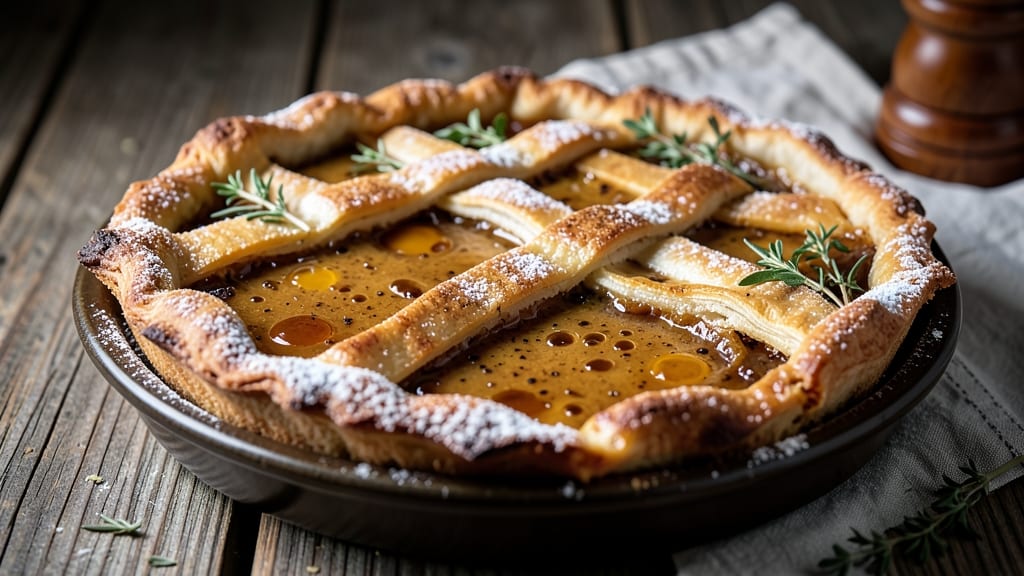
This Amish brown sugar pie brings the warmth of a Pennsylvania farmhouse straight to your kitchen with its buttery crust and spiced filling that melts in your mouth. 💛 The secret lies in the traditional lard-based crust—flaky, golden, and sturdy enough to hold the rich, caramelized brown sugar mixture.
I first tasted this pie at an Amish gathering, where it was served warm with a scoop of homemade vanilla ice cream, and it’s been my go-to dessert ever since.
The filling is where the magic happens: molasses, eggs, and butter create a deep, molasses-like sweetness that’s balanced by cinnamon and nutmeg, giving it that classic Amish spice profile.
Unlike store-bought versions, this pie is made with real brown sugar and no shortcuts—just simple, wholesome ingredients that deliver a texture between custardy and firm, with a caramelized top that cracks beautifully when sliced.
The crust, rolled out by hand and baked in a cast-iron skillet, adds that rustic charm that makes it taste like it came from a family kitchen.
What makes this pie truly special is how it transports you to an Amish community gathering—the aroma of cinnamon and brown sugar filling the house, the way the crust holds its shape while still being tender, and the way the filling sets just enough to hold its shape but still feels velvety.
It’s the kind of dessert that disappears quickly, leaving only crumbs and happy memories. Serve it warm with a dollop of whipped cream or a scoop of vanilla ice cream for the full experience.
Perfect for holidays, family dinners, or when you want to treat yourself to something truly comforting, this pie is foolproof once you master the crust and filling balance.
The best part? It’s a recipe that’s been passed down through generations, and now, you can make it in your own kitchen. Let’s get baking!
Ingredients for amish brown sugar pie
Simple pantry staples transform into a nostalgic Amish dessert with a buttery crust and spiced filling.
| Ingredient | Amount | Notes |
|---|---|---|
| All-Purpose Flour 🌾 | 2 ½ cups | Sifted for light texture |
| Lard 🧈 | 1 cup | Use leaf lard, chilled |
| Cold Unsalted Butter 🧈 | ½ cup | Cut into small cubes |
| Light Brown Sugar 🍯 | 1 ½ cups | Packed, not scooped |
| Large Eggs 🥚 | 2 whole | Room temperature |
| Molasses 🍯 | ½ cup | Unsulphured preferred |
| Heavy Cream 🥛 | 1 cup | Full-fat for richness |
| Granulated Sugar 🍚 | ½ cup | For caramelized top |
| Ground Cinnamon 🌿 | 2 tsp | Freshly ground preferred |
| Ground Nutmeg 🌿 | ½ tsp | Freshly grated |
| Salt 🧂 | ½ tsp | Kosher or sea salt |
| Vanilla Extract 🌸 | 1 tsp | Pure vanilla preferred |
| Ice Water 💧 | ¼ cup | For dough handling |
The crust is where this pie earns its rustic charm. Leaf lard from Whole Foods or your local butcher gives that signature flaky texture—don't substitute with butter or shortening. I always buy mine in bulk from Costco when I'm making pies for gatherings. Look for lard that's been rendered properly; it should be solid at room temperature. The flour matters too—King Arthur is my go-to for that perfect balance of protein and texture. Keep everything cold until ready to roll out—this prevents the crust from getting tough.
No molasses on hand? Dark corn syrup works in a pinch, but it lacks that deep caramel flavor. Freshly ground spices make all the difference—Penzeys or Trader Joe's bulk bins are perfect for this. The brown sugar needs to be packed firmly into the measuring cup—tap it gently to settle. For the vanilla, real Madagascar bourbon vanilla from Goya or McCormick elevates the filling. If you're short on eggs, aquafaba (chickpea brine) can replace one at a ratio of 3 tbsp per egg, though texture might differ slightly.
This pie tastes even better the next day—trust me on that. Store leftovers in an airtight container at room temperature for 2 days, or refrigerate for up to 5 days. For longer storage, wrap tightly in plastic and freeze for 3 months. I always bake an extra crust to make mini pies—just roll it out thin, cut into rounds, and bake for 12 minutes at 375°F. The caramelized top? That's all about the final sprinkle of sugar—don't skip it, even if it seems like overkill.
Why You'll Love This Recipe
- No-Fuss Crust: I swear by that lard-butter combo—it’s flaky without fuss, and you can cut it in with a fork while watching TV. No chilling required, no rolling pins, just mix and press. That’s my kind of baking.
- Sweet & Simple Magic: Brown sugar and eggs? It’s like dessert had a love affair with comfort food. The crust stays tender, the filling’s just sweet enough, and honestly? It tastes like nostalgia in every bite.
- Potluck Hero: This pie travels like a champ—no soggy bottoms, no messy fillings. Bring it to a picnic, church gathering, or even a last-minute dinner party. People will ask for seconds, and you’ll be the star.
- Budget-Friendly Staples: Flour, sugar, eggs—these are ingredients you already have. No fancy shortcuts, just real food that doesn’t break the bank. Plus, leftovers? They’re just as good the next day, reheated or cold.
Step-by-step instructions for Amish brown sugar pie
Here's how to make this classic dessert with a flaky crust and spiced filling that's rich and caramelized to perfection.
👨🍳 Step 1: Make the Buttery Crust
In a large bowl, combine the 2.5 cups all-purpose flour and 0.5 tsp salt. Cut in the 1 cup lard and 0.5 cup cold unsalted butter using a pastry cutter or your fingers until the mixture resembles coarse crumbs with pea-sized fat pieces. Here's the thing—don't overwork it or you'll end up with tough crust instead of flaky layers.
Gradually add the 0.25 cup ice water, 1 tablespoon at a time, mixing gently until the dough just comes together. It should hold when pressed but not be sticky. Turn it out onto a lightly floured surface and knead just 4-5 times until smooth. Wrap in plastic and chill for 30 minutes—this resting time is crucial for that perfect flaky texture.
🍳 Step 2: Prepare the Spiced Filling
In a separate large bowl, whisk together the 1.5 cups light brown sugar, 0.5 cup molasses, 1 cup heavy cream, 0.5 cup granulated sugar, 2 tsp ground cinnamon, 0.5 tsp ground nutmeg, 0.5 tsp salt, and 1 tsp vanilla extract until completely combined. This is where the magic happens—the spices will infuse into that rich molasses-sugar mixture.
Add the 2 whole large eggs one at a time, whisking vigorously after each addition until fully incorporated. The mixture should be thick but pourable. I know it seems weird, but trust me—this consistency is exactly what you want for that perfect balance of gooey and firm filling. Taste and adjust sweetness if needed, though the recipe's measurements are spot-on.
🥘 Step 3: Assemble and Bake the Pie
Roll out the chilled dough on a lightly floured surface to fit a 9-inch pie dish, leaving a ½-inch overhang. Gently transfer it to the dish and trim the edges, leaving about ½-inch extra. Here's the moment that matters: Pour the filling into the crust, spreading it evenly. Sprinkle the extra dough trimmings over the top for a lattice effect or create a simple top crust by rolling out the trimmings and placing them over the filling.
Preheat your oven to 375°F. Place the pie on a baking sheet (to catch any drips) and bake for 45-50 minutes until the crust is golden brown and the filling is bubbly at the edges. The center should still have a slight jiggle—it'll set as it cools. Real talk: If the edges brown too quickly, cover them with aluminum foil to prevent burning while the center finishes baking.
⏰ Step 4: Cool and Serve
Remove the pie from the oven and let it cool on a wire rack for at least 2 hours—this is non-negotiable. The filling needs time to set properly, and serving it warm will make it runny. I know it's hard to wait, but trust the process. The contrast between the warm, gooey filling and the cool crust is what makes this pie truly special.
Once cooled, slice into wedges and serve with a dollop of whipped cream or a scoop of vanilla ice cream. Each bite should deliver that perfect balance of sweet, spiced molasses filling with a buttery, flaky crust that practically melts in your mouth. Store leftovers covered in the fridge for up to 3 days or freeze for up to 3 months—though I doubt there'll be any leftovers!
Pro Tips For Making Amish Brown Sugar Pie
- CHILL THE FAT FIRST: Mix that lard and butter together while still cold—no warmer than your fridge. I learned this the hard way when I used slightly softened butter and ended up with a crumbly crust instead of that perfect flaky texture. The colder the fat, the more layers you’ll get when the steam hits the oven.
- WEIGH THE SUGAR: Brown sugar packs differently, and scooping it leads to uneven sweetness. Use a kitchen scale for the filling—2 cups packed equals about 350 grams. My grandmother swore by this, and she was right: the pie’s caramel depth depends on precise sugar measurement.
- DON’T OVERMIX THE CRUST: Cut the butter and lard into the flour just until pea-sized crumbs form—no smaller. Overworking it turns the dough into a paste, and that’s how you end up with a dense, cakey crust instead of the light, tender one this pie deserves. Stop when it looks like crushed cookies.
- BAKE UNTIL 190°F: The pie’s done when the center hits 190°F—hotter than you’d think. A toothpick test is useless here; the filling’s thick, and it’ll look set before it’s fully cooked. Pull it out at 185°F and let it rest 10 minutes under foil, or you’ll crack the crust trying to rush it.
Regional styles of these flavors
Pennsylvania Dutch Roots
The Amish brown sugar pie originated in the Pennsylvania Dutch communities of Lancaster County, where German settlers adapted traditional European pie techniques using local ingredients like molasses and brown sugar. These early Amish bakers relied on lard-based crusts—a practical choice in rural kitchens where butter was scarce.
The pie became a staple at harvest festivals and family gatherings, often baked in cast-iron skillets over open hearths before stoves became common. 🌾
Ohio Amish Twist
In Ohio’s Amish communities, particularly around Holmes and Wayne counties, the pie often incorporates maple syrup instead of molasses, creating a lighter, less intense flavor profile. The crust here tends to be slightly thicker, designed to hold up to the region’s colder climates where pies were stored for weeks.
Ohio Amish bakers also frequently add a thin layer of cornmeal to the crust for extra crispness—a technique borrowed from their German ancestors. This variation is especially popular during Autumn harvest celebrations.
Indiana’s Sweetened Version
Indiana Amish communities, particularly in Northeast Indiana, often enhance their brown sugar pie with black walnuts or pecans, adding a crunchy texture that contrasts with the creamy filling. The state’s rich farmland also means locally grown honey sometimes replaces molasses entirely, creating a unique floral note.
Indiana’s version is traditionally served at county fairs and church socials, where it’s paired with apple butter for dipping. The crust here is often butter-only, reflecting the region’s dairy abundance. 🍯
Texas Amish Adaptation
In Texas, where Amish communities settled later, the pie incorporates chili powder and cinnamon sticks into the filling, blending Southern and Midwestern flavors.
The crust is sometimes pre-baked to prevent sogginess in Texas’s humid climate, and the pie is often served warm with a scoop of homemade pecan ice cream. Texas Amish bakers also use dark brown sugar exclusively, deepening the caramelized flavor.
This version is a hit at Texas Amish markets like Katy’s Market in Austin. 🌶️
Modern Homestyle Variations
Today, many home cooks—even non-Amish—adapt the classic recipe with modern twists. Some replace lard with coconut oil for a dairy-free crust, while others add orange zest to the filling for brightness. In urban Amish bakeries, you’ll find mini pies (baked in muffin tins) and gluten-free crusts using almond flour.
The key remains the same: balance between the spiced filling and buttery crust, whether made traditionally or with a contemporary spin. 💛
Nutrition facts
Frequently asked questions
Why does this pie need to rest before slicing?
The filling requires at least 2 hours to set properly after baking. This resting time allows the molasses and sugars to fully thicken, creating that perfect balance between creamy and firm texture. Serving it too soon will result in a runny filling that won't hold its shape—trust the process!
Can I substitute butter for the lard in the crust?
While you can use all butter, the traditional lard-based crust gives that signature flaky texture. For best results, use ½ cup lard and ½ cup butter together. If you must go butter-only, chill everything extra well and handle the dough gently to prevent toughness.
What's the secret to preventing a soggy bottom?
Pre-bake the crust for 10 minutes at 375°F before adding filling, or sprinkle ½ cup cornmeal on the bottom crust. The cornmeal creates a barrier that absorbs excess moisture. Another trick: Chill the pie for 15 minutes after baking before cooling completely.
How do I store leftovers to keep them fresh?
Store cooled pie in an airtight container at room temperature for 2 days, or refrigerate for up to 5 days. For longer storage, wrap tightly in plastic and freeze for 3 months. To reheat, bake at 350°F for 10-15 minutes until warmed through.
Can I make this pie in a glass pie dish?
Yes, but use a 9-inch glass dish and reduce baking time by 5-10 minutes as glass conducts heat differently. Always place the pie on a baking sheet to catch drips. The filling will set faster in glass, so check for doneness at 40 minutes.