
Main Courses
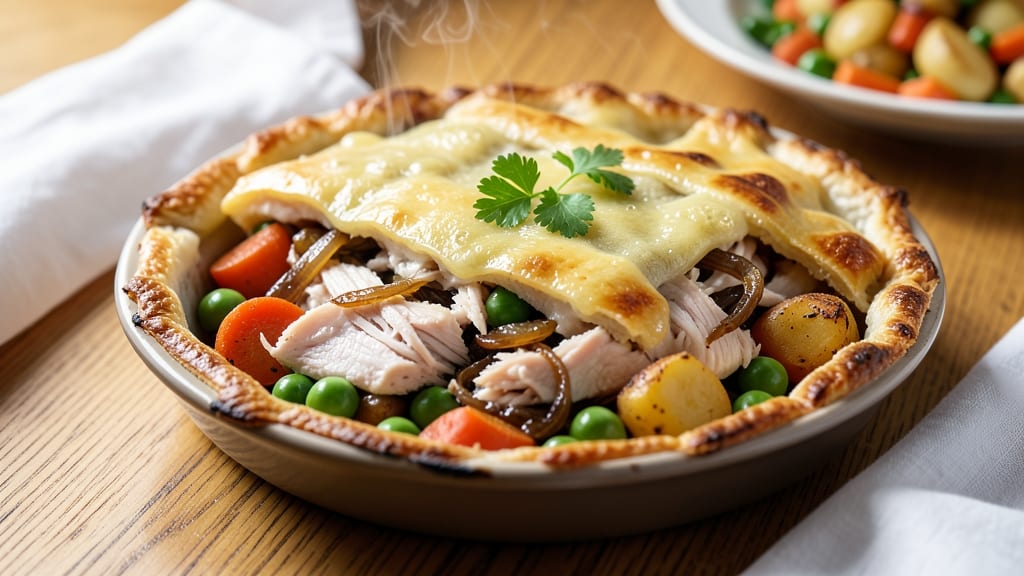
This chicken pot pie recipe with white wine transforms comfort food into something sophisticated—where tender chicken, creamy vegetables, and a golden crust come together in perfect harmony. 💛 The secret lies in the herbed white wine gravy, which adds depth and richness without overpowering the delicate flavors of the filling.
I developed this recipe during a chilly Portland winter when I needed something hearty yet elegant for dinner guests.
The beauty of this recipe is its balance: a flaky homemade crust encases a velvety filling of chicken, carrots, peas, and potatoes, all bathed in that luxurious white wine gravy. The crust gets perfectly golden and crispy, while the filling stays tender and flavorful.
What makes it special is how the wine not only enhances the sauce but also pairs beautifully with the savory filling, creating a dish that feels both comforting and refined.
By the time it comes out of the oven, you’ll have a pot pie that looks as impressive as it tastes—golden, bubbling, and ready to be sliced into generous portions. The wine gravy ties everything together, adding a subtle tang that elevates each bite.
This is the kind of dish that feels like a hug on a cold day, but with a touch of sophistication.
Serve it with a simple green salad or crusty bread to soak up every last drop of that rich gravy. Pair it with a crisp Sauvignon Blanc or a buttery Chardonnay for the perfect dining experience. Let’s get cooking!
Ingredients for chicken pot pie recipe white wine
Elevate classic pot pie with white wine's sophisticated touch—where golden crust meets velvety filling.
| Ingredient | Amount | Notes |
|---|---|---|
| Boneless, Skinless Chicken Breast 🍗 | 1 ½ lb | Cut into bite-sized pieces |
| Unsalted Butter 🧈 | ½ cup | Cold and cubed for crust |
| Carrots 🥕 | 1 ½ lb | Peeled, sliced into rounds |
| Fresh Peas 🌿 | 1 cup | Frozen works perfectly |
| Russet Potatoes 🥔 | 2 lb | Peeled, diced small |
| Shallots 🧅 | 3 whole | Minced for gravy |
| Garlic Cloves 🧄 | 4 cloves | Minced for flavor |
| Dry White Wine 🍷 | 1 cup | Sauvignon Blanc preferred |
| Chicken Broth 💧 | 1 ½ cups | Low-sodium preferred |
| Heavy Cream 🥛 | ½ cup | Full-fat for richness |
| All-Purpose Flour 🌾 | 2 ½ cups | Plus 1 tbsp for dusting |
| Ice Water 💧 | ½ cup | For dough elasticity |
| Fresh Thyme Leaves 🌿 | 1 tbsp | Or 1 tsp dried thyme |
| Fresh Parsley 🌿 | ¼ cup | Chopped for garnish |
| Salt 🧂 | 1 ½ tsp | Kosher or sea salt |
The white wine is non-negotiable here. Sauvignon Blanc or Chardonnay from a good bottle—none of that boxed stuff. I grab mine from Trader Joe's when I need a quick bottle, but for special occasions, Willamette Valley wines take it to the next level. The shallots and garlic are your flavor foundation—don't skip the mincing, as this releases more aroma. For the potatoes, Yukon Golds would be ideal if you're feeling fancy, but russets work perfectly for this filling. The butter for the crust? Plugrá or Land O'Lakes work great—just make sure it's cold when you cube it for that perfect flaky texture.
No white wine on hand? Chicken broth with 1 tbsp lemon juice mimics the acidity, though it won't have the same depth. Fresh thyme is ideal, but dried works at one-third the amount. If you're using frozen peas, no need to thaw—they'll cook right in the filling. For the crust, King Arthur flour gives the best results, but any all-purpose will do. The ice water is crucial for that tender, elastic dough—don't skip it, even if it seems like an extra step. And if you're worried about the crust getting soggy, bake it separately for 5 minutes before adding the filling.
This pie reheats beautifully—just cover with foil and bake at 375°F for 20 minutes. The filling actually tastes better the next day as the flavors meld. Store leftovers in the fridge for 4 days or freeze for 3 months. I always make a double batch because it disappears fast. For the crust scraps, save them in a bag in the freezer—they're perfect for topping soups later. And if you're making this ahead, assemble it the night before and refrigerate—it'll be even more flavorful when you bake it.
Why You'll Love This Recipe
- One-Pot Magic: I swear, this recipe is the kind of meal where you dump everything in one pot and walk away. The chicken shreds itself, the potatoes soak up the white wine butter like a dream, and those peas? They stay bright and sweet—no wilting here.
- Wine-Infused Richness: That splash of white wine isn’t just for show—it cuts through the richness of the butter and chicken, leaving behind a bright, savory depth. The carrots caramelize just enough to add natural sweetness, and the creamy mashed potato topping ties it all together like a hug.
- Weeknight to Weekend: Between us, this is my go-to for both lazy Tuesdays and Sunday dinners. The leftovers reheat beautifully, and honestly? The kids (and my partner) don’t even notice when I serve it in mugs for a quick lunch. It’s that good.
- Budget-Friendly Comfort: You’re using simple, affordable ingredients—potatoes, carrots, chicken—that stretch across multiple meals. I’ll be real: the first time I made this, I doubled the recipe and had enough for four lunches. No waste, all flavor.
Step-by-step instructions for chicken pot pie with white wine gravy
This method delivers tender chicken, rich wine gravy, and a flaky crust every time.
🍳 Step 1: Sear and Braise the Chicken
Heat a large Dutch oven over medium-high heat. Add 1.5 lb boneless, skinless chicken breast cut into bite-sized pieces and cook for 5-6 minutes until the edges are lightly browned. This creates flavorful fond at the bottom of the pot.
Remove the chicken and set aside. Add 0.5 cup unsalted butter to the pot and melt over medium heat. Toss in 1.5 lb peeled, sliced carrots and 2 lb peeled, diced russet potatoes. Cook for 3-4 minutes until the vegetables begin to soften slightly.
🍳 Step 2: Build the Herbed Wine Gravy
Pour in 1 cup dry white wine and scrape up any browned bits from the bottom of the pot. Add 1.5 cups low-sodium chicken broth, 1 tbsp fresh thyme leaves, and 1.5 tsp salt. Bring to a simmer, then return the chicken to the pot.
Cover and reduce heat to low. Simmer for 15-20 minutes until the chicken is cooked through and the vegetables are tender but not mushy. Stir occasionally to prevent sticking. The liquid should reduce slightly but still coat the vegetables.
🍳 Step 3: Finish with Cream and Fresh Peas
Remove the pot from heat and stir in 1 cup fresh peas (frozen works perfectly) and 0.5 cup heavy cream. Return to low heat and simmer for 3-4 minutes until the peas are heated through and the gravy thickens slightly. Taste and adjust seasoning with additional salt if needed.
Remove from heat and stir in 0.25 cup chopped fresh parsley. Let the filling cool for 10 minutes while you prepare the crust. The filling should be thick enough to hold its shape when spooned but still slightly saucy.
👨🍳 Step 4: Prepare the Flaky Crust
In a large bowl, combine 2.5 cups all-purpose flour and 1 tbsp additional flour for dusting. Cut in 0.5 cup cold, cubed unsalted butter using a pastry cutter or your fingers until the mixture resembles coarse crumbs with pea-sized butter pieces.
Add 0.5 cup ice water and mix gently with a fork until the dough just comes together. Avoid overmixing. Shape the dough into a disk, wrap in plastic, and chill for 20 minutes. This resting period helps develop gluten for a flaky crust.
🥘 Step 5: Assemble and Bake
Preheat your oven to 375°F. Roll out the chilled dough on a lightly floured surface to fit your Dutch oven with about ½-inch overhang. Carefully transfer the filling to the oven-safe dish, then drape the dough over the top, tucking in the edges.
Cut a few small slits in the center of the dough to allow steam to escape. Brush the top with a bit of milk or water if desired for extra browning. Bake for 30-35 minutes until the crust is golden brown and the filling is bubbling through the slits.
⏰ Step 6: Rest and Serve
Remove from the oven and let the pot pie rest for 10 minutes before serving. This resting period allows the filling to set slightly and makes it easier to slice. Serve warm with a side of crusty bread or a simple green salad.
The wine gravy should be rich and flavorful, with tender chicken and perfectly cooked vegetables. Each bite should deliver a perfect balance of savory, herby, and slightly sweet flavors from the white wine and vegetables.
Pro Tips For Making Chicken Pot Pie Recipe White Wine
- Sear Chicken First: Hit the chicken with a quick sear in butter before adding liquid—just 2-3 minutes per side until golden. I learned this the hard way when my pot pie filling turned out bland; browning the chicken adds depth that simmering alone can’t match.
- Parboil Potatoes Separately: Boil the russets for 5 minutes before adding them to the pot pie—skin on, cut into even chunks. This keeps them from turning to mush later, and the skins stay intact for texture. (Yes, even if you’re impatient like me.)
- Salt the Peas Last: Hold off on salting the peas until the very end, or they’ll turn soggy from their own water. Fresh peas release moisture fast—wait until the filling’s thickened, then stir them in with a pinch of salt and a squeeze of lemon.
- Deglaze with Wine First: After searing the chicken, pour in the white wine immediately and let it reduce by half before adding broth. This concentrates the flavor and cuts the cooking time later—no more waiting for the alcohol to burn off. (Your future self will notice the difference.)
Common mistakes when making this dish
Overcooking the Chicken
I’ve ruined more pot pies than I’d like to admit by letting the chicken overcook in the filling. The key is removing it from the pot once it reaches 165°F internal temperature—any longer, and it turns dry and stringy.
I set a timer for 5 minutes after the chicken returns to the pot during the simmering phase to ensure it doesn’t overcook while the veggies finish. 💡
Skipping the Wine Reduction
Don’t pour that white wine in and immediately add the broth—this is where the magic happens! After adding the wine, let it simmer for 2-3 minutes to reduce slightly and concentrate the flavors.
This step builds depth in the gravy and prevents a thin, watery sauce. I swear by this technique—it’s what makes the difference between a good pot pie and a great one.
Neglecting the Crust Pre-Bake
If you’re worried about a soggy bottom (and trust me, I’ve been there), don’t skip pre-baking the crust for 5 minutes before adding the filling. This creates a barrier that keeps the crust crispy.
I learned this the hard way when my first attempt turned into a sad, soggy mess. Pro tip: Use a pie bird or crumpled foil in the center to prevent steam buildup during baking.
Overmixing the Dough
The crust is all about layers, not toughness! Once you add the ice water to the flour and butter, mix just until the dough comes together—overworking it develops gluten, which makes the crust tough instead of flaky.
I promise, it’s okay if it looks shaggy. After chilling, the dough will hold together beautifully. 🥖
Using Low-Quality Wine
This isn’t the time for that $5 boxed wine—use something decent! A dry white wine like Sauvignon Blanc or Chardonnay adds complexity to the gravy. I’ve used Trader Joe’s or local Willamette Valley wines, and the difference is night and day.
If you’re worried about cost, even a mid-range bottle makes a difference—just avoid anything overly sweet or oaky.
Underestimating Resting Time
Patience is key here! Letting the pie rest for 10 minutes after baking is crucial—it allows the filling to set and the juices to redistribute. Skipping this step results in runny filling and a messy slice.
I’ve seen people cut into it immediately, and it’s always a disaster. Trust the process, and you’ll be rewarded with clean, elegant slices every time. ✨
Nutrition facts
Frequently asked questions
Can I use chicken thighs instead of breasts in this recipe?
Chicken thighs add incredible richness and stay juicier than breasts. Use bone-in, skin-on thighs for maximum flavor, but remove the skin before adding to the pot. Increase simmering time to 20-25 minutes to ensure they're fully cooked through.
What's the best white wine to use if I don't have Sauvignon Blanc?
Any dry white wine works—Pinot Grigio or Chardonnay are great alternatives. Avoid sweet wines like Riesling or Moscato, as they'll make the gravy taste cloying. A local Oregon Pinot Grigio from New Seasons Market would be perfect for this Pacific Northwest recipe!
How can I make this gluten-free?
Replace the all-purpose flour with a 1:1 gluten-free flour blend (like Bob's Red Mill) and use gluten-free oats if needed for the crust. For the gravy, use a cornstarch slurry instead of flour to thicken. The crust will be slightly different but still delicious—just expect it to be more delicate.
Can I prepare this ahead of time?
This pie actually tastes better the next day! Assemble it completely (including the crust) and refrigerate overnight. Bake straight from the fridge, adding 5-10 extra minutes to the baking time. For freezing, bake the pie, cool completely, wrap tightly, and freeze for up to 3 months. Reheat in a 350°F oven for 20 minutes.
What's the secret to a flaky crust without a food processor?
Use your fingers to work the cold butter into the flour until you get pea-sized pieces—no food processor needed! The key is keeping everything cold and working quickly. Chill the dough for 20 minutes before rolling, and don't overwork it. The ice water is crucial for that tender, flaky texture.