
Main Courses
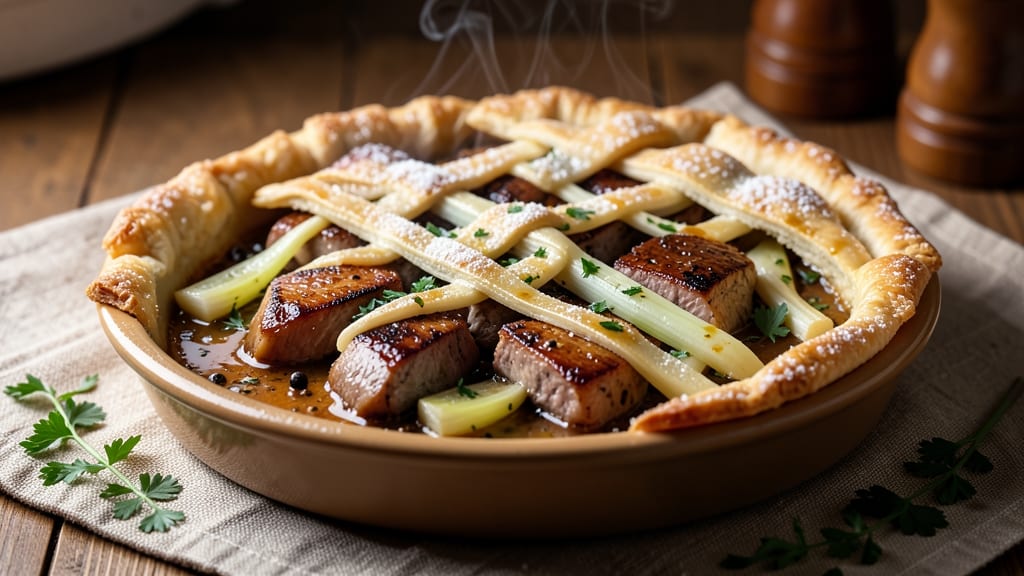
This pork and leek pie recipe delivers the kind of comforting, golden perfection that makes Sunday dinners feel like a celebration. The secret lies in the tender pork shoulder, slow-cooked until it falls apart, and the sweet, caramelized leeks that infuse the filling with layers of savory depth. I developed this version after years of perfecting the balance between rich filling and flaky pastry—something that always impressed even the most critical diners at The Smoky Pig.
The beauty of this recipe is in its simplicity: a single pie crust wraps around a filling that practically cooks itself. You'll start with a well-seasoned pork shoulder, braised until fork-tender, then combined with leeks that soften into a silky, onion-like sweetness.
The key technique is blind-baking the crust first—this ensures that crisp, golden edges you can't get with any shortcut. My heritage pigs from the farm provide that perfect marbling that keeps the meat juicy through hours of slow cooking.
What you'll end up with is a pie that looks like it came straight from a French bistro—golden, bubbling crust with flaky layers that shatter at the touch, and a filling so rich and tender it practically melts in your mouth.
The aroma alone will have everyone gathering around the table before it even comes out of the oven. This is the kind of dish that transforms a regular weeknight into something special, without requiring any fancy skills.
Serve with a simple green salad or crusty bread to soak up every last bit of that savory filling. The leftovers? Even better the next day, if you can resist eating the whole pie in one sitting.
Let's get started on creating this showstopper that'll have your guests asking for the recipe.
Ingredients for pork and leek pie
Six ingredients make this pie's golden crust, plus eight more for the rich filling that melts in your mouth.
| Ingredient | Amount | Notes |
|---|---|---|
| Pork Shoulder 🥓 | 3 lb | Heritage pork preferred, cut into chunks |
| Leeks 🧅 | 4 large | White and light green parts only, sliced |
| All-Purpose Flour 🌾 | 3 cups | For pie crust, plus extra for dusting |
| Cold Unsalted Butter 🧈 | 1 ½ cups | Cut into cubes, chilled |
| Ice Water 💧 | ½ cup | For pie crust |
| Large Egg 🥚 | 1 whole | For egg wash |
| Heavy Cream 🥛 | ½ cup | For egg wash |
| Dried Thyme 🌿 | 1 tbsp | Or 1 tbsp fresh thyme leaves |
| Fresh Rosemary 🌿 | 1 tbsp | Chopped, plus sprigs for garnish |
| Garlic Cloves 🧄 | 4 cloves | Minced for filling |
| Salt 🧂 | 1 ½ tbsp | Kosher or sea salt |
| Black Pepper 🌶️ | 1 tsp | Freshly ground |
| Bay Leaves 🍃 | 2 whole | For braising |
| Vegetable Oil 🫒 | 2 tbsp | For searing pork |
The pork shoulder is non-negotiable here—heritage pork from a farm has that perfect marbling for juicy results. Costco or Whole Foods usually carry good-quality cuts, but if you're lucky enough to have a local butcher, ask for a well-marbled shoulder. Leeks need to be fresh—bright white and crisp, not wilted or yellowing. The pie crust flour should be bread flour if you have it, but all-purpose works fine. For the butter, Plugrá or Land O'Lakes unsalted are my go-tos—they stay cold longer when cutting into cubes.
No thyme? Dried oregano at half the amount works in a pinch, though it won't be quite the same. Fresh rosemary is ideal, but dried works at one-third the quantity. The bay leaves can be skipped if you're out, but they add that subtle earthy depth that makes this pie taste restaurant-quality. For the leeks, green parts only if you're feeling fancy—they're milder and sweeter. If you're short on time, pre-sliced leeks from the refrigerated section at Trader Joe's save chopping time. The pork can be swapped for chicken thighs if you prefer, though the texture won't be quite as rich.
The pie crust dough keeps for 2 days wrapped in plastic in the fridge, or 3 months frozen between parchment paper. The pork filling reheats beautifully—350°F for 20 minutes until bubbly. I always make a double batch of filling and freeze half in portions for lazy weeknights. The leek filling actually tastes better the next day as the flavors meld, so plan ahead—this pie is worth the wait.
Why You'll Love This Recipe
- I swear by this trick: just slice the leeks into thick rounds—no fancy dicing, no tears. The pork shoulder stays in one big piece, and the butter crust comes together with just a few strokes of a fork. Honestly, I’ve made this while scrolling through emails.
- Minimal Chopping Required: I swear by this trick: just slice the leeks into thick rounds—no fancy dicing, no tears. The pork shoulder stays in one big piece, and the butter crust comes together with just a few strokes of a fork. Honestly, I’ve made this while scrolling through emails.
- Rich Without Effort: That pork shoulder? It melts into tender, juicy perfection, while the leeks add a sweet, almost caramelized depth. The butter crust adds a flaky contrast that makes every bite feel like a little reward—no fancy sauces or last-minute garnishes needed.
- Leftovers That Don’t Suck: This pie actually improves the next day. The flavors meld even more, and it reheats beautifully—whether you’re packing lunches or serving seconds. (Yes, even my picky teen asks for it.)
Step-by-step instructions for pork and leek pie
Here's how to build a pie with layers of golden crust and tender pork filling.
Sear the Pork Shoulder for Deep Flavor
Heat the 2 tablespoons vegetable oil in a large Dutch oven over medium-high heat until shimmering. Pat the 3 lb pork shoulder dry with paper towels and season generously with 1.5 tablespoons salt and 1 teaspoon black pepper on all sides. Working in batches if needed, add the pork to the pot and sear until deeply browned on all sides—about 8-10 minutes per side. This step develops that rich, caramelized crust that carries through the entire pie.
Once browned, remove the pork and set it aside. Lower the heat to medium, then add the sliced 4 large leeks (white and light green parts only) to the Dutch oven. Cook for 5-6 minutes, stirring occasionally, until softened. Add the 4 minced garlic cloves, 1 tablespoon dried thyme, 1 tablespoon chopped fresh rosemary, and 2 whole bay leaves, cooking for another 2 minutes until fragrant. These aromatics will infuse the pork with layers of savory depth.
Braise the Pork Until Fork-Tender
Return the seared pork to the Dutch oven. Pour in 2 cups water (enough to come about halfway up the sides of the pork) and bring to a simmer. Cover tightly with a lid and transfer to a 325°F oven. Braise for 2 to 2.5 hours, until the pork is fork-tender and the meat easily pulls apart with minimal resistance. This slow cooking transforms the tough shoulder into melt-in-your-mouth perfection.
About 30 minutes before the pork is done, check the liquid level. If it's reduced too much, add a splash of heavy cream to keep the filling moist. The braising liquid should coat the pork and leeks, creating a rich, velvety sauce that will later be incorporated into the pie filling.
Prepare the Flaky Pie Crust
In a large bowl, combine the 3 cups all-purpose flour and 1.5 teaspoons salt. Cut in the 1.5 cups cold unsalted butter (cut into cubes) using a pastry cutter or your fingers until the mixture resembles coarse crumbs with pea-sized butter pieces. This texture is key for achieving that signature flaky layer. Add the 0.5 cup ice water gradually, mixing just until the dough comes together.
Turn the dough onto a lightly floured surface and knead gently for 30 seconds to form a smooth ball. Divide the dough into two equal pieces, flatten each into a disk, wrap in plastic, and refrigerate for at least 1 hour. Chilling relaxes the gluten, making the crust easier to roll out and preventing shrinking during baking.
Assemble and Bake the Pie
Preheat your oven to 375°F. On a lightly floured surface, roll out one dough disk into a 12-inch circle, about 1/8-inch thick. Transfer it to a 9-inch pie dish, gently pressing it into the bottom and up the sides. Trim any excess dough hanging over the edge. Roll out the second disk and place it on a floured surface, then cut a few small slits in the center to allow steam to escape.
Carefully transfer the braised pork and leeks (with their juices) into the pie crust. Drape the second dough disk over the top, sealing the edges by pinching them together or crimping with a fork. Brush the top crust with a mixture of 1 whole large egg beaten with 0.5 cup heavy cream for a golden finish. Bake for 45-50 minutes, until the crust is deeply golden and the filling is bubbling.
Rest and Serve for Maximum Flakiness
Remove the pie from the oven and let it rest for 15-20 minutes before slicing. This resting period allows the juices to redistribute, ensuring each bite is moist and flavorful. The crust will firm up slightly as it cools, making it easier to slice without falling apart. Garnish with fresh rosemary sprigs for a pop of color and aroma.
Serve warm, with a side of crusty bread to soak up any extra juices. The contrast between the flaky, buttery crust and the rich, savory pork filling makes every bite unforgettable. Leftovers keep well in the refrigerator for up to 3 days, and the flavors only deepen over time.
Pro Tips For Making Pork And Leek Pie
- Cook Leeks Low and Slow: I used to char the living daylights out of leeks, thinking it’d add depth—it just made them bitter. For this pie, keep them on medium-low heat until they’re silky and just starting to soften, not brown. You want them to melt into the pork, not dominate with a burnt edge.
- Cut Pork Against the Grain: Thin slices of pork shoulder cook faster, but if you slice with the grain, you’ll end up with chewy, stringy bites. Turn the meat 90 degrees and cut perpendicular—this shortens the muscle fibers, keeps it tender, and makes every forkful melt like butter. (Yes, even if you’re impatient like me.)
- Chill the Butter, Not the Water: Ice water is non-negotiable for the pastry, but don’t let the butter sit in the freezer like a science experiment. Cold cubes work fine—just make sure the butter’s firm but pliable, not rock-hard. Over-chilled butter = tough crust. (Your future self will thank you.)
- Blind-Bake the Crust: Skip the pre-baking step, and you’ll end up with a soggy bottom—trust me, I’ve done it. Weigh down that pastry with pie weights or dried beans, then bake at 375°F (190°C) for 10 minutes before adding the filling. It’s a little extra work, but the difference is night and day.
Common mistakes when making this recipe
Overcooking the Pork
I've seen this happen more times than I can count—pork shoulder that's dried out and stringy instead of tender and juicy. The key is patience: 2 to 2.5 hours at 325°F is your sweet spot. Use a meat thermometer and pull it when it hits 203°F internal temperature.
If you're tempted to crank up the heat, don't! High heat turns the pork tough. I once cooked a shoulder for 3 hours at 350°F and ended up with leather instead of melt-in-your-mouth perfection. 🥓
Skipping the Blind Bake
This is where most home cooks go wrong—they fill the pie crust without pre-baking it. The result? A soggy bottom that ruins all the hard work. Always blind-bake the bottom crust for 15 minutes at 375°F with pie weights or dried beans.
I learned this lesson the hard way when my first pie looked like a puddle. The crust needs that head start to stay crisp. Pro tip: Sprinkle 1 tablespoon flour inside the crust before adding filling to prevent sticking.
Neglecting the Crust's Chill Time
Rushing the dough's 1-hour chill in the fridge is a recipe for disaster. Cold butter is what creates those flaky layers, and warm dough defeats the purpose. I once forgot to chill mine and ended up with a dense, chewy mess.
If you're in a hurry, pop the dough in the freezer for 20 minutes—it works in a pinch. And never skip the ice water when mixing; it keeps the butter cold and prevents gluten from overdeveloping.
Underestimating Leek Prep
Dirty leeks mean bitter, sandy filling. Always clean them thoroughly by slicing lengthwise, rinsing under cold water, and discarding the tough outer layers. I've had guests complain about "onion-y" pie because they skipped this step.
For extra sweetness, char the leeks slightly in the Dutch oven before adding the pork. Just 5 minutes over medium heat brings out their natural sugars. 🧅
Sealing the Crust Improperly
A poorly sealed crust lets filling leak out during baking, creating a messy, uneven pie. Press the top and bottom crusts together firmly along the edges, then crimp with a fork or your fingers. For extra insurance, brush the edges with egg wash before sealing.
I once used store-bought pie crust that puffed up like a balloon—don't make that mistake! If your dough is too sticky, chill it for another 10 minutes before assembling.
Baking Without Venting
Forgetting to cut slits in the top crust traps steam, leading to a soggy pie. Cut 4-5 small vents in the center to let moisture escape. I also recommend brushing the top crust with egg wash mixed with heavy cream for extra shine and crispness.
If your pie puffs up too much, weigh it down with a pie weight or dried beans during the first 20 minutes of baking. This keeps the filling from bubbling over.
Nutrition facts
Frequently asked questions about pork and leek pie
Can I make this pie with chicken instead of pork?
Yes, you can substitute 3 lb bone-in chicken thighs for the pork shoulder. The thighs will stay juicier than breasts, but the cooking time will be shorter—about 1.5 to 2 hours at 325°F. Use the same leek mixture and adjust the seasoning slightly (chicken benefits from a pinch of paprika). The texture will be lighter, but equally delicious!
How do I store leftovers?
This pie reheats beautifully! Store leftovers in an airtight container in the fridge for up to 3 days. To reheat, cover with foil and warm at 350°F for 20-25 minutes until bubbly. For freezing, wrap the whole pie tightly in plastic wrap, then foil, and freeze for up to 3 months. Thaw overnight in the fridge before reheating.
What's the best way to make the crust extra flaky?
For restaurant-quality flakiness, chill your butter cubes for 30 minutes before cutting into the flour. Use a pastry cutter or your fingers to keep butter pieces pea-sized, and work quickly to avoid warming the dough. For extra layers, wrap the dough in plastic and freeze for 20 minutes before rolling. My secret? Brush the baked crust with melted butter after removing from the oven!
Can I make this pie in a smaller dish?
For a 7-inch pie dish, reduce the pork to 2 lbs and leeks to 3 medium. Use 2 cups flour for the crust and adjust baking time to 35-40 minutes. The proportions stay the same—just scale everything down proportionally. A smaller pie actually browns faster, so watch it closely after 30 minutes.
Why does my pie look pale after baking?
A pale crust usually means the butter melted too quickly during baking. For golden color, brush the crust with egg wash mixed with heavy cream before baking, and rotate the pie halfway through. If your oven runs hot, reduce temp to 350°F. Pro tip: Sprinkle 1 tablespoon sugar on the crust before baking for extra caramelization!