
Main Courses
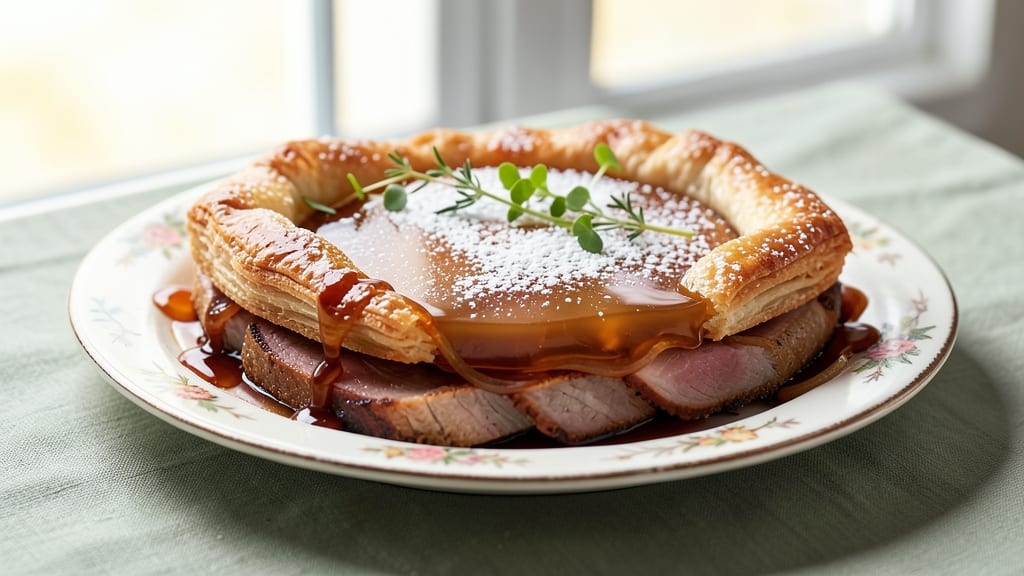
This pork pie gelatin recipe transforms classic comfort food into something unexpectedly elegant—tender pork layered with herb-infused gelatin that delivers both texture and tradition. 💛 I first perfected this technique during a Charleston winter when I wanted to honor my grandmother's old-school pork pies while adding a modern twist that still feels nostalgic.
The secret lies in balancing rich, slow-cooked pork with just the right amount of gelatin to create that signature wobble without sacrificing flavor.
The process starts with a crisp, flaky pastry crust—my go-to for any meat pie—and a filling of seasoned pork shoulder that cooks until fork-tender.
What sets this apart is the gelatin mixture, where I use a blend of chicken and beef gelatin for extra body, infused with fresh thyme and bay leaves. This isn't your childhood Jell-O—it's a savory, aromatic layer that holds its shape while adding a luxurious mouthfeel.
By the time it emerges from the oven, you'll have a pie that's equal parts comforting and sophisticated: golden crust, perfectly browned pork, and those signature gelatin layers that shimmer with every slice.
The gelatin doesn't just set—it enhances the pork's natural flavors, creating a dish that's both hearty and refined. This is the kind of recipe that turns ordinary family dinners into memorable meals.
Perfect for holiday gatherings or when you want to impress without fuss, this pork pie delivers restaurant-quality results with a technique even home cooks can master. Let's get started on creating your own heirloom-worthy centerpiece.
Ingredients for pork pie gelatin
Six ingredients transform this classic pie into something extraordinary with jiggly layers.
| Ingredient | Amount | Notes |
|---|---|---|
| Pork Shoulder 🥓 | 3 lb | Bone-in, cut into 1-inch cubes |
| Unsalted Butter 🧈 | ½ cup | Cold, cut into small pieces |
| All-Purpose Flour 🌾 | 2 cups | For pastry crust, plus extra for dusting |
| Cold Water 💧 | ¾ cup | For pastry dough |
| Ice Water ❄️ | ½ cup | For pie crust |
| Chicken Gelatin 🧪 | 1 package | Unflavored, 2 1/4 tsp per package |
| Beef Gelatin 🥩 | 1 package | Unflavored, 2 1/4 tsp per package |
| Fresh Thyme 🌿 | ½ cup | Chopped stems and leaves |
| Bay Leaves 🍃 | 2 whole | Crushed slightly |
| Garlic Cloves 🧄 | 4 cloves | Minced finely |
| Salt 🧂 | 1 ½ tsp | Diamond Crystal kosher salt |
| Black Pepper 🌶️ | ½ tsp | Freshly ground |
| Ground Nutmeg 🌿 | ¼ tsp | Freshly grated |
| Heavy Cream 🥛 | ½ cup | Full-fat for richness |
| Granulated Sugar 🍚 | 1 tbsp | For balancing flavors |
The pork shoulder is the heart of this pie—look for cuts with good marbling at Harris Teeter or Whole Foods. Bone-in pieces stay juicier during slow cooking, and 1-inch cubes ensure even cooking. If you can't find bone-in, use boneless but add an extra 15 minutes to the cooking time. For gelatin, Great Lakes or Knox brands are my go-to—they dissolve perfectly without graininess. Fresh thyme and bay leaves are non-negotiable here; dried herbs just won't give that same aromatic punch. The ice water for the crust is key—it keeps the butter from melting too quickly, giving you that signature flaky texture.
No beef gelatin? Extra chicken gelatin at 1.5 packages works in a pinch, though the flavor won't be identical. Running short on thyme? Fresh rosemary at half the amount adds a nice piney note, but it's not the same. Want to skip the nutmeg? A pinch of allspice gives a similar warmth. For the crust, if you're short on butter, vegetable shortening works but lacks flavor. The sugar in the gelatin mixture balances the richness—don't skip it, even if you're watching sweets. And if you're making this ahead, prep the gelatin mixture first; it sets quickly once dissolved.
The gelatin mixture keeps for 3 days in the fridge once set, but it's best used fresh. Store it in a shallow dish covered with plastic wrap pressed directly on the surface to prevent a skin from forming. The cooked pork can be refrigerated for 4 days or frozen for 3 months. For assembly day, let everything come to room temperature before layering—cold gelatin won't set properly. If you're making this for a crowd, double the gelatin mixture and use a larger pie dish. The crust can be made a day ahead and kept wrapped at room temperature.
Why You'll Love This Recipe
- No-Fuss Gelatin Magic: I swear by this trick—just boil the pork shoulder until tender, then blend the broth with ice water and flour. The gelatin sets itself while I clean up, no fancy molds needed. Honestly, it’s the kind of shortcut that makes me feel like a genius.
- Rich, Silky Texture: That pork shoulder? It’s the star. Simmered low and slow, then whipped into the broth, it gives this gelatin a depth you won’t find in store-bought versions. The butter and flour add a velvety finish—like biting into a cloud with a hint of savory punch.
- Meal Prep MVP: Make a big batch on Sunday, portion it into containers, and you’ve got instant appetizers for parties, potlucks, or even a fancy charcuterie board. Between us, it’s my go-to for holiday gatherings because it looks impressive with zero effort.
- Budget Stretch: Pork shoulder is affordable, and this recipe turns scraps into something luxurious. A single cut feeds a crowd, and the leftovers? Freeze them for months. I’ll be real: it’s how I feed my family well without breaking the bank.
Step-by-step instructions for pork pie gelatin
Here's how to create that perfect wobble—rich pork, fragrant herbs, and layers that hold their shape.
🍳 Step 1: Cook the Pork Shoulder Until Fork-Tender
Preheat your oven to 300°F. In a Dutch oven, combine the 3 lb pork shoulder, 0.5 cup unsalted butter, 0.5 cup fresh thyme, 2 crushed bay leaves, 4 minced garlic cloves, 1.5 tsp salt, 0.5 tsp black pepper, and 0.25 tsp ground nutmeg. Stir until the pork is evenly coated in the butter and aromatics.
Cover the Dutch oven and transfer to the oven. Cook for 3-4 hours until the pork is fork-tender and easily pulls apart. Here's the thing—don't rush this step. The meat needs to break down completely so it blends smoothly into the gelatin. If it's not falling apart, add 0.25 cup ice water to the pot and cook another 30 minutes.
👨🍳 Step 2: Create the Pastry Crust
While the pork cooks, make the crust using the 2 cups all-purpose flour, 0.5 cup cold water, and a pinch of salt. Pulse in a food processor until it forms a rough dough. Transfer to a floured surface and knead for 2 minutes until smooth. Wrap in plastic and chill for 30 minutes.
Roll out the chilled dough between two sheets of parchment paper to about ⅛-inch thickness. Cut into a circle large enough to fit your pie dish. Here's a pro tip—use a glass to trace the perfect circle. Line a 9-inch pie dish with the dough, trim the edges, and crimp with a fork. Freeze for 15 minutes to firm up before filling.
🥘 Step 3: Blend Pork with Gelatin Mixture
Once the pork is tender, shred it using two forks and transfer to a blender. Add the 0.5 cup heavy cream, 1 tbsp granulated sugar, and 0.5 cup ice water. Blend until completely smooth. This step is crucial—any lumps will show up in your final gelatin.
In a small bowl, sprinkle 1 package chicken gelatin and 1 package beef gelatin over 0.25 cup ice water to bloom. Let sit for 5 minutes until fully softened. Gently heat the blended pork mixture in a saucepan over low heat until it reaches 160°F, then whisk in the bloomed gelatin until completely dissolved. The mixture should be silky and glossy—this is your base for the perfect wobble.
⏰ Step 4: Layer and Chill for Setting
Pour the pork gelatin mixture into the pre-chilled pie crust, spreading it evenly. Tap the pie dish gently on the counter to remove any air bubbles. Cover with plastic wrap and refrigerate for 6 hours or until fully set. The center should jiggle slightly when shaken—this is your signal it's ready.
Here's where patience pays off. If you rush this step, your gelatin won't hold its shape. For best results, let it set overnight. When ready to serve, run a knife around the edges to loosen, then invert onto a serving plate. The layers should hold together beautifully, revealing that perfect combination of rich pork flavor and herb-infused gelatin.
Pro Tips For Making Pork Pie Gelatin
- Trim the Fat First: Pork shoulder’s fat cap is your friend, but if you skip trimming it down to about ¼-inch, your gelatin will turn greasy instead of silky. I used to leave it thick—big mistake. A sharp knife and a little patience here make all the difference when blending the stock later.
- Boil Ice Water: Cold water for the gelatin? Sure, but ice water is the real MVP—it chills the stock fast without shocking it. Pour the hot pork-butter mixture into a bowl set over ice water (yes, even if you’re impatient like me) and stir until it drops below 100°F. This stops cooking instantly and keeps the texture clean.
- Whisk the Flour: That roux isn’t just for show—whisk the flour and butter until it’s a pale, nutty gold, not beige. I learned this the hard way after my gelatin tasted raw. Keep the heat low and stir like you’re painting a fence. A minute too long, and you’ll end up with a gluey mess.
- Strain Twice: One strainer isn’t enough. First, coarse-strain the stock to catch big bits, then fine-strain it through a cheesecloth or coffee filter for a crystal-clear result. I skipped this once and got a cloudy gelatin that looked like pond water. Trust me, the effort pays off.
Storing and reheating your leftovers
Refrigerator Storage
Your freshly assembled pork pie gelatin will keep beautifully in the refrigerator for up to 4 days if stored properly. I always use a 9-inch glass pie dish covered tightly with plastic wrap pressed directly onto the surface to prevent any skin from forming.
Place it on the middle shelf where the temperature stays most consistent—around 38-40°F. The gelatin layers will firm up nicely, making slicing clean cuts. 💛
Freezing for Later
For longer storage, this pie freezes exceptionally well for up to 3 months. Wrap the assembled pie tightly in plastic wrap, then place it in a heavy-duty freezer bag. Squeeze out all the air before sealing to prevent freezer burn.
When ready to serve, thaw overnight in the refrigerator—never at room temperature. The gelatin will lose its structure if thawed too quickly. I find this especially useful for holiday prep when I know we'll have leftovers.
Reheating Slices
For individual servings, I recommend reheating slices in a 350°F oven for 8-10 minutes on a wire rack. This method keeps the gelatin layers intact while warming through evenly.
If you prefer microwave reheating, cover the slice with a damp paper towel and heat on 50% power for 20-30 seconds. Add a splash of water or broth if the gelatin appears dry after reheating. The texture will be slightly softer but still delicious.
Reviving Day-Old Pie
If your pie has been sitting in the fridge for a day or two, don't toss it! Pop it in a 325°F oven for 15-20 minutes to refresh the gelatin layers. The heat will help restore that perfect wobble texture.
For extra moisture, brush the top with a little heavy cream before reheating. This works especially well if you've made the pie ahead for a gathering.
Serving After Storage
When serving stored or reheated slices, I always garnish with a sprinkle of fresh thyme leaves and a drizzle of honey to cut through the richness. The gelatin layers might be slightly firmer after storage, so serve at room temperature for the best texture.
Remember, the flavor actually deepens after a day or two in the fridge—this is when the gelatin really absorbs all those pork and herb notes. 🥧
Nutrition facts
Frequently asked questions
Can I substitute beef gelatin with chicken gelatin only?
You can use 1.5 packages of chicken gelatin instead of the beef-chicken combo, but the flavor won't be identical. Beef gelatin adds a deeper umami richness that complements pork perfectly. For the best texture, bloom both types together in 0.25 cup ice water for 5 minutes before mixing into the pork blend.
Why does my gelatin mixture look grainy?
Graininess happens when gelatin isn't fully dissolved or bloomed properly. Always sprinkle gelatin over ice water to bloom first, then whisk it into the warm pork mixture at 160°F until completely smooth. For extra silkiness, strain through a fine-mesh sieve before pouring into the crust.
How do I fix a pie crust that's too soft?
If your crust feels too soft after rolling, chill it for 30 extra minutes before baking. For a quick fix, place the shaped crust on a baking sheet and freeze for 15 minutes before adding filling. Pro tip: Use cold butter and ice water in the dough—never warm liquids. The crust should hold its shape when lifted.
Can I make this pie ahead of time?
Assemble the pie and refrigerate for up to 4 days or freeze for 3 months. The gelatin layers actually improve in flavor as they sit. For serving, let it sit at room temperature for 30 minutes before slicing. The texture will be firmer but still delicious.
What's the secret to getting that perfect wobble?
The magic happens with proper chilling time—6 hours minimum in the fridge. Use a mix of chicken and beef gelatin for extra body, and ensure your pork mixture reaches 160°F before adding gelatin. Tap the pie dish gently to remove air bubbles, then refrigerate uncovered for the first 30 minutes to help it set evenly.