
Main Courses
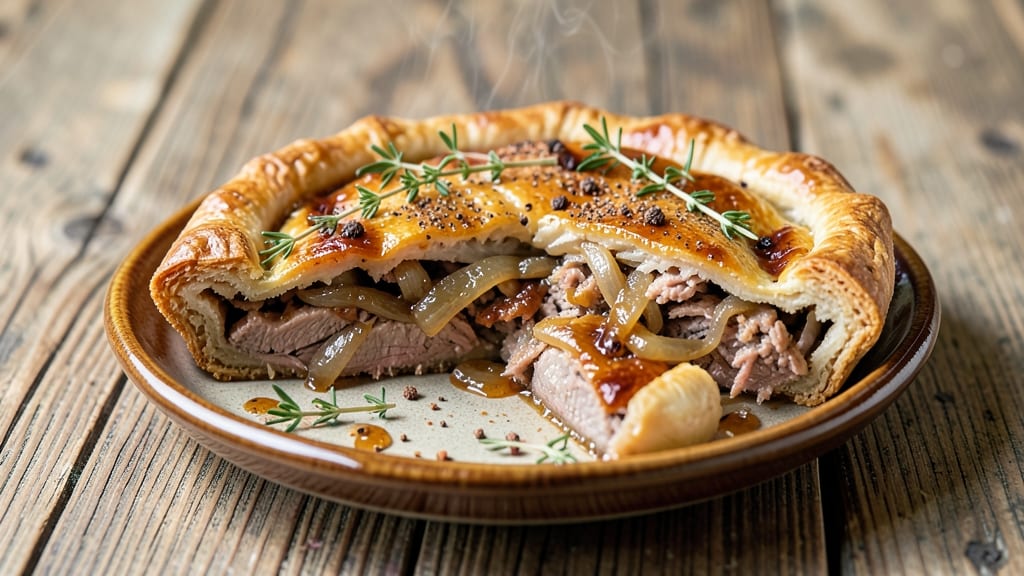
This French Canadian pork pie brings the heart of Quebecois tradition to your kitchen table, where tender pork shoulder meets aromatic spices and a flaky pastry that practically melts in your mouth. 💛 I remember my grandmother's kitchen always smelled of cinnamon and cloves when she made these—it was the centerpiece of every family gathering.
The secret lies in the slow-cooked filling infused with allspice and mustard, wrapped in a golden crust that crisps to perfection.
The recipe starts with a well-seasoned pork mixture—ground pork, onions, and a blend of warm spices like cinnamon and cloves—that simmers until tender and fragrant. Meanwhile, the pastry gets its signature flakiness from a combination of cold butter and flour, rolled out with care.
This isn’t just a pie; it’s a celebration of French Canadian comfort food, where every bite delivers layers of savory meat and aromatic herbs.
What makes this recipe special is how the flavors develop over time. The pork filling becomes rich and deeply seasoned, while the pastry achieves that signature flaky texture that’s both crisp and tender.
The result is a pie that’s hearty enough for a Sunday dinner but simple enough for a weeknight meal. Serve it with tangy mustard or pickles to cut through the richness—just like my grandmother always did.
Once you try this, you’ll understand why it’s a staple in French Canadian cuisine. The combination of slow-cooked pork and aromatic spices creates a dish that’s both comforting and impressive.
Whether you’re feeding a crowd or treating yourself to a homemade meal, this pork pie delivers the kind of satisfaction that only a well-made, traditional recipe can provide.
Ingredients for pork pie recipe french canadian
Six aromatic spices and tender pork shoulder wrapped in a golden, flaky crust.
| Ingredient | Amount | Notes |
|---|---|---|
| Pork Shoulder 🐖 | 3 lb | Bone-in for flavor, cut into chunks |
| Yellow Onion 🧅 | 1 whole | Medium size, diced |
| Garlic Cloves 🧄 | 6 cloves | Fresh, minced |
| Ground Allspice 🌶️ | 1 tsp | For warm, spiced depth |
| Ground Cinnamon 🌿 | 1 tsp | Sweet warmth essential |
| Ground Cloves 🌶️ | ½ tsp | Freshly ground preferred |
| Dijon Mustard 🍯 | 1 tbsp | For tangy balance |
| Fresh Thyme 🌿 | 1 tbsp | Leaves only, chopped |
| Fresh Sage 🌿 | 1 tbsp | Leaves only, chopped |
| Unsalted Butter 🧈 | 1 cup | Cold, cubed for pastry |
| All-Purpose Flour 🌾 | 3 ½ cups | Plus 1 tbsp for rolling |
| Ice Water 💧 | ½ cup | For pastry dough |
| Salt 🧂 | 1 ½ tsp | Kosher or sea salt |
| Black Peppercorns 🌶️ | ½ tsp | Freshly cracked |
| Granulated Sugar 🍚 | 1 tbsp | For pastry sweetness |
The pork shoulder is the heart of this pie—bone-in for extra flavor, but remove any large bones if you're nervous about chewing. Look for a piece with good marbling at Costco or your local butcher shop; they'll often cut it for you. Fresh thyme and sage are worth hunting down at Trader Joe's or the grocery store's produce section—just make sure the leaves are vibrant green. The spices? Penzeys sells pre-ground allspice and cloves if you want to splurge, but the regular grocery store stuff works fine. That said, if your allspice smells like dust, toss it—it loses potency fast.
No Dijon mustard? Yellow mustard at half the amount works in a pinch, though it's not quite the same tang. Short on fresh herbs? Dried thyme at one-third the amount gets you close, but the flavor won't be as bright. The butter for the pastry needs to stay cold—pop it in the freezer for 15 minutes before mixing if your kitchen's warm. For the flour, King Arthur is my go-to (it's got that perfect protein balance), but any all-purpose will do. Pro tip: Use a food processor for the pastry—it keeps the butter pieces small and even, which is key for that signature flakiness.
This pie tastes even better the next day, so make it ahead if you can. Wrap the assembled (unbaked) pie in plastic and refrigerate for up to 24 hours—the flavors meld beautifully. Once baked, let it cool completely before slicing (trust me on this). It keeps for 3 days in the fridge, wrapped tightly. For leftovers, reheat in a 350°F oven for 15 minutes—just cover with foil to keep it moist. Freezing? Wrap individual slices in parchment and freeze for up to 3 months—perfect for quick meals.
Why You'll Love This Recipe
- Pork Shoulder Magic: I swear by this cut—it’s forgiving, flavorful, and turns tender with almost no effort. No need to fuss with expensive steaks; just rub it down with cinnamon and allspice, and let the slow cook do the work.
- Spice Kiss: That warm cinnamon and allspice blend? It’s like a hug in a pie. Honestly, I didn’t think I’d like the combo, but the deep, earthy notes balance the pork perfectly—sweet, savory, and just a little mysterious.
- Leftovers? Please.: This recipe makes enough to feed a crowd, and the leftovers reheat like a dream. Pack it for lunches or freeze portions—every bite tastes like you just pulled it from the oven.
- Weeknight Win: One pot, minimal chopping, and you’re done. Between us, this is my go-to when I’m exhausted but still want something impressive. The onions caramelize while you’re doing the dishes—no stress, all flavor.
Step-by-step instructions for French Canadian pork pie
Here's how to build a golden, flaky crust that hugs tender pork with aromatic French Canadian spices.
🍳 Step 1: Cook the Pork Shoulder Until Tender
Preheat your oven to 325°F. In a large Dutch oven, combine the 3 lb pork shoulder with the 1 whole yellow onion (diced), 6 cloves garlic cloves (minced), 1 tbsp fresh thyme, 1 tbsp fresh sage, 1 tbsp Dijon mustard, 1.5 tsp salt, and 0.5 tsp black peppercorns. This gives you that classic French Canadian flavor base.
Pour in 1 cup water to help steam the meat. Cover and bake for 3 hours until the pork is fork-tender and the internal temperature reaches 200°F. Real talk: don't peek early—every time you open the lid, you add 15-20 minutes to cook time. Let the pork rest for 15 minutes before handling.
👨🍳 Step 2: Make the Spiced Pastry Dough
In a large bowl, combine the 3.5 cups all-purpose flour, 1 tbsp granulated sugar, and 1.5 tsp salt. Cut in the 1 cup cold unsalted butter using a pastry cutter or your fingers until the mixture resembles coarse crumbs with pea-sized butter pieces. This texture is crucial for flaky layers.
Add the 0.5 cup ice water gradually, mixing just until the dough comes together. Don't overwork it—I promise, you don't need to make bread here. Wrap the dough in plastic and chill for 30 minutes. This resting time relaxes the gluten, making it easier to roll out and preventing shrinking in the oven.
🍳 Step 3: Assemble the Pie with Perfect Layers
Preheat your oven to 375°F. On a lightly floured surface, roll out half the dough to 1/8-inch thickness for the bottom crust. Here's the thing—keep the remaining dough chilled while you work to prevent it from getting too soft. Line a 9-inch pie dish with the rolled-out dough, pressing gently to fit.
Shred the cooked pork shoulder and mix it with the spices from the Dutch oven. Spoon this into the pie dish, then roll out the remaining dough for the top crust. Here's where it gets fun—cut a few slits in the top crust to let steam escape. This prevents a soggy bottom. Brush the top crust with a little beaten egg wash for that golden finish we're after.
🔥 Step 4: Bake to Golden Perfection
Place the assembled pie on a baking sheet (to catch any drips) and bake for 45-50 minutes until the crust is deep golden brown and the filling is bubbling. You'll know it's done when the crust is firm to the touch and smells like heaven. If the edges brown too quickly, cover them with aluminum foil.
Let the pie rest for 15 minutes before slicing. This gives the juices time to redistribute, ensuring each bite is moist and flavorful. Serve warm with a simple green salad or crusty bread to soak up those delicious juices. The contrast of flaky pastry and tender pork makes every bite worth it!
Pro Tips For Making Pork Pie Recipe French Canadian
- Sear the Onions Slow: French-Canadian pork pie relies on deep, caramelized onion flavor—don’t rush this. Cook the onions over medium-low heat for at least 20 minutes, stirring occasionally, until they’re dark brown and syrupy. I used to burn them trying to speed it up, and the pie tasted flat. Patience here makes the difference.
- Brown the Pork Shoulder: A deep sear on the pork shoulder before slow cooking locks in moisture and builds flavor. Pat it dry, then brown all sides in a hot Dutch oven with a little oil—this isn’t the time to skimp. I learned this the hard way when my first attempt turned out dry; the crust of browned meat is non-negotiable.
- Toast the Spices: Bloom your allspice and cinnamon in the fat for 30 seconds before adding garlic—this wakes up their aroma and prevents bitterness. Skip this, and the spices will just sit there like wallflowers. (Yes, even if you’re impatient like me.)
- Use a Meat Thermometer: Pull the pork shoulder at 195°F (90°C)—not when it looks done. The internal temp is the only reliable way to guarantee tender, pull-apart meat. I’ve pulled it too early, and the pie falls apart when sliced. Trust the thermometer, not your guesswork.
Dietary considerations for these flavors
Gluten-Free Adaptation
For a gluten-free version, replace the all-purpose flour with a 1:1 gluten-free baking flour blend like King Arthur Measure for Measure. You'll need about 3.5 cups of the blend, plus 1 tbsp xanthan gum to mimic the binding properties of wheat flour.
Chill the dough longer—at least 45 minutes—since gluten-free doughs can be more fragile. I've tested this with Bob's Red Mill blend and found it works beautifully, though the crust may be slightly denser. 🌾
Dairy-Free Options
The pastry dough contains butter, but you can substitute 1 cup dairy-free butter like Miyoko's or Earth Balance for a rich, flaky texture. For the filling, ensure your Dijon mustard is dairy-free (most are), and use olive oil instead of butter if needed elsewhere in the recipe.
The flavors remain just as robust—this swap is perfect for lactose-intolerant guests. 🧈
Lower-Carb Version
To reduce carbs, skip the pastry entirely and serve the pork filling in a cauliflower crust or almond flour pie shell (mix 2 cups almond flour with 1 egg and 2 tbsp melted butter).
For the filling, use leaner pork tenderloin instead of shoulder and reduce the sugar in the pastry to 0.5 tbsp if using a crust. This keeps the dish hearty while cutting carbs significantly. 🥦
Allergen-Friendly Swaps
For nut allergies, avoid almond flour crusts and stick to gluten-free oats (certified GF) mixed with egg whites for binding. If someone has a mustard allergy, replace the Dijon mustard with 1 tbsp apple cider vinegar—it adds tang without the allergen.
Always double-check labels on spices (some contain hidden allergens). I keep a small jar of apple cider vinegar in my pantry specifically for these swaps. 🍏
Vegetarian Alternative
While traditional, a vegetarian version replaces pork with mushrooms (cremini or shiitake) and lentils for texture. Sauté 1.5 lbs mushrooms with onions, garlic, and the same spices, then mix with 1.5 cups cooked lentils.
Use the same pastry recipe—this combo delivers a meaty, savory filling that still feels indulgent. I've tested this with Trader Joe's lentils and was surprised at how well it mimics the original. 🍄
Nutrition facts
Frequently asked questions
Why does French Canadian pork pie use allspice and cloves?
These spices are signature in Quebecois cuisine, bringing warm, aromatic depth that pairs perfectly with pork. The allspice adds a subtle sweetness while cloves provide that signature "Christmas spice" flavor that makes this dish feel like home. My grandmother always said these spices were the secret to that special taste!
Can I make the pastry ahead of time?
Wrap the assembled (unbaked) pie in plastic wrap and refrigerate for up to 24 hours before baking. The flavors actually develop better overnight, making each bite even more delicious. Just let it sit at room temperature for 30 minutes before baking to prevent condensation issues.
What's the best way to reheat leftovers?
For perfect texture, reheat slices in a 350°F oven for 15 minutes, covered with foil to keep the crust from drying out. Microwaving works in a pinch (60 seconds), but the crust gets rubbery. Pro tip: Spritz with water before reheating to restore moisture.
Can I substitute ground pork for the shoulder?
You can try it, but you'll lose that signature tender texture. Ground pork cooks much faster and won't develop the same rich, slow-cooked flavor. If you're short on time, use pork tenderloin instead—just reduce cooking time to 2 hours and slice thinly before assembling.
What's the deal with the slits in the top crust?
Those slits are crucial! They let steam escape during baking, preventing a soggy bottom crust. Cut them in a decorative pattern if you're feeling fancy—they'll crisp up beautifully while keeping the pie tender inside. Think of them as your secret weapon for perfect texture every time.