
Main Courses
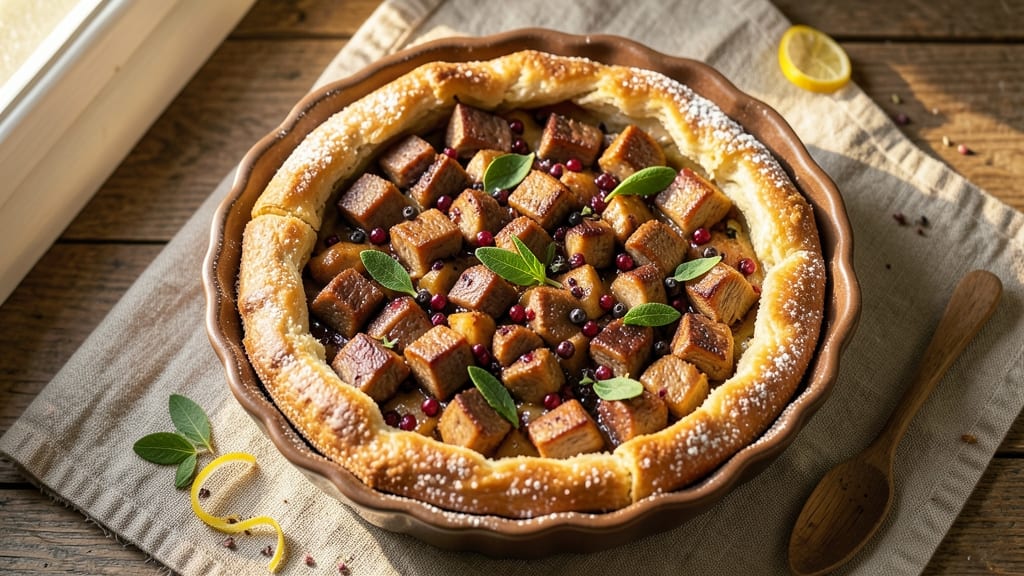
Mary Berry’s pork pie recipe delivers the perfect harmony of flaky pastry and rich, slow-cooked pork filling—just like the ones you’d find in a traditional British bakery.
The secret lies in her signature pastry technique: layers of crisp, golden crust that encase tender meat infused with aromatic spices and a velvety gravy. This isn’t just a pie; it’s a showstopper that transforms a simple dinner into an elegant centerpiece.
The filling starts with succulent pork shoulder, slow-cooked until fork-tender and infused with juniper berries, mustard, and herbs—a flavor profile that balances sweetness and depth.
Meanwhile, the pastry is made from scratch, chilled thoroughly for that signature flakiness, and assembled with precision to create a lattice lid or a classic domed top. Every step is designed to ensure the pie bakes evenly, with a crisp crust and moist filling.
What makes this recipe truly special is the attention to detail—from the precise spice blend to the slow cooking process that renders the meat perfectly.
The result is a pie that’s as impressive to slice into as it is to eat, with each bite offering layers of savory meat, herby gravy, and buttery pastry. It’s the kind of dish that feels luxurious yet achievable, making it ideal for special occasions or a comforting family meal.
Whether you’re serving it at a holiday gathering or simply treating yourself to a homemade classic, this pork pie delivers restaurant-quality results with a touch of British charm.
The key is patience—letting the filling develop deep flavors and the pastry achieve its signature crispness. Let’s get started on creating your own masterpiece.
Ingredients for pork pie recipe mary berry
Six ingredients for the filling and nine for the pastry—Mary Berry’s signature flaky crust and rich meat magic.
| Ingredient | Amount | Notes |
|---|---|---|
| Pork Shoulder 🍖 | 3 lb | Bone-in for best flavor |
| All-Purpose Flour 🌾 | 4 cups | Plus 2 tbsp for dusting |
| Unsalted Butter 🧈 | 1 cup | Cold, cubed for pastry |
| Ice Water 💧 | ½ cup | For pastry elasticity |
| Juniper Berries 🌿 | 1 tbsp | Crushed, for authentic flavor |
| English Mustard 🍯 | 2 tbsp | Dijon preferred for depth |
| Fresh Sage Leaves 🌿 | ¼ cup | Chopped, stems removed |
| Fresh Thyme Leaves 🌿 | 1 tbsp | Chopped, stems removed |
| Garlic Cloves 🧄 | 4 cloves | Minced, for aromatic base |
| Beef Stock 🍲 | 1 ½ cups | Homemade or high-quality |
| Heavy Cream 🥛 | ½ cup | For velvety gravy |
| Salt 🧂 | 2 tsp | Plus extra for seasoning |
| Black Pepper 🌶️ | 1 tsp | Freshly ground for heat |
| Egg Yolk 🥚 | 1 whole | For pastry egg wash |
| Milk 🥛 | 1 tbsp | For egg wash |
The pork shoulder is non-negotiable for this recipe—bone-in delivers the most flavor, and you’ll find it at Whole Foods or your butcher’s counter. Look for well-marbled cuts, which render fat during slow cooking for that signature juicy texture. If you’re using a pre-cut roast, trim any excess silver skin for cleaner slices. For the juniper berries, specialty stores like Penzeys carry them, but a quick online search will turn up dried options. The fresh herbs—sage and thyme—should be vibrant green, not wilted, and you can find them at any grocery store’s produce section.
No juniper berries? Ground allspice at half the amount works in a pinch, though it won’t be identical. Substituting Dijon mustard for English mustard is fine, but the flavor profile won’t be as nuanced. For the pastry, all-purpose flour is standard, but if you’re feeling fancy, bread flour gives a slightly chewier texture. The beef stock should be rich and homemade if possible—Kitchen Basics or Pacific Foods brands are reliable if you’re using store-bought. If you’re short on time, chicken stock can be used, but the flavor will differ slightly. The heavy cream is essential for that velvety gravy, but if you’re avoiding dairy, half-and-half or coconut cream can substitute.
The pork filling keeps well in the fridge for up to 3 days before assembly, and the pastry dough can be chilled for up to 48 hours for easier handling. Once baked, the pie reheats beautifully—wrap tightly in foil and bake at 350°F (175°C) for 20-25 minutes to refresh. For storage, keep the pie at room temperature for up to 2 days in an airtight container, or freeze for up to 3 months. The gravy can be reheated separately and poured over slices when serving for that restaurant-quality finish.
Why You'll Love This Recipe
- I’ll be real: rolling out pie crust stresses me out. This recipe’s butter-and-flour mix with ice water is forgiving—no chilling nightmares, no cracking. Just toss, press, and bake. (Yes, even on a Tuesday night.)
- No-Fuss Dough: I’ll be real: rolling out pie crust stresses me out. This recipe’s butter-and-flour mix with ice water is forgiving—no chilling nightmares, no cracking. Just toss, press, and bake. (Yes, even on a Tuesday night.)
- Juniper Magic: That earthy juniper berry punch in the filling? It’s the secret weapon. The pork shoulder stays juicy while the berries add this warm, woodsy depth—like a cozy hug in pie form. Honestly, it’s the only time I’ll use them, but it’s worth it.
- Weeknight Feast: This isn’t just dessert—it’s a full meal. Serve slices with a simple salad or crusty bread, and suddenly you’ve got dinner covered. My kids ask for it after school, and my partner sneaks seconds. (Between us, I do too.)
Step-by-step instructions for Mary Berry's pork pie
Achieving that iconic flaky crust and rich filling requires precision. Here's how to bring Mary Berry's masterpiece to life.
Prepare the Pork Filling with Juniper and Herbs
In a large mixing bowl, combine the 3 lb pork shoulder cut into 1-inch chunks, 2 tbsp English mustard, 1 tbsp crushed juniper berries, 0.25 cup chopped fresh sage leaves, 1 tbsp chopped fresh thyme leaves, and 4 minced garlic cloves. Mix gently to distribute the seasonings evenly without breaking up the meat.
Transfer the mixture to a large roasting pan and spread it in an even layer. Pour 1.5 cups beef stock over the meat, ensuring it's well-coated but not swimming. Cover loosely with aluminum foil and refrigerate for 24 hours. This step develops deep flavor through slow marinating and prevents the filling from becoming soggy later.
Cook the Pork Until Fork-Tender
Preheat your oven to 325°F. Remove the pork from the refrigerator and let it sit at room temperature for 30 minutes. Roast uncovered for 2.5 to 3 hours until the internal temperature reaches 200°F and the meat is fork-tender with no pink remaining. The edges should pull away from the bone easily.
Once cooked, transfer the pork to a cutting board and let it rest for 15 minutes. Shred the meat using two forks, discarding any large fat pieces. Return the shredded pork to the roasting pan and stir in 0.5 cup heavy cream and any accumulated juices. Season generously with 2 tsp salt and 1 tsp black pepper. Keep warm while you prepare the pastry.
Make the Classic Puff Pastry
In a large bowl, combine 4 cups all-purpose flour and 2 tsp salt. Cut in the 1 cup cold cubed unsalted butter using a pastry cutter or your fingers until the mixture resembles coarse crumbs with pea-sized butter pieces. Gradually add 0.5 cup ice water, 1 tablespoon at a time, mixing gently until the dough just comes together.
Turn the dough onto a lightly floured surface and knead lightly for 30 seconds until smooth. Shape into a rectangle about 12x8 inches and ¼-inch thick. Fold the dough in thirds like a letter, then rotate 90 degrees and fold again. Wrap tightly in plastic wrap and refrigerate for 30 minutes to relax the gluten.
Assemble and Bake the Pork Pie
Preheat your oven to 400°F. Roll out the chilled pastry dough on a lightly floured surface to a 12-inch circle. Transfer to a 9-inch pie dish, pressing gently to adhere to the sides. Trim any excess dough hanging over the edges. Spoon the warm pork filling into the pastry shell, mounding it slightly in the center.
Roll out any remaining pastry trimmings to create a 1-inch wide strip for the edge. Moisten the pastry edges with water, then press the strip firmly to seal, creating a decorative lattice pattern. Brush the entire pie with an egg wash made by whisking 1 whole egg yolk with 1 tbsp milk. Bake for 40-45 minutes until the pastry is deep golden brown and puffed.
Rest and Serve for Maximum Flakiness
Remove the pie from the oven and let it cool on a wire rack for 1 hour before slicing. This resting period allows the pastry to set properly and prevents the filling from spilling out. The pie should have a crisp, golden crust with layers that separate cleanly when cut.
Serve warm with a simple green salad or pickled vegetables. The combination of tender pork, aromatic juniper, and buttery pastry creates a harmonious balance of textures and flavors that's pure comfort food at its finest.
Pro Tips For Making Pork Pie Recipe Mary Berry
- CRANK DOWN THE HEAT: Mary Berry’s recipe calls for slow cooking, but I learned this the hard way—rushing the pork shoulder on high heat turns it tough instead of tender. Once the liquid reaches a gentle simmer, drop the heat to the lowest setting and let it bubble away quietly. You’re not making soup; you’re melting collagen, and that takes patience.
- GRIND JUNIPER FRESH: Store-bought juniper berry powder loses its punch fast. Crack open 6-8 fresh berries with a mortar and pestle (or a heavy pan lid) and grind them into a fine powder—just enough to tint the butter. This isn’t a spice blend; it’s a flavor bomb. Skip the pre-ground stuff unless you’re okay with a hint of sawdust.
- DON’T SKIP THE ICE WATER: The dough needs ice water to prevent gluten from overdeveloping, but I used to eyeball it and end up with sticky messes. Measure 120ml (about ½ cup) of ice water—yes, actual ice cubes work too—and add it gradually. The dough should hold together when pressed but still feel cool to the touch. Warm water is the enemy here.
- REST THE MEAT UNDER FOIL: Pull the pork shoulder out of the oven when it’s just done (160°F internal temp), tent it with foil, and let it rest for 15 minutes. I used to slice it immediately, and the juices would pool on the cutting board instead of staying in the meat. This step guarantees every bite stays moist—no dry surprises when you serve it.
Essential equipment for pork pie recipe mary berry
Pastry Tools Essentials
For that signature flaky crust, you’ll need a few key tools. A 12-inch rolling pin (like the OXO Good Grips) makes rolling the dough even easier, while a sharp chef’s knife (I love the Mac Knife) helps trim excess dough cleanly.
A pie dish with a 9-inch diameter and slightly flared sides ensures even baking—look for ceramic or stainless steel options for best heat distribution. 🧑🍳
Meat Prep Gear
Your pork filling needs proper attention, so grab a heavy-duty roasting pan (like All-Clad’s Stainless Steel) to hold the meat and juices securely. A meat thermometer (I use the Thermoworks Smoke) is non-negotiable—it ensures your pork reaches 200°F without overcooking.
For shredding, a pair of sturdy forks or a V-shaped meat hook works perfectly. Don’t skip the plastic wrap for chilling the dough—it prevents drying and keeps things tidy. ❄️
Pastry-Specific Must-Haves
A pastry brush (like the Westbloc Silicone) is your best friend for egg wash application—it creates that glossy, golden finish. For lattice work, a pizza cutter or sharp knife gives clean cuts, while a pastry bag with a plain tip helps pipe decorative details if you’re feeling fancy.
If you’re new to puff pastry, a bench scraper (like Jamie Oliver’s) makes handling dough effortless. Preheat your oven with a laser thermometer (optional but helpful) to confirm it’s at 400°F before baking. 🔥
Budget-Friendly Swaps
No need to break the bank! A wooden rolling pin works just as well as fancy ones, and a sharp steak knife can double as your pastry cutter. For the roasting pan, a heavy Dutch oven (like Le Creuset’s) does double duty.
Skip the fancy brush—just use a clean silicone spatula for egg wash. Even a plastic cutting board** (food-safe) works for trimming dough. The key is focus on technique over tools—Mary Berry’s pies shine with patience, not pricey gadgets. 💰
Nutrition facts
Frequently asked questions
Can I make this pork pie ahead of time?
The filling can be prepared up to 3 days ahead and refrigerated, while the pastry dough can be chilled for 48 hours before assembly. For the best results, bake the pie just before serving—this ensures the pastry stays crisp and the filling remains warm. If you must reheat, wrap it in foil and bake at 350°F (175°C) for 20-25 minutes.
What’s the secret to flaky pastry like Mary Berry’s?
Mary Berry’s flaky crust relies on three key steps: using cold butter cut into pea-sized pieces, keeping the dough chilled throughout handling, and giving it time to rest before rolling. The folding technique (like a letter) also builds layers. Never skip the 30-minute chill before rolling—it’s what creates that signature crispness!
Can I substitute beef for pork in this recipe?
While you can use beef, the flavor profile changes significantly. Pork shoulder’s fat content renders beautifully during slow cooking, creating a juicier filling. If substituting, use beef chuck roast and increase cooking time to 3-4 hours to achieve tenderness. The juniper berries will still shine, but the texture will be denser.
How do I fix a soggy bottom on my pie?
A soggy bottom happens when moisture escapes the filling. Prevent it by pre-baking the pastry shell for 10 minutes at 400°F (200°C) before adding filling, or blind-baking with pie weights. If it happens, brush the bottom with egg wash after baking to create a barrier, or serve with extra gravy poured over slices to mask the texture.
What’s the best way to store leftovers?
Keep the pie at room temperature in an airtight container for up to 2 days. For longer storage, freeze individual slices wrapped tightly in plastic wrap for up to 3 months. Reheat slices in a 350°F (175°C) oven for 10-12 minutes until warmed through. The pastry may lose some crispness but stays delicious!