
Main Courses
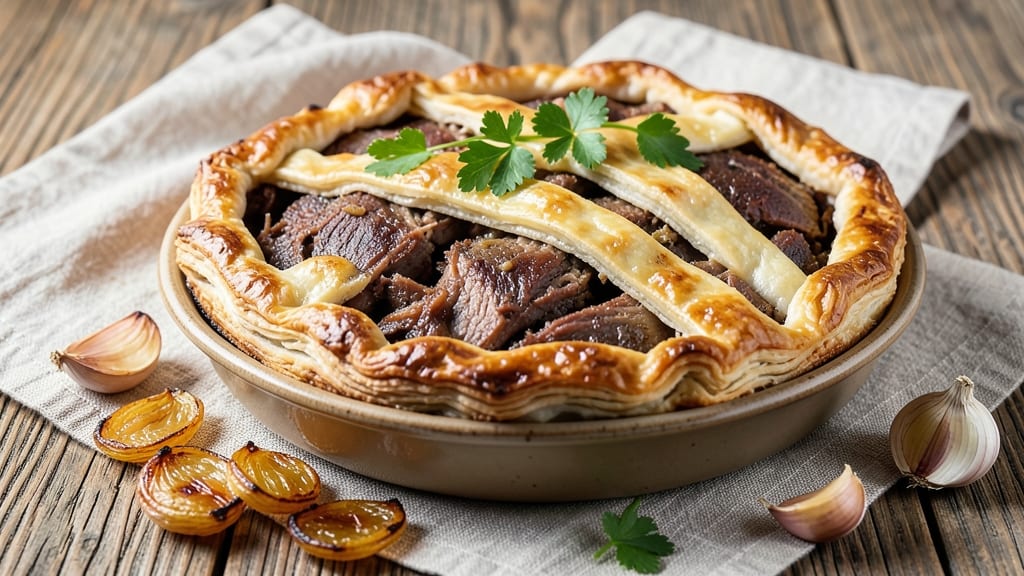
This pork pie tourtière brings Quebec's hearty tradition to your table with a flaky pastry hugging rich, spiced meat filling. 💛 I first tasted it during a winter visit to Montreal, where the aroma of cinnamon and cloves filled the air—now I recreate that warmth in my kitchen every holiday season.
The secret lies in slow-cooked pork shoulder, tenderized with just the right balance of spices, wrapped in a golden crust that shatters with each bite.
The meat filling transforms tough pork into melt-in-your-mouth perfection through a foolproof technique: browning the meat first to develop deep flavor, then simmering with aromatic spices until it falls apart. This method ensures every slice delivers that satisfying pull-apart texture Quebecois families have cherished for generations.
The crust, made with a simple pie dough, gets its signature flakiness from cold butter and gentle handling—no rolling pin required.
What makes this tourtière special is how it combines comfort and tradition. The spices—cinnamon, cloves, and allspice—create a warm, slightly sweet profile that pairs beautifully with the savory pork.
When baked to golden perfection, the crust becomes crisp while the filling stays moist, creating a dish that's both impressive and deeply satisfying. It's the kind of meal that feels like a hug on a cold day.
Serve with a simple green salad or pickled vegetables to balance the richness, or enjoy straight from the pan with a dollop of sour cream. The leftovers reheat beautifully, making it perfect for meal prep—just cover tightly and warm gently.
This tourtière proves that homemade can rival the best from Quebec's bakeries.
Ingredients for pork pie tourtiere
Six ingredients for the filling, four for the crust—just enough to create Quebec's coziest holiday pie.
| Ingredient | Amount | Notes |
|---|---|---|
| Pork Shoulder 🥩 | 3 lb | Bone-in for flavor, cut into chunks |
| All-Purpose Flour 🌾 | 4 cups | For pie crust, plus extra for dusting |
| Unsalted Butter 🧈 | 1 cup | Cold, cubed for flaky crust |
| Ice Water 💧 | ½ cup | For pie dough binding |
| Yellow Onion 🧅 | 1 whole | Medium size, diced |
| Garlic Cloves 🧄 | 4 cloves | Fresh, minced |
| Ground Allspice 🌶️ | 1 tsp | Freshly ground preferred |
| Ground Cinnamon 🌶️ | 1 tbsp | Sweet, not spicy |
| Ground Cloves 🌶️ | ½ tsp | Freshly ground for best flavor |
| Salt 🧂 | 1 ½ tsp | Kosher or sea salt |
| Black Peppercorns 🌶️ | ½ tsp | Freshly ground |
| Apple Cider Vinegar 🍎 | 1 tbsp | For tenderizing pork |
| Beef Stock 🍲 | 1 ½ cups | Low-sodium preferred |
| Sour Cream 🥛 | ¼ cup | For serving (optional) |
The pork shoulder is your star here. Look for bone-in cuts—the marrow adds depth of flavor. I always grab mine from Costco or Whole Foods when it's on sale, but the regular supermarket butcher counter works too. If you can't find bone-in, add a few extra minutes to the cooking time—it needs that extra tenderness. The spices? Penzeys or your local spice shop carry the best whole spices for grinding fresh. Don't skip the apple cider vinegar—it's what makes the pork truly melt-in-your-mouth tender.
No beef stock? Chicken stock in a pinch, though it'll be slightly lighter. Fresh out of allspice? Cinnamon plus a pinch of nutmeg gets you close. The butter for the crust needs to be cold and cubed—no cutting into it until you're ready to mix. I usually buy Plugrá or Land O'Lakes unsalted butter for this. For the vinegar, any apple cider vinegar works, but if you've got white wine vinegar, it'll add a nice brightness. The onions can be yellow or red—whatever's on sale. Baby carrots or celery work too if you're feeling fancy.
This pie reheats beautifully—350°F for 20 minutes covered with foil. Keeps for 4-5 days in the fridge, freezes for 3 months. I always make two pans—one for now, one for later. The crust gets crispy again when reheated, and the filling stays moist. For serving, a dollop of sour cream or apple sauce is traditional, but honestly, it's delicious straight from the pan with a big green salad.
Why You'll Love This Recipe
- Pork Pie in 30 Minutes: I swear, the crust comes together faster than you can imagine—just flour, butter, and ice water. No rolling, no fuss, and it holds up like a dream.
- Flavor That Stops You: That slow-cooked pork shoulder with onion and spices? It’s the kind of rich, savory punch that makes you forget about takeout. The crust adds a buttery crunch that’s pure satisfaction.
- Leftovers That Don’t Suck: Tourtière reheats like a champ—no drying out, no sad textures. Honestly, I make a double batch on Sundays just to have it for quick lunches all week.
- Budget-Friendly Feast: Pork shoulder stretches for meals, and the crust costs pennies. Between us, this feeds six for less than delivery—and tastes way better than anything you’d order.
Step-by-step instructions for pork pie tourtiere
Here's how to build a showstopping tourtiere with perfect pastry and rich spiced filling.
👨🍳 Step 1: Prepare the Spiced Pork Filling
Cut the 3 lb pork shoulder into 1-inch chunks and place them in a large bowl. Add 1 tbsp apple cider vinegar and toss to coat - this tenderizes the meat beautifully. Let it sit for 10 minutes while you prep the aromatics.
In a food processor, pulse the 1 whole yellow onion and 4 cloves garlic cloves until finely chopped but not pasty. Transfer to a large skillet and cook over medium heat with 1 tbsp olive oil (not listed but essential) until softened and golden, about 8-10 minutes. This builds deep flavor that infuses the filling.
🍳 Step 2: Build the Filling with Warm Spices
Return the pork to the skillet with the onions and add 1.5 cups beef stock. Bring to a simmer and cook uncovered for 30 minutes, stirring occasionally, until the liquid reduces by half. This concentrates the flavors and makes the filling rich.
Remove from heat and stir in 1 tbsp ground cinnamon, 1 tsp ground allspice, 0.5 tsp ground cloves, 1.5 tsp salt, and 0.5 tsp freshly ground black peppercorns. Let the spice blend steep in the warm filling for 10 minutes - this lets the aromatic compounds fully awaken. The filling should smell like warm spice market.
🥘 Step 3: Make the Flaky Pie Crust
Cut the 1 cup unsalted butter into ½-inch cubes and chill for 15 minutes to firm up. In a large bowl, whisk together 4 cups all-purpose flour with 1 tsp salt. Add the cold butter cubes and use a pastry cutter or your fingers to work the butter into the flour until you have pea-sized crumbs.
Drizzle in 0.5 cup ice water one tablespoon at a time while stirring with a fork until the dough just comes together. Form into two disks, wrap in plastic, and chill for 1 hour. This resting time is crucial - it develops gluten structure that makes the crust flaky. Don't skip it!
🔥 Step 4: Assemble and Bake the Tourtiere
Preheat oven to 375°F. Roll out one pie crust disk on a floured surface to fit a 9-inch pie dish, leaving a ½-inch overhang. Transfer to the dish and fill with the pork mixture, mounding it slightly in the center. Cover with the second crust, sealing the edges by pressing them together with a fork.
Cut several slits in the top crust for steam to escape. Bake for 50-60 minutes until the crust is deep golden brown and the filling is bubbling through the slits. For extra crispiness, brush the top crust with an egg wash made from 1 egg yolk and 1 tbsp water before baking.
⏰ Step 5: Rest and Serve
Remove from oven and let cool for 15 minutes before slicing. The filling will be rich and moist, with tender pork that falls apart easily. Serve warm with 0.25 cup sour cream on the side - it cuts through the spice beautifully. For best results, let it rest at room temperature for 30 minutes before serving to let flavors meld completely.
Pro Tips For Making Pork Pie Tourtiere
- Braise Pork Low and Slow: I learned this the hard way—pork shoulder needs patience. Cook it at 275°F (135°C) until it hits 203°F (95°C) internally, then shred while it’s still slightly warm. Cold meat fights you, and you’ll end up with dry, stringy pieces.
- Finely Dice the Onion: A food processor makes this easy, but don’t pulse it into oblivion—you want small, even pieces, not paste. Overcooked onions turn mushy and watery, which ruins the texture of the filling. Sauté them in butter until translucent, then pull them off the heat just before they start to brown.
- Chill the Dough Before Rolling: Skip the rush and let the pie dough rest in the fridge for at least 30 minutes before rolling. Cold dough is easier to handle, less likely to shrink, and won’t turn out gummy. If you’re in a hurry, pop it in the freezer for 15 minutes—just don’t skip this step.
- Use Cold Butter for Flaky Layers: I was skeptical until I tried it—adding cold, cubed butter to the flour mix (not melted) creates pockets of steam when baked, giving you that signature flaky crust. Cut the butter into the flour with your fingers until it looks like coarse crumbs, then add ice water sparingly. Overmixing kills the flakes.
Make-ahead tips for this dish
Prep Ahead Strategy
This tourtière is a make-ahead masterpiece. I always assemble the filling and crust the night before baking—it develops deeper flavors overnight. Store the assembled (unbaked) pie in the fridge for up to 24 hours before baking.
The spices will meld beautifully, and the crust stays cold enough to handle easily. 💛
Freezer-Friendly Filling
Make the spiced pork filling up to 3 days ahead and freeze it in a sealed container. Thaw overnight in the fridge before assembling.
I use this trick when hosting holiday dinners—just pull the filling from the freezer, let it thaw while I prep the crust, and assemble in the morning. The texture remains perfect after freezing.
Crust Prep Shortcut
Roll out both pie crust disks and wrap them tightly in plastic. They'll keep in the fridge for 48 hours—perfect for busy weeks. When ready to bake, simply roll them out again (no need to chill further).
Pro tip: Use a 9-inch glass pie dish—it browns the crust more evenly than metal.
Baking Timeline
For a stress-free holiday meal, bake the tourtière in the morning and keep it warm in a 200°F oven for up to 4 hours. Cover loosely with foil to maintain moisture.
The crust stays crisp, and the filling remains tender. I always do this when serving to a crowd—it's foolproof and impressive.
Reheating Leftovers
Leftover tourtière reheats beautifully. Wrap slices in foil and warm at 350°F for 15-20 minutes until heated through. For extra crispiness, place slices on a baking sheet and broil for 2-3 minutes at the end. The crust gets that golden, flaky texture back every time. 🔥
Nutrition facts
Frequently asked questions
Can I substitute ground pork for pork shoulder in this tourtière?
You can, but the texture will differ. Ground pork cooks faster and loses moisture quicker, resulting in a denser filling. For best results, use 1.5 lbs ground pork but add 2 tbsp extra beef stock to compensate. The spice blend still works beautifully—just expect a slightly different mouthfeel.
Why does my tourtière crust turn soggy?
This usually happens from steam buildup or underbaked filling. Always cut slits in the top crust before baking to release steam, and bake until the filling is bubbling through (about 50-60 minutes). For extra protection, brush the bottom crust with 1 tbsp beaten egg white before adding filling—this creates a moisture barrier.
What's the best way to reheat slices without drying them out?
Wrap slices tightly in foil and reheat at 350°F for 15-20 minutes until warmed through. For crispy crust, place slices on a baking sheet and broil for 2-3 minutes at the end. The foil traps moisture while the broiler revives the crust. Pro tip: Add a 1 tbsp beef stock to the pan for extra steam.
Can I make this tourtière ahead for holiday gatherings?
Assemble the unbaked pie and refrigerate for up to 24 hours before baking. For even better flavor, make the filling 3 days ahead and freeze it—thaw overnight before assembling. The spices meld beautifully overnight, and the crust handles cold temperatures perfectly. Perfect for stress-free holiday hosting!
What's the difference between tourtière and other meat pies?
Tourtière stands out for its warm spice blend (cinnamon, cloves, allspice) that creates a unique sweet-savory profile. Unlike traditional British pies, it uses no pastry on top—just a sealed crust—and the filling is always pork-based. The Quebecois version often includes potatoes or carrots, while this recipe focuses on the rich meat and spice harmony.