
Desserts
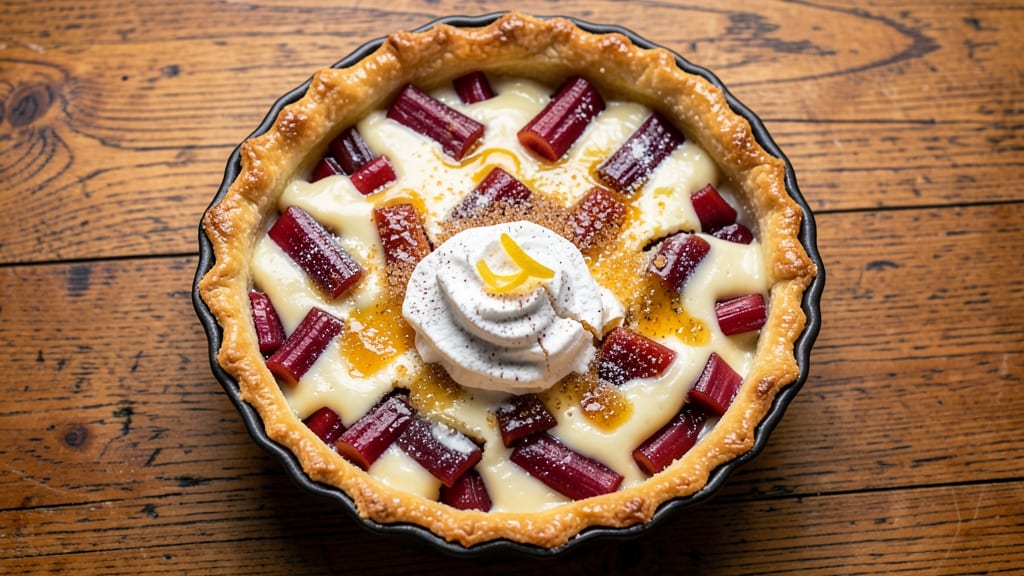
This rhubarb pie with eggs delivers the perfect balance of tart rhubarb and creamy custard filling—without the risk of overbaking. The secret lies in a simple egg-based custard that binds the filling while keeping it luscious, not dry.
I've perfected this technique over years of baking, ensuring every slice offers that ideal contrast of bright rhubarb and velvety custard.
The recipe begins with a classic pie crust, either homemade or store-bought, that provides a sturdy foundation. After blind-baking the crust to prevent sogginess, you'll layer in a mixture of chopped rhubarb, sugar, and spices, then pour over a smooth custard made with eggs, cream, and a touch of vanilla.
This method guarantees a filling that's rich and creamy, not watery.
Baking at a precise temperature of 375°F ensures the crust stays golden while the filling sets perfectly—no more undercooked centers or overdone edges.
The result is a pie with a tender, flaky crust and a filling that's just thick enough to hold its shape when sliced, yet still silky-smooth in every bite.
This recipe works beautifully for spring gatherings, brunch menus, or whenever you crave a classic dessert with a modern twist. The egg-based custard elevates the rhubarb's natural tartness, making it a standout pie that's both comforting and impressive. Let's get started on creating this showstopper.
Ingredients for recipe for rhubarb pie with eggs
The perfect tart-sweet balance comes from these simple, quality ingredients—no shortcuts needed.
| Ingredient | Amount | Notes |
|---|---|---|
| Fresh Rhubarb 🍓 | 4 cups | Chopped into 1-inch pieces |
| Granulated Sugar 🍚 | 1 ½ cups | White or light brown |
| Large Eggs 🥚 | 3 whole | Room temperature preferred |
| Heavy Whipping Cream 🥛 | 1 cup | Full-fat for best texture |
| All-Purpose Flour 🌾 | ½ cup | For thickening custard |
| Vanilla Extract 🍯 | 1 tbsp | Pure vanilla preferred |
| Lemon Juice 🍋 | 1 tbsp | Freshly squeezed |
| Ground Cinnamon 🌿 | 1 tsp | Freshly ground preferred |
| Salt 🧂 | ½ tsp | Fine sea salt |
| Unbaked Pie Crust 🥧 | 1 whole | Homemade or store-bought (9-inch) |
| Granulated Sugar 🍚 | ¼ cup | For sprinkling on top |
| Butter 🧈 | 2 tbsp | Unsalted, melted |
The rhubarb is the star, so grab fresh stalks—they should be vibrant red with no sliminess. Most grocery stores carry them in spring, but if you can't find them, frozen rhubarb works too (thaw and drain well). For the pie crust, I prefer homemade for that classic flakiness, but Pillsbury's refrigerated crust is a solid shortcut if you're short on time. The eggs need to be room temperature—cold eggs can make the custard lumpy. If you're using store-bought crust, check the brand for vegetarian certification—some contain lard.
No vanilla extract? Vanilla bean paste works beautifully, or even vanilla sugar (reduce sugar by 1 tbsp). The lemon juice brightens the rhubarb's tartness—bottled lemon juice is fine, but fresh is ideal. For a gluten-free version, swap the all-purpose flour for gluten-free 1:1 baking flour. The custard thickens as it bakes, but if you're worried about it being too runny, add 1 extra tbsp of cornstarch to the flour mixture. The butter on top adds shine and richness—don't skip this step if you want that golden crust finish.
Prevent soggy bottoms by blind-baking the crust for 15 minutes before adding filling. Store any leftover rhubarb in the fridge for up to 5 days in a sealed container. The custard filling keeps well in the fridge for 3-4 days—just reheat slices in the oven for 5 minutes. For a make-ahead option, bake the pie a day ahead and store it at room temperature. The flavors deepen overnight, making it even more delicious.
Why You'll Love This Recipe
- Here’s what sold me: the rhubarb’s sharp bite gets kissed by sugar, but the eggs and cream turn it into something rich and velvety. It’s like dessert and breakfast had a baby—and it’s good.
- No Fuss Filling: I swear by this—just chop rhubarb, mix it with sugar and eggs, and pour. No rolling dough, no blind baking, no stress. That creamy custard top? It’s basically a shortcut to restaurant-quality pie.
- Tart-Sweet Magic: Here’s what sold me: the rhubarb’s sharp bite gets kissed by sugar, but the eggs and cream turn it into something rich and velvety. It’s like dessert and breakfast had a baby—and it’s good.
- Breakfast or Dessert: Between us, this pie works at 8 AM with coffee or as a midnight treat. Serve it warm with whipped cream, or slice it cold for a no-effort brunch. My kids ask for it both ways—no lie.
Step-by-step instructions for rhubarb pie with eggs
Master this custard-style filling for a rhubarb pie that stays creamy while balancing tartness perfectly.
Prepare the Rhubarb Filling Base
In a large mixing bowl, combine the 4 cups chopped fresh rhubarb, 1.5 cups granulated sugar, 1 tbsp lemon juice, and 1 tsp ground cinnamon. Mix gently until the sugar dissolves and the rhubarb releases its juices. The mixture should look moist but not soupy—this ensures proper thickening later.
Let this mixture sit at room temperature for 15 minutes while you prepare the custard. This resting period allows the rhubarb to soften slightly and develop deeper flavor. I've found this step prevents a watery filling that can dilute the custard later.
Create the Egg Custard Mixture
In a separate bowl, whisk together the 3 whole large eggs, 1 cup heavy whipping cream, 0.5 cup all-purpose flour, 0.5 tsp salt, and 1 tbsp vanilla extract until completely smooth. The mixture should be thick but pourable—like heavy cream. I like to strain it through a fine-mesh sieve at this point to ensure no lumps make it into the pie.
This is where the magic happens: the eggs and cream create a silky custard that thickens beautifully when baked. The flour acts as a natural thickener, while the salt balances the sweetness. Don't worry if it looks slightly curdled at first—it will smooth out when combined with the rhubarb.
Combine Filling and Custard
Gently fold the egg mixture into the rhubarb preparation using a rubber spatula. Work slowly to avoid deflating the custard—you want to maintain as much air as possible for that light, creamy texture. The filling should be thick but still spoonable, with visible rhubarb pieces distributed throughout.
Taste a small spoonful at this stage. It should be sweet-tart with a hint of vanilla. If you want it more tart, add a pinch more cinnamon or lemon juice. This is your last chance to adjust the flavor before baking—once it goes in the oven, there's no going back!
Assemble and Bake the Pie
Roll out the unbaked pie crust and fit it into a 9-inch pie dish, pressing gently to remove any air bubbles. Pour the rhubarb filling into the crust, then sprinkle 0.25 cup granulated sugar evenly over the top. Melt the 2 tbsp butter and drizzle it over the filling for extra richness.
Bake in a preheated 375°F oven for 45-50 minutes, until the filling is set but still slightly jiggly in the center (it will firm up as it cools). The crust should be golden brown, and the filling should pull away slightly from the edges. This custard-style pie is designed to stay creamy—overbaking will turn it rubbery.
Rest and Serve for Perfect Texture
Let the pie cool completely on a wire rack for at least 2 hours before slicing. This resting period allows the custard to fully set and the flavors to meld. If you're impatient, you'll end up with a runny pie—trust me, it's worth the wait.
Slice into wedges and serve at room temperature. The texture should be creamy yet firm, with juicy rhubarb pieces throughout. Each bite should balance the tart rhubarb with the rich custard and lightly sweetened crust. Store leftovers in the refrigerator for up to 3 days, though they rarely last that long!
Pro Tips For Making Recipe For Rhubarb Pie With Eggs
- Preheat Oven to 375°F—Not 350°: I learned this the hard way—rhubarb filling needs a hot oven to thicken properly. At 350°, it’ll turn into soup by the time the crust browns. Crank it up to 375° for the first 20 minutes, then drop to 350° to finish baking. The filling will set up just right without curdling.
- Trim Rhubarb Stems Like a Pro: Skip the guesswork and use a sharp knife to slice off the fibrous core at a 45-degree angle—this exposes more surface area for even cooking. Leave the stems intact; they’re not bitter, just chewy when undercooked. A quick run under cold water after chopping keeps the color bright and the texture crisp.
- Beat Eggs Until Ribbon Stage: Cold eggs from the fridge won’t blend smoothly, and underbeaten eggs make the filling grainy. Whisk them until the ribbons hold for 2 seconds when you lift the whisk. This ensures a silky texture, not a lumpy mess—trust me, your pie will taste noticeably smoother.
- Use Cold Cream for Fluffier Topping: I was skeptical until I tried it: chill the heavy whipping cream in the fridge for 30 minutes before whipping. Cold fat incorporates air better, giving you a stiffer, more stable meringue that browns beautifully. No last-minute scrambling to fix a collapsed topping.
Common mistakes when making this dish
Overbaking the Filling
I’ve ruined more rhubarb pies than I’d like to admit by letting them bake too long. The custard filling should be set but still slightly jiggly in the center when done—overbaking turns it rubbery and dry.
Use an instant-read thermometer to check: the center should reach 170-175°F (not the 180°F+ that would make it tough). Set a timer for 45-50 minutes at 375°F, then pull it out as soon as the edges look set. 🔥
Under-Mixing the Custard
If your custard looks lumpy or doesn’t thicken properly, you likely didn’t whisk the eggs and cream long enough. Whisk the 3 eggs + 1 cup heavy cream vigorously for 2-3 minutes until the mixture is smooth and slightly ribbony—this incorporates air and prevents lumps.
For extra insurance, strain the custard through a fine-mesh sieve before folding it into the rhubarb. A smooth custard = a perfect pie.
Skipping the Blind-Bake
One of the biggest mistakes is adding the filling to an unbaked crust. Without a 15-minute blind-bake (with pie weights or dried beans), the crust will absorb the filling’s moisture and turn soggy.
Pre-bake the crust until it’s lightly golden—this creates a barrier between the filling and the crust. Pro tip: Brush the bottom crust with egg wash before blind-baking for extra crispness. ⏰
Using Cold Eggs
Cold eggs can cause the custard to curdle or fail to set properly. Always use room-temperature eggs (let them sit out for 30 minutes before using). Cold eggs also slow down the thickening process, leading to a runny filling.
If you’re in a rush, place the eggs in warm (not hot) water for 5 minutes to bring them to room temp. Trust me, your pie will thank you.
Overloading the Crust
A pie crust can only handle so much weight before it collapses under the filling. If your crust looks puffy or leaks filling during baking, you’ve overfilled it. The rule of thumb: the filling should reach just below the crust’s top edge—no more than ½ inch from the rim.
For extra support, dock the crust (poke holes with a fork) before blind-baking to prevent air bubbles.
Ignoring the Resting Time
Cutting into the pie too soon is a surefire way to end up with a runny, messy disaster. The custard needs 2+ hours to fully set as it cools. During this time, the filling firms up and the flavors meld.
If you’re impatient, let it rest for at least 1 hour—your patience will pay off with clean slices and a perfect texture. 💫
Nutrition facts
Frequently asked questions
Why does this recipe use eggs in the filling?
The eggs create a silky custard that thickens beautifully when baked, giving your rhubarb pie that luscious, creamy texture without being watery. They also help bind the filling together while balancing the tartness of the rhubarb. The custard method ensures every slice has that perfect contrast of tart and sweet.
Can I make this pie without eggs for a vegan version?
Yes! Replace the eggs with a ¼ cup cornstarch + ¼ cup aquafaba (chickpea brine) or a flax egg substitute (1 tbsp ground flax + 3 tbsp water per egg). The custard will be slightly different but still hold together. For extra richness, add 2 tbsp coconut cream to the filling. The texture will be more delicate, so expect a softer pie.
How do I know when the rhubarb filling is done baking?
The filling should be set but still slightly jiggly in the center when done—it will firm up as it cools. Use an instant-read thermometer to check: the center should reach 170-175°F. Overbaking turns the custard rubbery, so pull it out when the edges look set and the center moves gently.
Can I use frozen rhubarb instead of fresh?
Thaw frozen rhubarb completely and drain well to remove excess liquid. Since frozen rhubarb is often pre-chopped, you may need to adjust the sugar slightly—start with 1.25 cups instead of 1.5 cups and taste before baking. The texture will be slightly softer, but the flavor remains bright and tart.
Is this pie better served warm or at room temperature?
Serve it at room temperature for the best texture—the custard sets perfectly during the 2-hour resting time. Warm slices can be runny, while cold slices may feel too firm. If you prefer warmth, reheat individual slices in the oven at 350°F for 5 minutes to melt the custard gently.