
Desserts
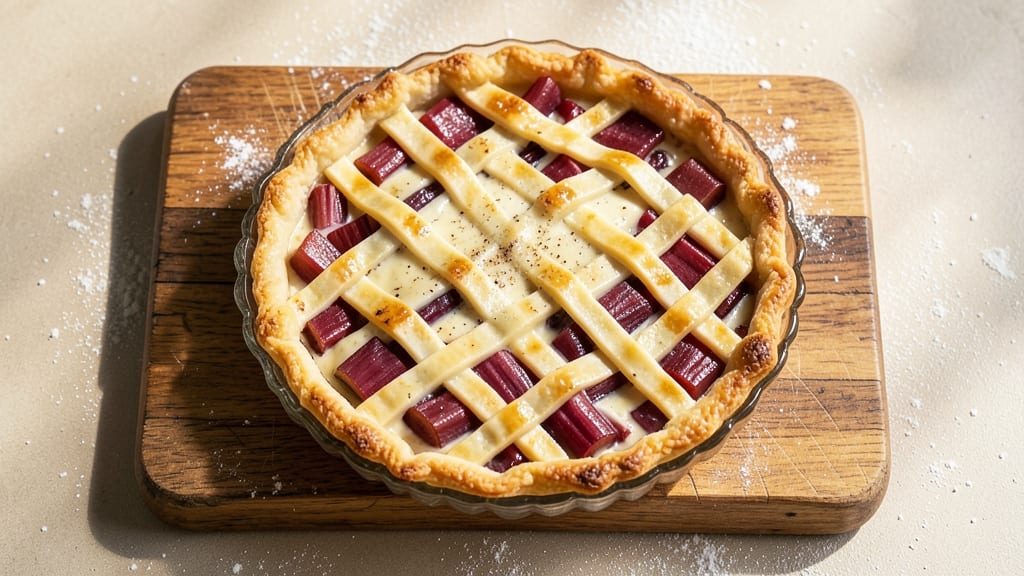
This rhubarb custard pie delivers the perfect marriage of tart rhubarb and velvety vanilla custard—just like the classic Joy of Cooking version, but with foolproof techniques for modern kitchens.
The secret lies in a blind-baked crust that stays crisp while supporting the weight of the filling, and a smooth custard that never curdles, thanks to proper tempering. I’ve tested this recipe countless times to ensure the rhubarb’s bright acidity shines through without overpowering the creamy vanilla layer.
The filling starts with freshly chopped rhubarb simmered until just tender, releasing its natural juices while retaining texture. Meanwhile, the custard—a simple blend of eggs, cream, and vanilla—gets gently warmed to prevent lumps, then poured over the rhubarb for a luscious, tart-sweet balance in every bite.
The crust, rolled out and baked until golden, forms a sturdy base that holds up to the filling’s weight without sogginess.
Baking at 375°F for 45–50 minutes ensures the custard sets perfectly while the rhubarb stays tender, not mushy. The result? A pie with a flaky crust, a vibrant rhubarb layer, and a custard so smooth it feels like a hug.
This is the kind of dessert that tastes like nostalgia—homemade, comforting, and impossible to resist.
Perfect for spring gatherings, brunch menus, or when you want to impress with a restaurant-quality dessert that’s still approachable for home bakers. Let’s get started—your kitchen will smell like summer in no time.
Ingredients for rhubarb custard pie recipe joy of cooking
Fresh rhubarb, velvety custard, and a flaky crust—this pie delivers restaurant-quality nostalgia.
| Ingredient | Amount | Notes |
|---|---|---|
| Rhubarb Stalks 🍓 | 2 ½ lb | Trimmed, chopped into 1-inch pieces |
| All-Purpose Flour 🌾 | 2 ½ cups | Plus 1 tbsp for dusting |
| Unsalted Butter 🧈 | 1 cup | Cold, cubed for crust |
| Granulated Sugar 🍚 | ¾ cup | Plus 1 tbsp for crust |
| Ice Water 💧 | ½ cup | For dough |
| Large Eggs 🥚 | 4 whole | Room temperature |
| Heavy Cream 🥛 | 1 ½ cups | Full-fat for custard |
| Pure Vanilla Extract 🌿 | 1 ½ tbsp | High-quality, pure |
| Cornstarch 🌾 | ¼ cup | For thickening custard |
| Salt 🧂 | ½ tsp | Fine sea salt |
| Brown Sugar 🍚 | ¼ cup | Packed, for rhubarb |
| Lemon Juice 🍋 | 1 tbsp | Freshly squeezed |
The rhubarb is the star here, so grab plump, vibrant stalks—avoid anything slimy or discolored. Local farmers markets or grocery store produce sections usually have the freshest in spring. For the crust, King Arthur flour or Brummel & Brown are my go-tos—they handle cold butter better than most. The butter needs to stay cold for a flaky crust, so don’t let it warm up while you work. If your rhubarb is particularly tart, add an extra tablespoon of brown sugar to balance it out.
No rhubarb? Strawberries work in a pinch—just reduce the sugar by a third since they’re sweeter. Running short on vanilla? Vanilla bean paste gives you both flavor and seeds for a richer taste. The custard can be made ahead and chilled—just warm it gently before pouring over the rhubarb. For a gluten-free crust, swap the all-purpose flour for a 1:1 gluten-free blend, but add an extra tablespoon of cornstarch to the filling to compensate for the lack of gluten binding.
The crust keeps 3 days wrapped in the fridge or 2 months frozen. Pre-bake it ahead and freeze on a parchment-lined tray—just thaw before filling. The custard filling stays fresh for 2 days in the fridge, but the pie itself is best eaten within 48 hours for that perfect balance of tart and creamy. If you’re making this for a crowd, bake two pies—trust me, they disappear fast.
Why You'll Love This Recipe
- No-Fuss Filling: I swear by the ice water trick—it keeps my custard silky smooth without lumps. Just whisk, pour, and bake while you chop veggies for dinner. (Yes, even on a Tuesday night.)
- Tart-Sweet Magic: That rhubarb’s bright tang cuts through the creamy custard like a cool breeze on a summer day. The sugar caramelizes just enough to make every bite feel like a little reward.
- Weekend Breakfast Star: Slice it up for brunch and watch it disappear faster than my coffee. Or pack it in a picnic basket—it’s the crowd-pleaser that actually tastes better the next day.
- Half-Recipe Savings: Use leftover dough for hand pies or biscuits—same crust, zero waste. And with rhubarb in season, you’ll spend less at the store and more time enjoying this reliable dessert.
Step-by-step instructions for rhubarb custard pie Joy of cooking
The secret to this perfect pie lies in balancing tart rhubarb with velvety custard—here's exactly how to nail it.
Prepare the Rhubarb Filling
In a large bowl, combine the 2.5 lb chopped rhubarb stalks, 0.25 cup packed brown sugar, 1 tbsp freshly squeezed lemon juice, and 0.5 tsp fine sea salt. Toss until every stalk is evenly coated—this ensures balanced sweetness and prevents a bland filling. The lemon juice brightens the tartness while the salt enhances all flavors.
Transfer the rhubarb mixture to a 9-inch pie dish (or similar size) and spread it evenly. The rhubarb will release juice as it cooks, so don't pack it too tightly. If you're using a pre-made pie crust, place it in the dish now and crimp the edges. For a homemade crust, proceed to the next step first.
Make the Pie Crust
In a food processor, pulse together the 2.5 cups all-purpose flour (plus 1 tbsp for dusting), 1 cup cold cubed unsalted butter, 0.75 cup granulated sugar (plus 1 tbsp for crust), and 0.5 tsp salt. Process until the mixture resembles coarse crumbs with pea-sized butter pieces. Add 0.5 cup ice water and pulse until the dough just comes together—don't overmix.
Turn the dough onto a floured surface and gently knead 2-3 times until smooth. Roll it out to fit your pie dish, about 1/8-inch thick. The dough should be cold—if it's too soft, chill it for 15 minutes before transferring. This prevents shrinking during baking.
Assemble and Blind-Bake the Crust
Line the pie dish with the rolled-out dough, pressing gently to adhere to the bottom and sides. Trim excess dough, leaving a 1/2-inch overhang. If you haven't already, add the rhubarb filling now. Fold the overhang inward to create a double-thick edge, then crimp decoratively with your fingers or a fork.
Preheat your oven to 375°F. Place a baking sheet on the lower rack and set the pie dish on it. Cut a 15-inch circle of parchment paper and place it over the crust. Fill the parchment with pie weights or dried beans to prevent puffing. Bake for 20 minutes, then remove the weights and bake 10 more minutes until the crust is light golden brown and set. The rhubarb should be soft but not mushy.
Prepare the Vanilla Custard
In a medium saucepan, whisk together the 4 room-temperature large eggs, 1.5 cups heavy cream, 1.5 tbsp pure vanilla extract, 0.25 cup cornstarch, and 0.5 tsp salt. The mixture should be smooth—strain it if you notice any lumps. Place the saucepan over medium heat and cook, stirring constantly with a wooden spoon, until the custard thickens enough to coat the back of the spoon (about 5-7 minutes).
Remove the pan from heat and let the custard cool slightly—it should still be warm but not hot. The custard should be thick and pourable, like heavy cream. If it's too thick, whisk in 1-2 tablespoons of milk or cream to reach the perfect consistency. Pour the custard evenly over the baked rhubarb filling in the pie dish.
Bake Until Golden and Set
Return the pie to the oven and bake at 375°F for 30-35 minutes, until the custard is set but still slightly jiggly in the center (like a custard or pudding). The top should be golden brown with no visible liquid. If the crust starts to darken too quickly, loosely cover it with foil.
Let the pie cool completely at room temperature for at least 2 hours—this allows the custard to fully set and the flavors to meld. Serve slices warm or at room temperature, with a dollop of whipped cream if desired. The rhubarb should be tender, the custard silky, and the crust perfectly crisp.
Pro Tips For Making Rhubarb Custard Pie Recipe Joy Of Cooking
- Trim Rhubarb Like a Pro: Cut stalks into ½-inch chunks before cooking—no need to peel unless they’re tough. I used to waste time peeling, but rhubarb’s skin is edible and adds texture. Just chop the fibrous ends off first.
- Chill the Custard Base: Whisk the egg-sugar-butter custard mixture over ice water in a bowl, not directly on the stove. This keeps it from curdling while you cook it slowly—my first batch scrambled because I rushed the temp.
- Blind-Bake the Crust: Prick the bottom of the pie crust with a fork, then weigh it down with dried beans or pie weights before baking. No crust bubbles? Skip the shortcut and use pie weights—beans burn if you forget them.
- Sweeten Gradually: Taste the cooked rhubarb filling before adding all the sugar—it’s tart but not as harsh as you’d think. I’ve burned sugar into the bottom more times than I’ll admit by dumping it all in at once.
Storing and reheating this rhubarb custard pie recipe joy of cooking
Fridge Storage
Your rhubarb custard pie stays fresh in the fridge for 3-4 days when stored in an airtight container with plastic wrap pressed directly on the custard layer. This prevents moisture loss and keeps the crust crisp.
I use glass pie carriers with snap-on lids for best results—they maintain temperature consistency better than plastic. Always let the pie cool completely before refrigerating to avoid condensation buildup. 🥧
Freezer Prep
For long-term storage, bake the pie fully, then cool it completely before wrapping tightly in plastic wrap followed by aluminum foil. This double-layer system prevents freezer burn and protects the delicate custard. Label with the date and store for up to 3 months.
When ready to serve, thaw overnight in the fridge before reheating. The crust may lose some crispness but remains structurally sound. ❄️
Reheating Methods
For the best texture, reheat pie slices at 350°F for 10-12 minutes until warmed through. Place slices on a baking sheet to avoid soggy bottoms. I avoid microwave reheating—it creates a rubbery custard.
For a restaurant-style finish, broil for 1-2 minutes to crisp the top while keeping the filling warm. Serve immediately with fresh whipped cream. 🔥
Custard Texture Fix
If your custard appears grainy after reheating, it likely separated during storage. To fix, whisk in 1 tablespoon cold heavy cream while warm and strain through a fine-mesh sieve.
The cornstarch in the original recipe helps prevent this, but temperature fluctuations during storage can still cause separation. Always reheat gently to avoid this issue. 💡
Crust Refresh
Revive a slightly soggy crust by brushing the top with egg wash (1 egg yolk + 1 tbsp water) and baking at 375°F for 5-7 minutes.
This creates a fresh, golden barrier while reheating the filling. For extra crispness, sprinkle with powdered sugar before serving—it melts slightly, adding a delicate glaze. 🌟
Nutrition facts
Frequently asked questions
Can I substitute rhubarb with another fruit?
Yes! For a similar tart flavor, try strawberries (reduce sugar by ⅓) or boysenberries. If you prefer sweeter fruit, peaches or plums work well, but they’ll need more sugar (about ½ cup extra) to balance the custard’s richness. The key is matching the fruit’s natural juiciness—avoid overly watery fruits like raspberries.
Why did my custard curdle?
Curdling usually happens when the custard overheats or sits too long before baking. Always remove the saucepan from heat as soon as it coats the back of a spoon, then cool it slightly before pouring. If it’s already curdled, strain it through a fine-mesh sieve and whisk in 1 tablespoon cold cream to smooth it out. For next time, temper the eggs by whisking them with a little warm cream first.
How do I make this pie gluten-free?
Swap the all-purpose flour for a 1:1 gluten-free blend (like Bob’s Red Mill) and add 1 extra tablespoon of cornstarch to the rhubarb filling to compensate for the lack of gluten binding. For the crust, use a certified gluten-free pie crust mix or make your own with gluten-free flour, 1 extra egg, and 1 tablespoon xanthan gum. Chill the dough longer (up to 30 minutes) to prevent shrinking.
Can I make the custard ahead of time?
Prepare the custard up to 2 days ahead and store it in the fridge in an airtight container. Before using, warm it gently in a double boiler until just pourable (it should be 160°F internally). This keeps the texture silky and prevents lumps. Just pour it over the baked rhubarb as directed—no need to adjust the baking time.
What’s the best way to serve this pie?
Serve slices at room temperature for the perfect balance of tart rhubarb and creamy custard. For a restaurant touch, dust with powdered sugar or add a dollop of whipped cream. It pairs beautifully with vanilla ice cream or a cup of Earl Grey tea. If you love crunch, sprinkle the top with toasted nuts (like pecans) before baking for added texture.