
Soups & Stews
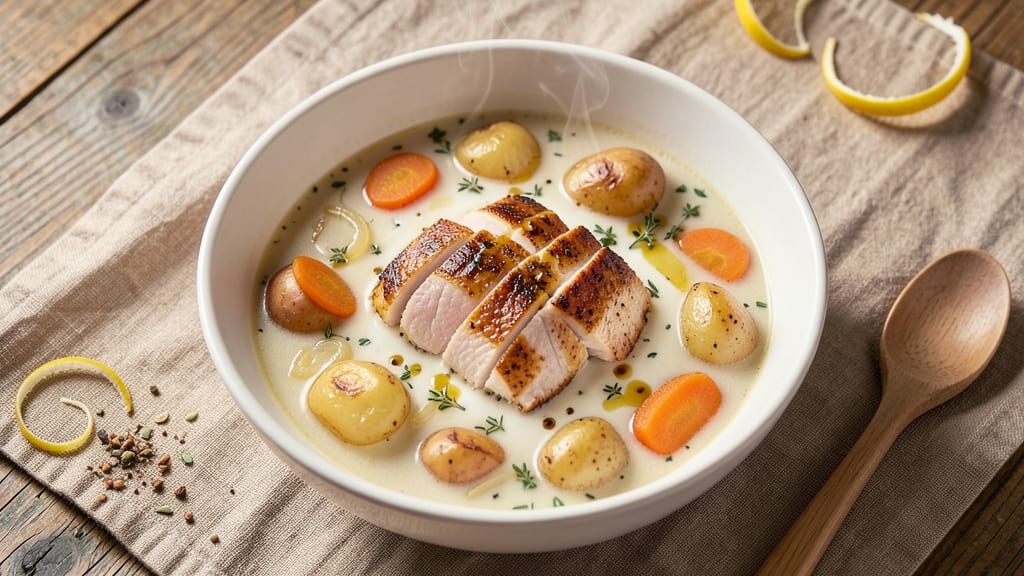
This skinny chicken pot pie soup delivers all the comforting flavors of classic pot pie—creamy, savory, and packed with veggies—without the heavy calories. The secret lies in using lean chicken breast, light coconut milk for creaminess, and a velvety broth thickened with cornstarch instead of heavy cream.
After years of perfecting lighter versions, this recipe finally balances indulgence with nutrition without sacrificing taste.
The foundation starts with tender shredded chicken and a medley of seasonal vegetables—carrots, peas, and potatoes—simmered in a flavorful broth. What sets this apart is the lightened-up sauce: coconut milk provides richness while keeping calories in check, and a touch of Dijon mustard adds depth without heaviness.
The soup is naturally thickened, so no extra butter or cream is needed, yet every spoonful feels satisfyingly hearty.
By the time you ladle this into bowls, you’ll notice the perfect balance of textures—tender chicken, creamy broth, and slightly crisp edges from the vegetables. It’s the kind of soup that warms you up while keeping you feeling light, making it ideal for chilly evenings or meal prep.
The best part? It takes just 45 minutes to prepare and serves six, so you can enjoy leftovers without guilt.
Serve with a sprinkle of fresh parsley and a side of crusty whole-grain bread for dipping. This version proves you can have your comfort food and eat it too—lighter, but never less delicious. Let’s get cooking!
Ingredients for skinny chicken pot pie soup
Lean chicken breast, light coconut milk, and seasonal veggies transform into this comforting soup.
| Ingredient | Amount | Notes |
|---|---|---|
| Boneless, Skinless Chicken Breast 🍗 | 1 ½ lb | Pounded to even thickness |
| Light Coconut Milk 🥥 | 1 cup | Full-fat for creaminess |
| Chicken Broth 💧 | 4 cups | Low-sodium preferred |
| Yellow Onion 🧅 | 1 whole | Diced, medium size |
| Carrots 🥕 | 2 medium | Peeled, sliced into rounds |
| Russet Potatoes 🥔 | 1 ½ lb | Diced into 1/2-inch cubes |
| Frozen Peas 🌿 | 1 cup | Thawed before adding |
| Cornstarch 🌾 | 2 tbsp | For thickening broth |
| Dijon Mustard 🍯 | 1 tbsp | For depth of flavor |
| Fresh Parsley 🌿 | ¼ cup | Chopped for garnish |
| Garlic Cloves 🧄 | 3 cloves | Minced, fresh preferred |
| Olive Oil 🫒 | 1 tbsp | For sautéing vegetables |
| Salt 🧂 | 1 tsp | Kosher or sea salt |
| Black Pepper 🌶️ | ½ tsp | Freshly ground preferred |
| Whole-Grain Bread 🍞 | 1 slice | For serving, optional |
The chicken breast is key—buy the plumpest cuts for maximum yield. Trader Joe's or Whole Foods often carry the best quality, but any supermarket works. Pound it to even thickness so it cooks uniformly. Frozen peas? No need to thaw—just toss them in at the end. The carrots should be bright orange, not limp or rubbery. For the potatoes, Russets hold up best to long simmering, but Yukon Golds add creaminess if you prefer.
No light coconut milk? Full-fat works too, but you'll need to reduce it slightly for the same consistency. Short on Dijon? Yellow mustard at half the amount gets you close. The cornstarch is non-negotiable for that velvety texture—arrowroot powder works too. For extra umami, add a dash of soy sauce. The broth? Homemade is ideal, but store-bought low-sodium works in a pinch. Just remember to taste and adjust salt at the end—coconut milk can be salty.
This soup reheats beautifully—3-4 days in the fridge, 3 months frozen. I double the batch and freeze half for lazy weeknights. For serving, toasted whole-grain bread is perfect. Keep the parsley fresh by wrapping it in damp paper towels. The broth base can be prepped ahead too—just store it separately and assemble when ready to serve.
Why You'll Love This Recipe
- One-Pot Magic: I swear by this—just chop an onion, dice carrots, and toss everything in one pot. No separate layers, no fussing with crusts, just pure, creamy comfort with half the cleanup.
- Creamy Without Guilt: That light coconut milk? It’s the secret weapon—rich and velvety but still light enough to keep it "skinny." The chicken broth ties it all together with that deep, savory base I can’t resist.
- Lunch or Dinner Hero: Between us, I make this for both—pack it cold for work lunches or reheat it for a cozy dinner. The texture holds up perfectly, whether you’re eating it straight from the pot or in a thermos.
- Budget Meal That Feeds: A single chicken breast stretches for four servings, and the rest of the ingredients are pantry staples. Honestly, it’s the kind of recipe that makes grocery night feel like a win, not a chore.
Step-by-step instructions for skinny chicken pot pie soup
Here's how to create a comforting, lightened-up version with rich flavors and satisfying texture.
Sear and Slice the Chicken Breast
Pound the 1.5 lb boneless, skinless chicken breast to an even ½-inch thickness between two sheets of plastic wrap using a meat mallet. This ensures even cooking throughout. Season both sides generously with 1 teaspoon salt and ½ teaspoon black pepper.
Heat a large skillet over medium-high heat and add 1 tablespoon olive oil. Once shimmering, add the chicken and cook for 4-5 minutes per side until the internal temperature reaches 165°F and the edges are golden brown. Transfer to a cutting board and let rest for 5 minutes before slicing into ¼-inch thick strips. The chicken should be moist and tender—if it's dry, you've overcooked it.
Sauté the Aromatic Vegetables
In the same skillet (no need to clean it—the browned bits add flavor), add the 1 whole yellow onion and 2 medium carrots sliced into rounds. Cook over medium heat for 5-6 minutes until the onions soften and the carrots begin to caramelize at the edges. Add the 3 cloves minced garlic and cook for another 30 seconds until fragrant.
This step builds the foundation of your soup's flavor. If the vegetables stick, add a splash of chicken broth to deglaze. The onions should be translucent and the carrots should start to soften but not break apart—this ensures they hold their shape in the final soup.
Simmer the Potatoes and Chicken
In a large pot, combine the sliced chicken, sautéed vegetables, 1.5 lb diced russet potatoes, and 4 cups chicken broth. Bring to a boil over high heat, then reduce to a simmer. Cook uncovered for 15-20 minutes until the potatoes are fork-tender but not falling apart.
Here's the thing—you want the potatoes to soften enough to hold their shape but still have a slight bite. If they're mushy, they'll turn to glue in the final soup. Stir occasionally to prevent sticking, and if the broth reduces too much, add a splash of water to maintain the right consistency.
Thicken and Add Creaminess
In a small bowl, whisk together the 2 tablespoons cornstarch and 1 tablespoon Dijon mustard with ¼ cup water until smooth. Slowly pour this mixture into the simmering soup while stirring constantly. Cook for another 5 minutes until the soup thickens slightly and coats the back of a spoon.
Next, stir in the 1 cup light coconut milk and the 1 cup thawed frozen peas. The coconut milk adds creaminess without the heaviness of traditional cream, while the peas bring a pop of color and texture. Simmer for another 3-4 minutes until everything is heated through and the peas are tender. Taste and adjust seasoning with additional salt or pepper if needed.
Finish and Serve
Remove the pot from heat and stir in the ¼ cup chopped fresh parsley. Ladle the soup into bowls and serve immediately with a slice of whole-grain bread on the side. The soup should be thick enough to coat the back of a spoon but still have a silky, velvety texture from the coconut milk.
Each spoonful should deliver a perfect balance of savory chicken, tender vegetables, and a hint of tangy mustard. The bread is optional but adds a nice contrast in texture—perfect for soaking up any remaining broth. This soup is hearty enough to satisfy but light enough to enjoy without guilt.
Pro Tips For Making Skinny Chicken Pot Pie Soup
- Sear Chicken First: Light coconut milk hides a lot, but searing the chicken breast in a dry pan for 2-3 minutes on each side before shredding adds depth. I used to skip this step because I thought it was extra work, but it makes the coconut flavor pop—especially when you’re using the lighter version.
- Cut Carrots Small: Tiny, even slices (about 1/8-inch thick) cook faster and blend into the soup without turning mushy. I learned this the hard way—once I used thick batons and ended up with a pot of mushy orange blobs instead of tender texture. (Yes, even if you’re impatient like me.)
- Simmer, Don’t Boil: Keep the soup at a gentle simmer after adding the coconut milk—anything hotter and you’ll break the emulsion, turning it greasy. I was skeptical until I tried it: the broth stays clear, and the coconut stays silky instead of separating like curdled milk.
- Salt Broth Early: Add half the salt to the broth before the chicken goes in—this guarantees even seasoning. I skip this when I’m lazy, but the dish is noticeably better when I don’t: the chicken absorbs flavor better, and you won’t end up guessing if it’s seasoned right at the end.
Common mistakes when making great skinny chicken pot pie soup
Overcooking Chicken
This is the #1 mistake I see—chicken that’s dry and stringy instead of tender and juicy. Chicken breast is forgiving, but only if you respect its 165°F internal temperature threshold.
I’ve ruined many batches by letting it sit too long in the pan or checking doneness with a fork that pierces it repeatedly. Use a meat thermometer instead, and remove the chicken as soon as it hits 165°F.
Let it rest for 5 minutes before slicing—this redistributes juices and keeps every bite moist. 🍗
Skipping the Rest
Rushing to slice and serve immediately is another common error. When you cut into chicken right after cooking, all the juices escape, leaving you with dry, flavorless strips. That 5-minute rest is non-negotiable—it’s the difference between a soup that’s just good and one that’s restaurant-quality.
I’ve learned this the hard way after serving soup that tasted like it needed a drink! Let the chicken rest on a cutting board while you finish the veggies.
Under-Simmering Potatoes
Potatoes that aren’t fully cooked will turn to mush later when the soup thickens, creating a gluey texture. The goal is fork-tender but still holding shape—this takes about 15-20 minutes of simmering. I’ve had to rescue soups where the potatoes were either rock-hard or disintegrated.
To test doneness, pierce a potato with a fork—it should go in easily but not fall apart. If they’re undercooked, add ¼ cup water and simmer another 5 minutes.
Thickening Too Aggressively
Adding too much cornstarch or simmering too long after thickening can turn your velvety soup into a paste. The cornstarch slurry should be added gradually while stirring constantly, and you only need 5 minutes of simmering after adding it.
I’ve had to rescue soups that were unpleasantly thick by thinning them with a splash of broth. If your soup looks too thick, add 1-2 tablespoons broth at a time until it reaches the perfect spoon-coating consistency.
Ignoring the Mustard
Dijon mustard isn’t just for flavor—it’s the secret to balancing the richness of the coconut milk. Skipping it or using too little leaves your soup tasting flat. That 1 tablespoon adds a subtle tang that brightens every spoonful.
I’ve made this mistake and ended up with a soup that lacked depth. If you’re worried about heat, use a mild Dijon—it’s still packed with flavor without the burn. Taste as you go and adjust to your preference.
Overlooking Seasoning Adjustments
Coconut milk can be naturally salty, and broth varies in sodium content. Tasting your soup before serving is crucial—many home cooks forget this step and end up with bland or overly salty results. After adding all ingredients, take a spoonful and evaluate: Does it need more salt?
A pinch of black pepper? A squeeze of lemon juice? I keep a small bowl of salt and pepper on the stove while cooking so I can adjust immediately. Trust your taste buds—they’re your best tool for perfecting this soup. 💡
Nutrition facts
Frequently asked questions
Can I use chicken thighs instead of breast for this recipe?
While chicken thighs are more flavorful, they're higher in fat and calories. If you prefer them, use 1 lb bone-in, skin-on thighs instead of the 1.5 lb breast and remove the skin before adding to the soup. Cook them to 175°F internal temp and reduce the coconut milk to ½ cup to balance the richness. The texture will be slightly different but still delicious!
How do I make this soup dairy-free? This recipe is already dairy-free thanks to coconut milk! For extra richness, try cashew cream (blend ½ cup soaked cashews with ½ cup water) instead of coconut milk. You can also add 1 teaspoon nutritional yeast for a cheesy flavor. Just
Can I make this soup in an Instant Pot?
Sauté the onions, carrots, and garlic first, then add all ingredients except the peas. Cook on high pressure for 8 minutes, then quick-release. Stir in the peas and coconut milk, then thicken with cornstarch slurry on the stove for 3-4 minutes. The Instant Pot cuts cooking time to just 25 minutes total! Just be careful not to overcook the potatoes.
Why does my soup look thin even after thickening?
This usually happens when the cornstarch slurry isn't cooked long enough or the soup was too cold when added. Make sure your soup is simmering (not just warm) before adding the slurry, then cook for 5 full minutes while stirring constantly. If it's still too thin, whisk in 1 teaspoon more cornstarch with 1 tablespoon water and cook another 2 minutes.
What's the best way to reheat leftovers?
Gently reheat on the stove over low-medium heat until just warmed through (3-4 minutes). Never microwave directly from the fridge as it can make the soup watery. If it thickens too much while reheating, add 1-2 tablespoons broth at a time. For extra flavor, stir in a splash of coconut milk or a pinch of Dijon mustard. This soup keeps for 4 days in the fridge or 3 months frozen!