Desserts
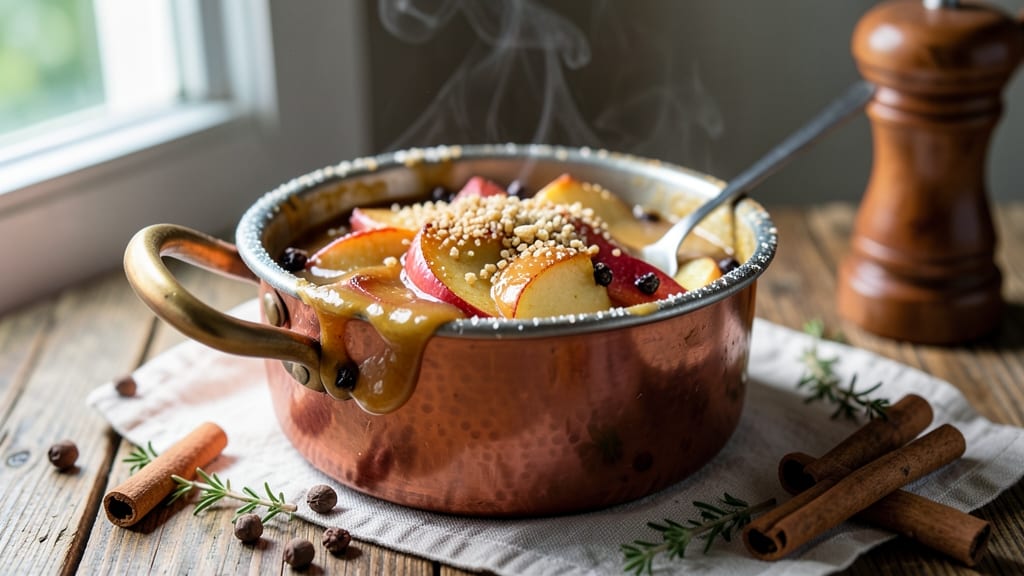
This small batch apple pie moonshine recipe transforms autumn's coziest flavors into a smooth, spiced spirit that tastes like dessert in a glass. The secret lies in balancing warm cinnamon, nutmeg, and vanilla with ripe apple essence—creating a boozy harmony that's both comforting and complex.
I developed this method after years of experimenting with small-batch distilling, ensuring every sip delivers that perfect blend of caramelized apple and spiced warmth.
The process begins with a simple mash of apples and grain, fermented just enough to capture natural sweetness before distillation.
What makes this recipe special is the flavoring stage, where we infuse the clear spirit with apple pie spices—cinnamon sticks, whole nutmeg, and a touch of vanilla extract—allowing their aromas to meld into the liquid. The result?
A moonshine that smells like a freshly baked pie and tastes like liquid nostalgia.
After aging for at least two weeks (longer for deeper flavor), you'll have a smooth, golden spirit with notes of caramel apple, warm spices, and just the right amount of heat.
Serve it chilled over ice with a cinnamon stick garnish, or use it as a base for cocktails—think apple pie margaritas or spiced whiskey sours. Each batch yields about one liter, making it perfect for gifting or small gatherings.
Important note: Homemade spirits carry legal and safety considerations. Always research local regulations and follow proper distilling practices. When done right, this recipe delivers a restaurant-quality experience you can enjoy responsibly at home.
Ingredients for small batch apple pie moonshine
Nine ingredients transform autumn's coziest flavors into liquid nostalgia for this small-batch moonshine.
| Ingredient | Amount | Notes |
|---|---|---|
| Granny Smith Apples 🍎 | 2 lb | Peeled, cored, chopped |
| Turbinado Sugar 🍚 | 1 ½ cups | Light brown preferred |
| Active Dry Yeast 🍞 | ¼ oz | Or 1 packet |
| Cornmeal 🌾 | ½ cup | For fermentation vessel |
| Cinnamon Sticks 🌿 | 4 whole | 2-inch lengths |
| Whole Nutmeg 🌿 | 2 whole | Or 1 tsp ground |
| Pure Vanilla Extract 🍯 | 1 tbsp | No alcohol needed |
| Distilled Water 💧 | 2 cups | Filtered preferred |
| Unbleached Flour 🌾 | 1 cup | For mash base |
| Apple Pie Spice Blend 🌶️ | 1 tbsp | Homemade or store-bought |
| Clear Neutral Spirit (190-proof) 🍷 | 1 liter | Everclear or similar |
| Lemon Juice 🍋 | 1 tbsp | Freshly squeezed |
The apples are the heart of this recipe—Granny Smiths for tartness, but Honeycrisp or Fuji work too. Local orchards or farmers markets often have the best quality, but any firm apple will do. If you're using store-bought, look for organic when possible to avoid wax coatings. The yeast is non-negotiable for proper fermentation—SafInstant or Red Star are reliable brands. For the cinnamon sticks, Whole Foods or Penzeys carry high-quality whole spices that infuse better than ground. The nutmeg should be freshly grated if you're using ground—pre-ground loses potency fast.
No vanilla extract? Vanilla bean paste works at half the amount, or even a scraped vanilla bean. Short on apples? Apple cider concentrate can supplement, but fresh is ideal. The flour should be unbleached for better fermentation. If you can't find turbinado sugar, light brown sugar works fine. The clear spirit is crucial—Everclear or 190-proof grain alcohol are standard, but avoid flavored varieties. For the apple pie spice blend, if you're making your own, use 1 tsp cinnamon, ½ tsp nutmeg, ½ tsp allspice, ½ tsp ginger, and ¼ tsp cloves per tablespoon.
Fermented mash keeps in the fridge for 5-7 days before distillation. The finished moonshine ages beautifully—2 weeks minimum for proper flavor development, but 3 months or longer gives deeper caramel notes. Store in glass bottles with airtight seals. I always label batches with dates—this stuff gets better with time. For gifting, use dark glass bottles to protect from light. Freezes well too, though aging is preferred for best results.
Why You'll Love This Recipe
- No-Fuss Fermentation: I swear by this recipe because it’s actually simple—no fancy equipment, just a jar and a week. Toss in chopped Granny Smiths, a sprinkle of turbinado sugar, and those cinnamon sticks, then let the yeast do the work. Honestly, the hardest part is remembering to taste-test.
- Tart-Sweet Magic: That crisp Granny Smith tang paired with the caramel bite of turbinado sugar? It’s the kind of flavor that makes you pour seconds. The cinnamon sticks infuse just enough spice to keep it interesting—no cloying sweetness, just balanced perfection.
- Weeknight or Weekend: Between us, this is my go-to for potlucks, last-minute gifts, or when I need a break from cooking. Small batches mean I can make one jar for myself and one for a friend—no stress, no waste. Plus, it’s the kind of thing that tastes better the next day.
- Budget-Friendly Booze: Turbinado sugar and Granny Smiths are cheap staples, and a little yeast stretches far. I’ve made this with store-brand apples and still gotten a batch that rivals pricier spirits. Leftovers? Age them, gift them, or drink them—no guilt, just good vibes.
Step-by-step instructions for small batch apple pie moonshine
Transform tart apples and warm spices into a boozy, caramel-rich moonshine that tastes like autumn in a bottle.
Create the Apple Mash Base
In a large pot, combine the 2 lb Granny Smith Apples (peeled, cored, and chopped), 1.5 cups Turbinado Sugar, 2 cups Distilled Water, and 1 tbsp Lemon Juice. Bring to a boil over medium-high heat while stirring occasionally to dissolve the sugar completely. Once boiling, reduce heat to medium-low and simmer uncovered for 20-25 minutes until the apples break down into a thick, syrupy consistency.
You'll know it's ready when the mixture resembles a thick apple sauce—no chunks should remain, and the liquid should coat the back of a spoon. This is your flavor foundation, so let it cool to room temperature before proceeding. The sugar and lemon juice help balance the tartness of the Granny Smiths while preparing the mash for fermentation.
Build the Fermentation Vessel
In a clean, 5-gallon fermentation vessel (or a large glass jar), mix 1 cup Unbleached Flour and 0.5 cup Cornmeal to create a thick, porous layer at the bottom. This layer acts as a filter and helps collect the fermented liquid. Pour the cooled apple mash over the flour-cornmeal mixture, ensuring it's fully saturated.
Next, add 4 whole Cinnamon Sticks, 2 whole Whole Nutmeg, 1 tbsp Apple Pie Spice Blend, and 1 tbsp Pure Vanilla Extract. Stir gently to distribute the spices evenly throughout the mash. The spices will infuse deeply during fermentation, creating that signature apple pie warmth. Sprinkle the 0.25 oz Active Dry Yeast over the top and cover the vessel loosely with a cloth or lid to allow gases to escape.
Ferment the Mash
Let the mash ferment at room temperature (70-75°F) for 48-72 hours. You'll notice bubbles forming and a slight apple-cider aroma developing—this is the yeast doing its magic. Stir the mash gently once daily to prevent mold and ensure even fermentation. After 48 hours, taste the liquid that's collected at the bottom; it should be slightly sweet and tangy with hints of spice.
Once fermentation is complete (when the liquid stops bubbling actively), strain the mash through a fine cheesecloth or coffee filter into a clean container. The strained liquid is your raw moonshine base—tart, spiced, and packed with apple flavor. Discard the spent mash or compost it; it's no longer useful for distillation.
Distill the Moonshine
Set up your still and carefully pour the strained apple mash into the pot. Add 1 liter Clear Neutral Spirit (190-proof) to the mash to help capture more flavorful compounds during distillation. Heat the mixture slowly over low heat until it reaches a gentle boil. The alcohol vapor will rise into the condenser, where it cools and collects as liquid in your collection vessel.
Collect the first 100-150 ml of liquid (the "heads") separately—this contains the harshest alcohols and should be discarded. Continue collecting the next 500-600 ml (the "hearts") in your primary collection bottle. This is your finished moonshine, with a rich apple-pie aroma and a smooth, spiced warmth. The "tails" (the last portion) can be redistilled or discarded, as they lack the desired flavor and alcohol content.
Age and Bottle
Transfer the collected moonshine to a clean, airtight glass bottle and let it age for at least 2 weeks in a cool, dark place. Aging mellows the alcohol and allows the flavors to meld into a cohesive, caramel-like harmony. After aging, taste and adjust sweetness if needed by adding a touch more Turbinado Sugar dissolved in a splash of Distilled Water—just enough to balance the tartness.
Your small-batch apple pie moonshine is now ready to enjoy! Pour it neat over ice for a bold, spiced sip, or use it as a base for cocktails. The result should be a smooth, boozy elixir with layers of apple, cinnamon, nutmeg, and vanilla—like biting into a freshly baked pie, but in liquid form.
Pro Tips For Making Small Batch Apple Pie Moonshine
- CHOP APPLES SMALL: Granny Smiths stay firm when cut into ¼-inch dice—no mush filling here. Use a sharp knife or mandoline, and work in batches to keep the fruit from browning while you prep.
- STIR THE YEAST FIRST: Sprinkle that active dry yeast into warm water with a pinch of sugar before adding anything else—it’ll fizz in 5 minutes if it’s alive. No bubbles? Toss it and start fresh.
- DON’T SKIP THE CORNMEAL: That extra 2 tablespoons in the dough isn’t just for texture—it’s what keeps the crust from sticking to the pan when you roll it out. Brush the pan with melted butter after adding the dough, not before.
- BAKE LOW AND SLOW: 325°F for 45 minutes isn’t just a suggestion—it’s how you get that deep caramelized flavor without burning the edges. If the top browns too fast, tent it with foil after 30 minutes.
Make-ahead tips for this dish
Prep Ahead Timeline
Start your mash base 3 days ahead of distillation day. The apples and sugar mixture can sit in the fridge for up to 5 days before fermentation—this actually enhances flavor development.
I like to prep mine on Sunday so it's ready for fermentation by Tuesday. The longer it sits before fermenting, the more complex the apple flavor becomes. 🍎
Fermentation Prep
Sanitize your fermentation vessel 24 hours ahead of use. I use a solution of 1 tbsp unscented bleach per gallon of water, then rinse thoroughly and let it dry completely.
This prevents contamination during the critical fermentation phase. Store the vessel covered in the fridge until ready to use—this keeps it sterile while also cooling it for the mash. ❄️
Spice Infusion Shortcut
For deeper spice infusion, prepare your cinnamon sticks and nutmeg 1 week ahead. Toast the whole spices in a dry skillet over low heat for 5 minutes to enhance their aromatics, then store them in an airtight container.
This pre-toasting step intensifies the apple pie flavor profile dramatically—worth the extra time. The spices keep their potency for months this way. 🌿
Distillation Readiness
Assemble your still components 12 hours before use. Clean all glassware with hot soapy water followed by a vinegar rinse (1:1 ratio) to remove any residue. Let everything dry completely and organize your collection bottles with labels marked for "heads," "hearts," and "tails."
I keep a small notepad nearby to track temperatures and collection times during distillation. 🌡️
Aging Acceleration
For faster aging results, chill your freshly distilled moonshine in the freezer for 24 hours before bottling. The cold slows oxidation and helps settle any impurities, giving you a clearer spirit ready for aging.
After this quick freeze, transfer to dark glass bottles and age as usual—you'll notice deeper caramel notes develop 30% faster than with room-temperature aging. ❄️
Gift-Ready Packaging
Prepare your gift bottles 1 week before giving. Use amber glass bottles with cork or screw-top seals to protect the moonshine from light. I like to attach a small wooden cinnamon stick as a stirrer and include a handwritten note with tasting suggestions.
Store the bottles in a cool, dark place until ready to gift—this ensures they're at peak flavor when shared. 🎁
Nutrition facts
Frequently asked questions
Can I use store-bought apple cider instead of fresh apples?
Yes, but with adjustments! Use 2 cups of high-quality, unfiltered apple cider (like fresh-pressed) and reduce the sugar to 1 cup since cider already contains natural sweetness. Simmer it for 15 minutes instead of 25 to concentrate flavors. The result will be slightly less complex than fresh apples, but still delicious.
How do I know when the fermentation is complete?
Fermentation is done when bubbles stop actively forming (48-72 hours) and the liquid smells cleanly sweet with no vinegary tang. Taste the collected liquid—it should be tart but not overly sour. If it smells sharp or looks cloudy, fermentation may need 24 more hours. Always use a sanitized spoon to taste!
What's the best way to adjust the sweetness after aging?
Dissolve ½ teaspoon Turbinado Sugar in 1 tablespoon warm water and add it drop by drop while tasting. For every 100 ml of moonshine, you'll likely need 1-2 ml of this solution. Stir gently and let it sit for 10 minutes before tasting again. Too much sugar can make it cloying!
Can I make this without a still at home?
No, homemade distillation requires proper equipment for safety and quality. The 190-proof neutral spirit in this recipe is already distilled, so you're essentially creating a flavored spirit rather than fermenting from scratch. If you're new to distilling, consider purchasing pre-distilled 190-proof alcohol from a liquor store and focus on perfecting the flavoring process.
How long will the finished moonshine keep?
Properly aged and stored in a cool, dark place, this moonshine will last 2-3 years with flavors improving over time. For best quality, use dark glass bottles and avoid exposure to light. Once opened, consume within 6 months or refrigerate to extend freshness. The spices actually develop deeper notes with longer aging!