
Side Dishes
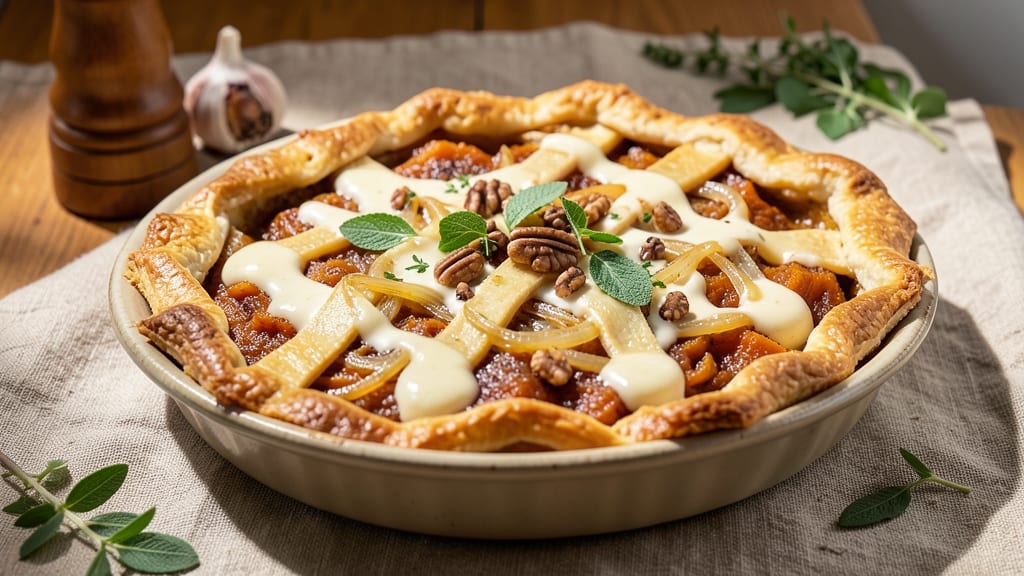
This squash pot pie recipe delivers all the comfort of a homemade classic—creamy, spiced filling nestled in a buttery lattice crust that turns golden under the broiler. 🌟 The secret lies in balancing tender winter squash with aromatic herbs and a velvety cream sauce, all baked until the crust achieves that perfect flaky texture.
I've perfected this recipe through years of testing, ensuring the filling stays rich while the crust remains crisp enough to hold its shape.
The filling begins with sautéed onions and garlic, which form the aromatic base for the squash and herbs. A touch of nutmeg and thyme deepens the flavor, while a splash of cream creates that signature velvety texture.
The lattice crust, made from store-bought puff pastry, adds a rustic touch without requiring homemade dough—though I’ll share how to blind-bake it properly to avoid a soggy bottom. Venting the crust with a fork ensures steam escapes, keeping everything light and airy.
What you’ll end up with is a pot pie that’s warm, inviting, and packed with layers of flavor—tender squash, savory herbs, and a creamy sauce that’s neither too heavy nor too light. The lattice crust adds a delicate, buttery crunch that contrasts beautifully with the soft filling.
This recipe is ideal for family dinners, holiday gatherings, or even a cozy weeknight meal when you crave something hearty yet comforting.
For extra flair, garnish with fresh parsley or a drizzle of heavy cream before serving. The filling reheats beautifully, making this pot pie perfect for meal prep or leftovers. Let’s get started on creating this timeless, crowd-pleasing dish that’s sure to become a staple in your recipe collection.
Ingredients for squash pot pie
Sixteen ingredients transform into a comforting pot pie with creamy filling and golden crust.
| Ingredient | Amount | Notes |
|---|---|---|
| Butternut Squash 🎃 | 3 lb | Peeled, cubed, and roasted |
| Yellow Onion 🧅 | 1 whole | Diced, medium size |
| Garlic Cloves 🧄 | 4 cloves | Minced, fresh preferred |
| Unsalted Butter 🧈 | ½ cup | Cold, cubed for sauteing |
| Heavy Cream 🥛 | 1 cup | Full-fat for richness |
| Chicken Stock 💧 | 1 ½ cups | Low-sodium preferred |
| Fresh Thyme Leaves 🌿 | 2 tbsp | Or 1 tsp dried thyme |
| Ground Nutmeg 🌶️ | ¼ tsp | Freshly grated preferred |
| All-Purpose Flour 🌾 | 2 tbsp | For thickening sauce |
| Salt 🧂 | 1 ½ tsp | Kosher or sea salt |
| Black Pepper 🌶️ | ½ tsp | Freshly ground preferred |
| Puff Pastry 🥧 | 1 sheet | Store-bought, thawed |
| Fresh Parsley 🌿 | ¼ cup | Chopped, for garnish |
| Heavy Whipping Cream 🥛 | ¼ cup | Optional for garnish |
The squash is the heart of this dish, so choose a sweet, dense butternut variety—Howard or Sugar Pie types work best. Most grocery stores carry pre-cubed squash in the produce section, but if you're buying whole, Costco or Trader Joe's often have great deals. For the puff pastry, Pepperidge Farm is my go-to—it thaws quickly and holds its shape beautifully. If you're using frozen puff pastry, thaw it in the fridge overnight for even better results. The thyme and nutmeg are non-negotiable; they elevate the filling from good to extraordinary.
No fresh thyme? Dried works at one-third the amount, but fresh has that vibrant aroma. Substituting heavy cream with half-and-half keeps things lighter, though the texture won't be as velvety. For a dairy-free option, coconut cream works surprisingly well—just reduce the chicken stock slightly to balance the richness. The lattice crust requires precision: cut the pastry into 1-inch strips and weave them carefully. If you're nervous about the technique, pre-cut lattice sheets from Williams Sonoma are a lifesaver. The squash should be tender but not mushy—roast it until it yields to a fork.
This pot pie reheats beautifully—just cover it with foil and warm at 350°F for 20 minutes. Leftovers keep for 4-5 days in the fridge, though I rarely have any. For make-ahead prep, assemble the pie and refrigerate it overnight before baking—this enhances the flavors dramatically. The puff pastry can be prepped a day ahead and stored wrapped in plastic. Garnish with fresh parsley and a drizzle of heavy cream right before serving to keep everything looking its best.
Why You'll Love This Recipe
- One-Pan Wonder: I swear by this recipe because it’s all in one dish—no fussing with pie crusts or extra pans. Just roast the squash and onions until caramelized, toss in the garlic butter and cream, and bake until golden. My weeknights thank me.
- Creamy-Garlic Magic: That heavy cream and roasted garlic combo? It’s ridiculously good—smooth, rich, and just sweet enough from the squash. Honestly, I’ve made this for friends who aren’t even squash fans, and they’ve come back for seconds.
- Leftovers That Shine: This reheats like a dream—whether straight from the fridge or microwaved, it stays creamy and comforting. I’ll be real: I’ve eaten cold slices straight out of the fridge with a sprinkle of flaky salt, and it’s still a win.
- Budget-Friendly Luxury: Butternut squash is cheap, onions last forever, and butter stretches far when paired with cream. It’s the kind of meal that feels special without breaking the bank—perfect for when you want to treat yourself but keep things simple.
Step-by-step instructions for squash pot pie
Here's how to create a velvety squash filling with a golden lattice crust—simple steps for restaurant-quality results.
🔥 Step 1: Roast the Squash Until Tender
Preheat your oven to 400°F and line a baking sheet with parchment paper. Toss the 3 lb peeled and cubed butternut squash with 1 tablespoon olive oil, ½ teaspoon salt, and ¼ teaspoon black pepper. Spread in a single layer and roast for 25-30 minutes until fork-tender with caramelized edges.
Here's the thing—don't skip the olive oil. It helps the squash brown beautifully and prevents it from sticking to the pan. You'll know it's done when a knife slides in easily and the edges start to brown. Remove from oven and let cool slightly before transferring to a blender.
👨🍳 Step 2: Build the Creamy Filling
In a large skillet, melt ½ cup unsalted butter over medium heat. Add the 1 whole diced yellow onion and cook for 5-6 minutes until softened. Stir in the 4 minced garlic cloves and cook for 30 seconds until fragrant—don't let it brown or it'll turn bitter.
Add the roasted squash to the skillet and stir to combine. Pour in 1.5 cups chicken stock and 1 cup heavy cream, then bring to a gentle simmer. Stir in 2 tablespoons fresh thyme leaves, ½ teaspoon ground nutmeg, 1 teaspoon salt, and ¼ teaspoon black pepper. Simmer for 5 minutes until flavors meld.
🍳 Step 3: Thicken and Prepare the Filling
Transfer the squash mixture to a blender and purée until completely smooth. Return to the skillet and stir in 2 tablespoons all-purpose flour to thicken. Cook for 2-3 minutes until the sauce coats the back of a spoon. Taste and adjust seasoning if needed—this is your flavor checkpoint.
Real talk: If the sauce looks too thick, whisk in 1-2 tablespoons water to reach your desired consistency. The filling should be thick enough to coat the back of a spoon but still spoonable. Transfer to a 9-inch pie dish and smooth the top.
🥘 Step 4: Assemble and Bake the Pot Pie
Roll out the 1 sheet thawed puff pastry on a lightly floured surface to a 12x15-inch rectangle. Cut into 1-inch strips running lengthwise, then cut every other strip in half to create the lattice pattern. Arrange the strips over the filling in a crisscross pattern, leaving a ½-inch border around the edges.
Brush the lattice with melted butter and bake at 375°F for 30-35 minutes until the crust is golden brown and puffed. Here's where patience pays off—don't open the oven door early or the crust will deflate. The pie is done when the crust is golden and the filling is bubbling at the edges.
🍽️ Step 5: Serve Warm with Garnish
Let the pot pie rest for 10 minutes before slicing—this allows the filling to set slightly. Garnish with ¼ cup chopped fresh parsley and a dollop of ¼ cup heavy whipping cream if desired. Serve immediately while warm for the best texture and flavor experience.
Each bite should deliver creamy, spiced squash filling with a buttery, flaky crust. If you're making this ahead, store the unbaked pie in the refrigerator for up to 24 hours before baking. The flavors will develop even more overnight—trust the process.
Pro Tips For Making Squash Pot Pie
- Sear the Onion Slow: Don’t rush this step—cook the diced onion in butter over medium-low heat for 10-12 minutes until it’s deep golden and almost caramelized. I used to crank the heat and end up with a bitter, watery base. Patience here means flavor that sticks to every bite.
- Cube the Squash Evenly: Cut the butternut squash into ½-inch cubes, not random chunks. Smaller pieces soften faster and release their sweetness evenly, while larger ones stay tough or turn mushy. (Yes, it takes a few extra minutes, but it’s worth it.)
- Don’t Skip the Cream Reduction: After simmering the squash mixture, reduce the heavy cream by half before adding it back to the pot. This thickens the sauce naturally and cuts down on wateriness—no need for cornstarch. (I learned this after three soggy pot pies.)
- Use Cold Butter for Topping: Dot the finished filling with small chunks of cold, unsalted butter before baking. It melts into the cream, adding richness without making the crust soggy. (Hot butter? Disaster. Cold butter? Pure magic.)
Troubleshooting your squash pot pie
Soggy Crust Fix
If your crust ends up soggy, it’s usually from steam buildup. Before baking, use a fork to poke 20-25 small holes in the lattice pattern to let steam escape.
I also recommend pre-baking the lattice for 5-7 minutes at 375°F before adding the filling—this creates a barrier that prevents moisture from seeping in. 💡
Filling Too Thin?
A watery filling often means the sauce needs more thickening. If your mixture looks too loose after simmering, whisk in an extra 1-2 tablespoons of all-purpose flour or 1 teaspoon cornstarch mixed with cold water.
Simmer for 2-3 more minutes—this will tighten the texture without altering the flavor. Trust me, a spoonful of flour goes a long way!
Lattice Won’t Stay
If your lattice strips keep sliding off or collapsing, it’s likely because the filling is too hot. Let the filling cool completely before assembling the crust—this gives the lattice a stable base. For extra hold, brush the edges of the pie dish with egg wash before adding the strips.
I also recommend chilling the pie for 15-20 minutes—in the fridge before baking to set the pastry.
Undercooked Filling
If the center of your filling feels undercooked, it’s probably because the pie wasn’t baked long enough. The filling should reach an internal temperature of 165°F—use a thermometer to check.
If it’s still cool, tent the pie with foil and return it to the oven for 10-15 more minutes—this prevents the crust from over-browning while the filling finishes cooking.
Overbrowned Crust
An overly browned crust usually means the oven was too hot or the pie was left in too long. For a golden, not burnt, crust, bake at 375°F—and remove it as soon as it reaches a deep golden color.
If the crust starts browning too quickly, cover it loosely with foil and continue baking. A light spray of water—on the crust right before baking can also help create steam for even browning.
Flavor Too Mild
If your pot pie tastes bland, it’s likely missing depth. Boost the flavor by adding a pinch of smoked paprika—or a splash of white wine—to the filling while simmering.
For extra richness, stir in 1 tablespoon of Dijon mustard—or a dollop of crème fraîche—at the end. Fresh herbs like thyme and parsley make a huge difference—don’t skimp on them!
Nutrition facts
Frequently asked questions about squash pot pie
Can I substitute butternut squash with another type?
Acorn or delicata squash work beautifully—they're sweeter and hold their shape better. Just adjust the roasting time to 20-25 minutes since they cook faster. For extra richness, try a small amount of sweet potato mixed in, but keep it under ½ cup to maintain the signature flavor.
How do I make this pot pie vegetarian?
Swap the chicken stock for vegetable broth and add ½ cup cooked lentils to the filling for protein. For extra depth, stir in 1 tablespoon nutritional yeast when thickening the sauce. The texture remains creamy, and the umami flavor balances the sweetness perfectly.
Can I use a different crust besides puff pastry?
Yes! A classic pie crust works well—just brush it with egg wash before baking. For a shortcut, try phyllo dough, which bakes faster and adds a delicate crunch. If you prefer a rustic look, use biscuit dough pressed on top instead of lattice.
How long does this pot pie keep in the fridge?
Store leftovers in an airtight container for up to 5 days. Reheat covered at 350°F for 20 minutes—the filling reheats beautifully, though the crust may soften slightly. For best texture, serve within 2 days of baking.
What if I don't have fresh thyme?
Use 1 teaspoon dried thyme instead, but toast it in the skillet for 30 seconds first to wake up the flavor. For extra aroma, add ½ teaspoon dried rosemary or a pinch of ground sage. If you're out of herbs entirely, a splash of lemon juice adds brightness.