
Desserts
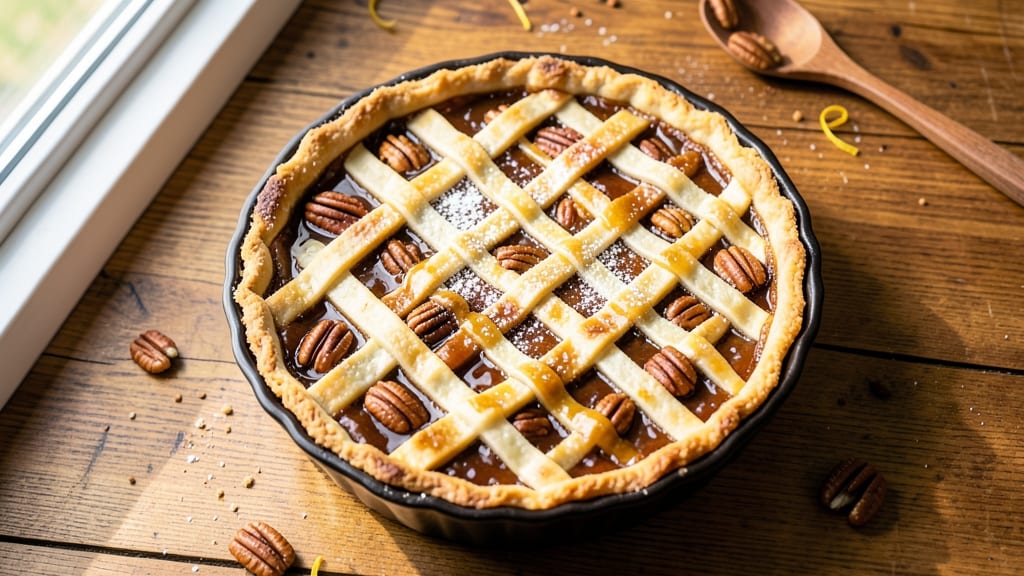
This 300-year-old pecan pie recipe brings colonial baking traditions to your kitchen with a buttery crust and caramelized pecans that taste like history. The original recipe relied on simple pantry staples—flour, sugar, and nuts—transformed through slow baking into a dessert that became a Southern staple.
What makes this version special is the balance of rich, spiced filling and a flaky crust that holds up to time, just as it did in 18th-century kitchens.
The key to authenticity lies in the technique: a hot water crust for the pie shell, which creates a sturdy base that resists sogginess, and a filling cooked low and slow to develop deep caramelized flavors.
Unlike modern recipes that rush the process, this method lets the pecans soften while the sugar melts into a glossy, sticky glaze. The result is a pie with layers of texture—crisp edges, tender crust, and pecans that are both nutty and sweet.
Modern adaptations simplify the process without sacrificing tradition, like using a food processor for the crust and pre-measured spices. The filling’s corn syrup (a colonial-era substitute for refined sugar) ensures the pecans stay moist and the pie holds its shape.
What you’ll end up with is a dessert that feels like a slice of history—warm, fragrant, and perfectly balanced between buttery crust and caramelized nuts.
Serve this pie warm with vanilla ice cream or whipped cream for the full colonial experience. The rich, spiced filling and buttery crust make it a showstopper for holidays or special occasions. Let’s bring this timeless recipe to life in your kitchen.
Ingredients for 300 year old pecan pie
Colonial staples and modern convenience combine for this historic pecan pie.
| Ingredient | Amount | Notes |
|---|---|---|
| All-Purpose Flour 🌾 | 2 ½ cups | Unbleached preferred for flakiness |
| Cold Unsalted Butter 🧈 | 1 cup | Cut into cubes, not softened |
| Ice Water 💧 | ½ cup | For dough elasticity |
| Large Pecans 🌰 | 2 cups | Shells removed, toasted lightly |
| Granulated Sugar 🍚 | 1 ½ cups | White or light brown |
| Corn Syrup 🍯 | ¾ cup | Light corn syrup preferred |
| Large Eggs 🥚 | 2 whole | Room temperature |
| Vanilla Extract 🌿 | 1 tbsp | Pure vanilla preferred |
| Ground Cinnamon 🌶️ | 1 tsp | Freshly ground preferred |
| Ground Nutmeg 🌶️ | ½ tsp | Freshly grated nutmeg |
| Salt 🧂 | ½ tsp | Fine sea salt |
| Heavy Cream 🥛 | ½ cup | For pie topping |
| Powdered Sugar 🍚 | 2 tbsp | For final dusting |
The hot water crust is non-negotiable for authenticity—King Arthur flour or Bob’s Red Mill are my go-tos for texture. Butter must be cold (store it in the freezer 15 minutes before mixing) to create flaky layers. Pecans should be raw and unsalted—Blue Ridge or Planters brands work best. For the filling, light corn syrup (not dark) keeps the pecans moist without overpowering sweetness. The eggs should be room temperature to blend smoothly into the filling. Nutmeg is critical here—freshly grated from a whole nut makes all the difference.
No corn syrup? Light maple syrup is a 1:1 substitute, though the flavor will shift slightly. Substitute brown sugar for granulated at a 1:1 ratio, but reduce the corn syrup by 2 tbsp to balance moisture. For a vegetarian-friendly crust, ensure your butter is dairy-free (like Miyoko’s). The heavy cream topping can be swapped for coconut cream for a dairy-free version. If you’re short on pecans, walnuts work in a pinch, but texture will differ. Toasting the nuts lightly (5 minutes at 350°F) enhances their flavor—don’t skip this step if you can help it.
The crust dough should be chilled for 1 hour before rolling to prevent shrinking. Store leftover filling in an airtight container in the fridge for up to 3 days—it reheats beautifully. The pie itself keeps for 4-5 days at room temperature or 2 weeks refrigerated. For long-term storage, freeze the unbaked pie for up to 3 months. Bring to room temperature before baking to ensure even cooking. Serve warm with vanilla ice cream for the full colonial experience—trust me, it’s worth the wait.
Why You'll Love This Recipe
- No-Fuss Crust: I swear by that cold butter and ice water trick—it’s the secret to a flaky crust without overworking the dough. Five minutes of cutting butter into flour, a quick press into the pan, and you’re done. (Yes, even if you’re not a baker.)
- Caramelized Pecan Magic: That sugar-to-pecan ratio? It’s where the real magic happens. Roast the pecans first—just until fragrant—and they turn into little crispy pockets of flavor. One bite, and you’ll understand why this pie’s been around for centuries.
- Holiday or Weeknight: Between us, I’ve served this at Thanksgiving and as a dessert for my book club’s casual Tuesday night. The crust holds up, the filling stays rich, and it doesn’t scream “holiday”—so it works anywhere. (My roommate’s favorite, honestly.)
- Leftovers? Even Better: This pie actually tastes better the next day. The filling thickens just enough to be decadent, and the crust stays crisp. I make two—one for now, one for “emergency” dessert cravings. (Spoiler: They never last.)
Step-by-step instructions for 300-Year-old pecan pie
This time-tested method delivers a buttery crust and caramelized pecan filling that's been perfected for centuries.
Prepare the Classic Pecan Pie Dough
In a large mixing bowl, combine the 2.5 cups all-purpose flour and 0.5 teaspoon salt. Cut in the 1 cup cold unsalted butter using a pastry cutter or your fingers until the mixture resembles coarse crumbs with pea-sized butter pieces. This texture is crucial for achieving that signature flaky crust.
Gradually add the 0.5 cup ice water, 1 tablespoon at a time, mixing gently with a fork just until the dough comes together. Be careful not to overwork it—handle only enough to form a smooth ball. Wrap the dough tightly in plastic wrap and refrigerate for at least 1 hour (or up to 24 hours) to firm up. This resting period allows the gluten to relax, ensuring tender layers when baked.
Assemble the Pecan Filling
In a separate large bowl, whisk together the 1.5 cups granulated sugar, 0.75 cup corn syrup, 2 whole large eggs, 1 tablespoon vanilla extract, 1 teaspoon ground cinnamon, 0.5 teaspoon ground nutmeg, and 0.5 teaspoon salt until fully combined. The mixture should be smooth and slightly thick.
Gently fold in the 2 cups large pecans using a spatula, ensuring they're evenly distributed throughout the filling. Set the mixture aside while you prepare the crust. This step is where the magic happens—the sugar and corn syrup will caramelize beautifully during baking, creating that signature gooey texture.
Roll and Blind-Bake the Crust
On a lightly floured surface, roll out the chilled dough to a 12-inch circle, about ⅛-inch thick. Transfer it to a 9-inch pie dish, gently pressing it into the bottom and up the sides. Trim any excess dough hanging over the edge. Prick the bottom of the crust all over with a fork to prevent puffing.
Preheat your oven to 375°F. Line the crust with parchment paper, then fill it with pie weights or dried beans. Bake for 15 minutes, then remove the weights and bake for an additional 5 minutes until the edges are lightly golden. This blind-baking step ensures the crust stays crispy rather than soggy when the filling is added.
Bake to Caramelized Perfection
Pour the pecan filling into the pre-baked crust, spreading it evenly. Bake at 375°F for 45-50 minutes, until the filling is bubbly and the edges are set but the center still has a slight wobble (it will firm up as it cools). The filling should be deep golden brown with a glossy sheen.
During the last 10 minutes of baking, place the 0.5 cup heavy cream in a small saucepan and heat gently until warm (do not boil). Remove the pie from the oven and carefully pour the warm cream over the filling. Return the pie to the oven for 2-3 minutes to let the cream soak in, then remove and let it cool completely on a wire rack.
Finish with Powdered Sugar Dusting
Once the pie has cooled completely (at least 2 hours), dust the top generously with the 2 tablespoons powdered sugar using a fine-mesh sieve. This step adds that classic finishing touch and balances the rich, caramelized flavors. Serve warm or at room temperature for the best texture contrast.
The pie will continue to set as it cools, resulting in a perfect balance of crisp crust, gooey caramelized filling, and perfectly toasted pecans. Each slice should deliver that signature combination of sweet, nutty, and buttery flavors that make this recipe legendary.
Pro Tips For Making 300 Year Old Pecan Pie
- CHILL THE BUTTER FIRST: Your crust won’t hold if the butter melts mid-handling. Cut that unsalted block into ½-inch cubes and stash them in the fridge for 15 minutes before mixing—even if the recipe says "cold." I learned this the hard way when my first crust turned into a sad, greasy puddle.
- TOAST THE PECANS LOW: Skip the high-heat blitz that turns pecans into bitter charcoal. Toast them at 300°F for 8–10 minutes, stirring every 2 minutes, until they’re fragrant but still light brown. Overcooking makes them taste like sawdust—trust me, your pie will thank you.
- DOUBLE-CHECK THE CRUST EDGE: That ice water in the dough is your friend, but too much makes the crust gummy. After rolling, press the edge firmly into the pie dish with your thumb—no gaps. If it springs back, add a pinch more flour to the work surface and re-roll. A sealed edge keeps filling from leaking.
- SUGAR FIRST, THEN PECANS: Dump the sugar into the pie shell before adding pecans—it caramelizes faster and creates a glossy, crackly top. Press the nuts in lightly so they’re partially submerged; this ensures even baking and prevents a dry, nut-heavy center. (Yes, even if it looks messy.)
Flavor customization for these flavors
Sweetness Adjustments
Balance the sugar and corn syrup ratio to match your sweet tooth. For a more traditional 18th-century taste, reduce granulated sugar to 1 cup and increase corn syrup to 1 cup—this was the colonial approach before refined sugar became widely available.
If you prefer a modern twist, add 2 tbsp honey or 1 tbsp maple syrup to the filling for depth. 🍯
Spice Variations
Experiment with warm spices beyond cinnamon and nutmeg. A pinch of ground cloves (¼ tsp) adds depth, while fresh ginger (1 tsp grated) brings a subtle zing. For a Southern twist, swap nutmeg for ½ tsp allspice—this was common in early American recipes.
Always toast spices in a dry pan for 30 seconds to enhance their flavor before mixing.
Nutty Alternatives
While pecans are traditional, walnuts or hickory nuts work beautifully. For a walnut version, use 1½ cups chopped walnuts and add ½ tsp lemon zest to brighten the filling. Hickory nuts (½ cup) add a smoky note—pair them with ½ tsp smoked paprika for a rustic touch.
Toast all nuts at 350°F for 5 minutes before folding into the filling to maximize flavor.
Crust Customizations
Swap the all-purpose flour crust for a graham cracker crust by crushing 1½ cups graham crackers with ½ cup melted butter and pressing into the pie dish. For a shortbread twist, mix 1½ cups shortbread crumbs with ¼ cup melted butter—this adds buttery richness.
Both alternatives require 10 minutes of chilling before filling to set properly.
Topping Innovations
Skip the heavy cream topping for a whipped cream glaze: mix ½ cup heavy cream with 2 tbsp powdered sugar and ½ tsp vanilla, then drizzle over the warm pie.
For a coconut caramel, heat ½ cup coconut milk with 2 tbsp brown sugar until thickened, then pour over the filling. Both toppings add texture contrast without overpowering the filling.
Dietary Adaptations
Make this pie gluten-free by using a 1:1 gluten-free flour blend (like King Arthur Measure for Measure) and ½ cup almond flour for the crust. For vegan options, replace eggs with 2 tbsp flaxseed meal mixed with 6 tbsp water, and use coconut oil instead of butter.
The filling stays rich and gooey—just reduce baking time by 5-7 minutes to prevent over-browning.
Nutrition facts
Frequently asked questions
Why does this recipe use corn syrup instead of modern sugar substitutes?
Corn syrup was a common colonial sweetener—it mimics the texture and moisture retention of molasses while being more neutral in flavor. The 1:1 ratio with sugar creates that signature gooey consistency without crystallizing. Modern versions sometimes use honey or maple syrup, but corn syrup stays truest to the original technique.
Can I make this pie ahead of time?
The crust can be prepped 24 hours ahead—just keep it wrapped in the fridge. For the filling, mix it up to 3 days in advance and store in an airtight container. Bake it fresh for the best texture, but you can assemble the pie (unbaked) and refrigerate for 12 hours before baking.
What’s the secret to a crisp crust?
The hot water crust method is key—ice water creates steam during baking, making layers that stay flaky. Always use cold butter (never softened) and avoid overworking the dough. Blind-baking for 20 minutes before adding filling prevents sogginess.
Why does the pie need to cool completely before serving?
Pecan pie sets as it cools, and serving it warm too soon makes the filling runny. The 2-hour rest lets the caramelized sugar firm up while keeping the pecans tender. This also lets the flavors meld—patience ensures that perfect balance of crisp crust and gooey filling!
Can I use store-bought pie crust?
Technically yes, but the hot water crust is what gives this pie its signature texture. If you must substitute, choose a buttery shortbread-style crust (like Pillsbury Grand) and blind-bake it for 25 minutes to mimic the traditional method. The flavor won’t be identical, but it’ll still taste delicious!