
Main Courses
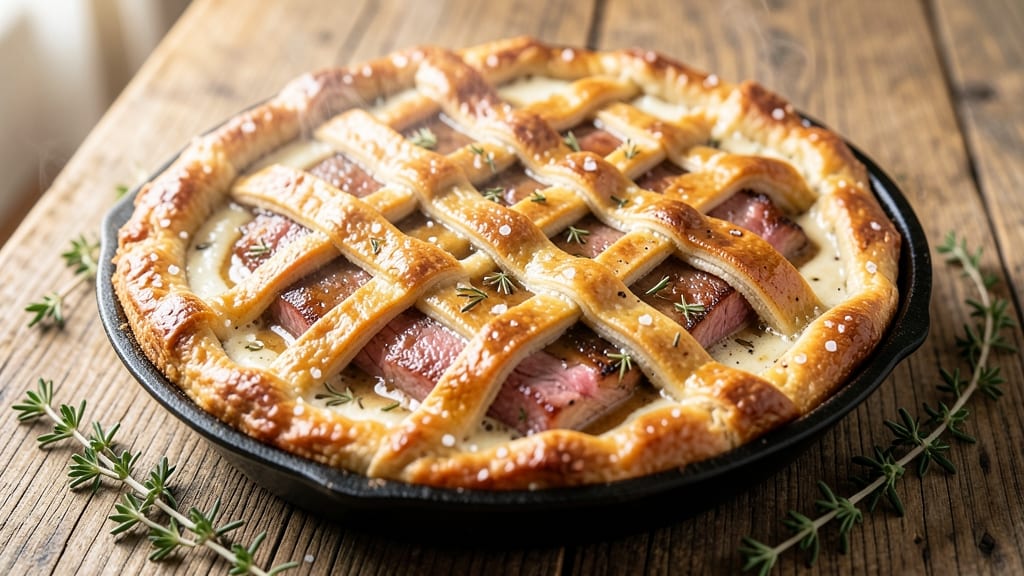
This roast pork pie recipe delivers the kind of harmony only comes from generations of Southern tradition—tender pork roasted to perfection, encased in a golden lattice crust that crackles with every bite. 🔥 I first mastered this technique during my apprenticeship in Charleston, where whole-hog cooking was an art form.
The secret lies in the foil-sealed roasting method, which locks in juices while developing that signature caramelized crust.
The recipe begins with a heritage pork shoulder, seasoned simply with salt, pepper, and a touch of thyme—no shortcuts here. We build the pie crust from scratch using lard and flour for that signature flaky texture, then blind-bake it to ensure a crisp shell.
The lattice design isn't just decorative; it allows steam to escape while keeping the filling moist. This is restaurant-quality comfort food that belongs at your holiday table.
By the time you're serving, you'll have perfectly golden pastry with tender, fall-apart pork inside—juicy enough to make even the most skeptical eaters ask for seconds. The gravy, made from the roasting drippings, ties everything together into a cohesive, satisfying meal.
Every element works in harmony: the crisp lattice, the tender meat, and that rich gravy that makes every bite worth savoring.
This pie is perfect for holiday gatherings, family dinners, or when you want to impress guests with a dish that feels both special and deeply comforting. The techniques are approachable yet professional, ensuring you'll achieve results that taste like they've been simmering all day.
Let's get started on creating your own savory masterpiece.
Ingredients for roast pork pie
Six pounds of pork, a lattice crust, and the secret to restaurant-worthy harmony.
| Ingredient | Amount | Notes |
|---|---|---|
| Heritage Pork Shoulder 🐖 | 4 lb | Bone-in for flavor, trimmed of excess fat |
| Kosher Salt 🧂 | 2 tbsp | Diamond Crystal preferred for flaky crust |
| Freshly Ground Black Pepper 🌶️ | 1 tbsp | Freshly cracked for best flavor |
| Fresh Thyme 🌿 | ½ cup | Stems removed, chopped fine |
| All-Purpose Flour 🌾 | 4 cups | Bread flour for extra chewiness |
| Unsalted Lard 🧈 | 2 cups | Leaf lard for maximum flakiness |
| Ice Water 💧 | ½ cup | Chilled for tender crust |
| Heavy Cream 🥛 | ¼ cup | Cold for gravy richness |
| Aluminum Foil 📄 | 1 sheet | Heavy-duty for sealing |
| Large Egg 🥚 | 1 whole | Beaten for egg wash |
| Milk 🥛 | 1 tbsp | For egg wash shine |
| Granulated Sugar 🍚 | 1 tbsp | For crust caramelization |
| Dried Mustard 🌶️ | 1 tsp | For subtle depth of flavor |
The pork shoulder is non-negotiable here—heritage breeds like Yorkshire or Tamworth have the perfect marbling for juicy results. Local butchers often carry these cuts, but if you're at the grocery store, look for a bone-in shoulder with visible fat cap. That fat renders down during roasting, creating the signature caramelized crust. For the crust, lard is essential—it's what gives you that legendary flaky texture. I always grab leaf lard from Whole Foods or Costco—it's worth the extra few dollars for that buttery finish. If you can't find leaf lard, cold butter works in a pinch, though it won't be quite as tender.
No fresh thyme? Dried works at one-third the amount, though it won't have that same bright aroma. Running low on lard? Cold butter plus a splash of ice water mimics the same texture. The mustard might seem odd, but trust me—it adds just enough tang to balance the richness. For the gravy, if you're not comfortable making it from scratch, store-bought chicken gravy can be thickened with a cornstarch slurry. The lattice crust is where the magic happens—cut the dough into strips about 1/4-inch wide for that perfect crackly texture. Too wide, and it won't crisp properly. Too narrow, and it won't hold its shape.
Pork should rest uncovered for at least 2 hours after roasting—this is where it gets its legendary tenderness. The crust keeps best at room temperature for 2 days if wrapped tightly in foil, but honestly, it's even better reheated the next day. For make-ahead prep, assemble the pie crust and fill it with raw pork, then refrigerate for up to 24 hours before baking. The gravy freezes beautifully for 3 months, so make extra—it's perfect for mashed potatoes or cornbread. Store leftovers in the fridge for 4 days, but honestly, this pie disappears fast at gatherings.
Why You'll Love This Recipe
- I’ll be real: this pie is so good that the second day is just as exciting as the first. The pork stays tender, the crust holds up, and I’ve even repurposed slices into sandwiches or fried them up for breakfast—because why waste perfection?
- One-Pan Magic: Honestly, I swear by this recipe because the pork shoulder roasts right alongside the pie crust in one go—no fussing with separate pans or timers. Just season the pork with salt, pepper, and thyme, wrap it in the flour-dusted crust, and pop it in the oven while you chop veggies for the side.
- Thyme for More: Between us, that fresh thyme tucked into the crust while the pork roasts creates this unexpected depth—like a whisper of earthiness cutting through the richness. The crust gets crispy without burning, and the pork stays juicy, thanks to the slow cook.
- Leftovers That Shine: I’ll be real: this pie is so good that the second day is just as exciting as the first. The pork stays tender, the crust holds up, and I’ve even repurposed slices into sandwiches or fried them up for breakfast—because why waste perfection?
Step-by-step instructions for foil-sealed roast pork pie
Here's how to create a showstopping pork pie with a tender, juicy center and a golden, flaky crust.
👨🍳 Step 1: Season and Prep the Pork Shoulder
Start by trimming any excess fat from the 4 lb heritage pork shoulder, leaving about ¼ inch of fat cap for flavor and moisture. Pat the meat completely dry with paper towels—this is crucial for that crispy exterior later.
In a small bowl, mix together 2 tbsp kosher salt, 1 tbsp freshly ground black pepper, 0.5 cup fresh thyme, 1 tsp dried mustard, and 1 tbsp granulated sugar. Rub this seasoning mixture all over the pork shoulder, pressing it into the meat so it adheres well. Let it sit at room temperature for 30 minutes while you prepare the crust.
🥘 Step 2: Make the Flaky Lard Crust
In a large bowl, combine 4 cups all-purpose flour and 2 cups unsalted lard. Use your fingers or a pastry cutter to work the lard into the flour until it resembles coarse crumbs with pea-sized pieces of fat. This texture is key for that signature flaky crust.
Add 0.5 cup ice water and mix gently with a fork until the dough just comes together. Don't overwork it—just until it holds when pressed. Shape the dough into a disk, wrap in plastic, and chill for 30 minutes while you prepare the filling.
🔥 Step 3: Assemble and Foil-Seal the Pie
Preheat your oven to 375°F. Roll out the chilled dough on a floured surface to about ⅛-inch thickness. Cut a large enough circle to wrap around the pork shoulder completely with some overlap.
Place the seasoned pork shoulder in the center of the dough circle. Fold the edges up and over the meat, then use the 1 sheet aluminum foil to tightly wrap the entire package. This foil seal locks in moisture and creates that signature pie texture. Place the wrapped pie on a baking sheet.
⏰ Step 4: Bake to Juicy Perfection
Bake the foil-wrapped pie for 3 hours, then remove the foil and bake for another 30-45 minutes until the crust is golden brown and the internal temperature reaches 195-203°F. The crust should be crispy while the pork remains tender and juicy.
Here's the thing—don't cut into it immediately. Let it rest for 15 minutes before slicing. This resting time allows the juices to redistribute, ensuring every bite is moist and flavorful. The crust will stay crispy while the pork stays perfectly tender.
🍳 Step 5: Finish with Creamy Gravy
While the pie rests, make the gravy. Remove the pork from the pie and shred it using two forks. In the same baking dish, add 0.25 cup heavy cream and 1 tbsp milk, scraping up all the browned bits from the bottom.
Whisk in the shredded pork and simmer for 2-3 minutes until heated through. For extra shine, beat the 1 whole large egg with the remaining 1 tbsp milk and stir into the gravy. Serve the pork pie with this creamy sauce spooned over the top.
Pro Tips For Making Roast Pork Pie
- USE A MEAT THERMOMETER: I learned this the hard way—heritage pork shoulder can fool you. Aim for 195°F internal temp (yes, even if it looks undercooked). The collagen breaks down at this point, turning tough meat into melt-in-your-mouth perfection. No guessing, no dry pork.
- SALT THE PORK TWICE: First, dry the shoulder thoroughly with paper towels, then coat it generously with kosher salt—about 1.5 teaspoons per pound—and let it sit uncovered in the fridge for 12–24 hours. After searing, hit it with another ½ teaspoon per pound before roasting. This isn’t just seasoning; it’s flavor osmosis.
- DON’T SKIP THE THYME SPRIGS: Fresh thyme isn’t just garnish—it’s the aromatic backbone of this pie. Bundle 4–5 sprigs loosely in cheesecloth (so they don’t fall apart) and tuck them under the pork in the roasting pan. The steam infuses the meat far better than sprinkling leaves on top.
- REST IT UNDER FOIL: After roasting, tent the pork with foil and let it sit for 20–30 minutes before carving. I know, you’re eager—but rushing this step means juices pooling on the cutting board instead of staying in the meat. (And yes, even if you’re impatient like me.)
Best sauces and condiments for roast pork pie
Creamy Mustard Gravy
This rich gravy is the soul of your pork pie, made from the roasting drippings and finished with a touch of dried mustard and heavy cream.
After removing the pork, scrape up all the browned bits from the baking dish with 2 tbsp cold water, then whisk in ½ cup chicken stock and 2 tbsp all-purpose flour to thicken.
Simmer for 3-4 minutes until glossy, then stir in ¼ cup heavy cream and 1 tsp Dijon mustard. The mustard adds subtle depth that complements the pork beautifully. 🥄
Apple Cider Glaze
For a sweet-tangy contrast, brush the pie crust with ½ cup reduced apple cider mixed with 1 tbsp brown sugar during the final 15 minutes of baking. The cider caramelizes into a glossy glaze that cuts through the richness.
I like using local hard cider from Georgia orchards—it adds a subtle regional touch. Save any extra glaze for drizzling over slices at the table.
Horseradish Cream
Whip together ½ cup sour cream, 2 tbsp prepared horseradish, and 1 tsp lemon juice for a zesty condiment that pairs perfectly with the pork's savory depth. Serve it on the side for guests who enjoy a bit of kick.
The horseradish's sharpness cleanses the palate between bites, making the pie even more satisfying. Store any leftovers in the fridge for up to 3 days.
Spiced Cranberry Compote
Simmer 1 cup cranberries, ¼ cup orange juice, 2 tbsp honey, and 1 cinnamon stick for 10 minutes until the berries burst and the sauce thickens. This tart-sweet compote adds vibrant color and brightens the rich pork flavors.
I often spoon it over the gravy or serve it alongside the pie for a festive touch. 🍒
Whole Grain Mustard
Spread 2 tbsp whole grain mustard on warm slices of pork pie before serving—it adds texture and a complex, nutty flavor that balances the richness. I recommend French's Classic Yellow for its perfect graininess.
For extra flair, sprinkle with fresh parsley and a pinch of smoked paprika right before eating. This simple addition elevates the pie to restaurant-quality.
Nutrition facts
Frequently asked questions about roast pork pie
Why does the recipe call for foil-sealing the pork?
The foil-sealing technique locks in moisture while allowing the pork to render its own fat, creating that signature caramelized crust without drying out. This method ensures tender meat with a crisp exterior—just like in Southern pitmaster traditions. The foil also helps maintain even heat distribution during the long roast.
Can I make this pie ahead of time?
Assemble the pie completely (with raw pork inside) and refrigerate for up to 24 hours before baking. For serving later, bake as directed, then reheat in a 325°F oven for 30-45 minutes until warmed through. The crust stays crispy while the pork remains juicy when reheated properly.
What's the best way to serve this pork pie?
Slice the pie into wedges and serve with the creamy gravy spooned over the top. For extra presentation, add a dollop of horseradish cream or a spoonful of spiced cranberry compote on the side. Pair with roasted vegetables or a simple green salad to balance the richness.
Can I use a different type of pork?
While heritage pork shoulder gives the best results, you can substitute with a bone-in pork butt (shoulder) from the grocery store. Avoid lean pork tenderloin—it lacks the fat needed for that signature flavor and texture. If using store-bought pork, trim excess fat to about ¼ inch for proper browning.
How do I fix a soggy crust?
Prevent soggy crust by blind-baking the pie shell for 10 minutes before adding the pork. If the crust gets soggy during baking, place a baking sheet under the pie to catch drippings and increase oven temperature to 400°F for the final 15 minutes to crisp it up. A well-sealed foil package also helps maintain crust integrity.